Red-naped Sapsucker
Sphyrapicus nuchalis
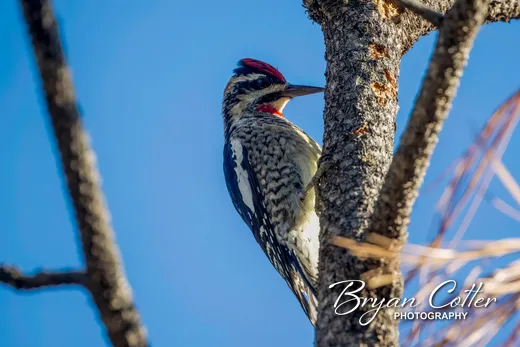
About the Red-naped Sapsucker
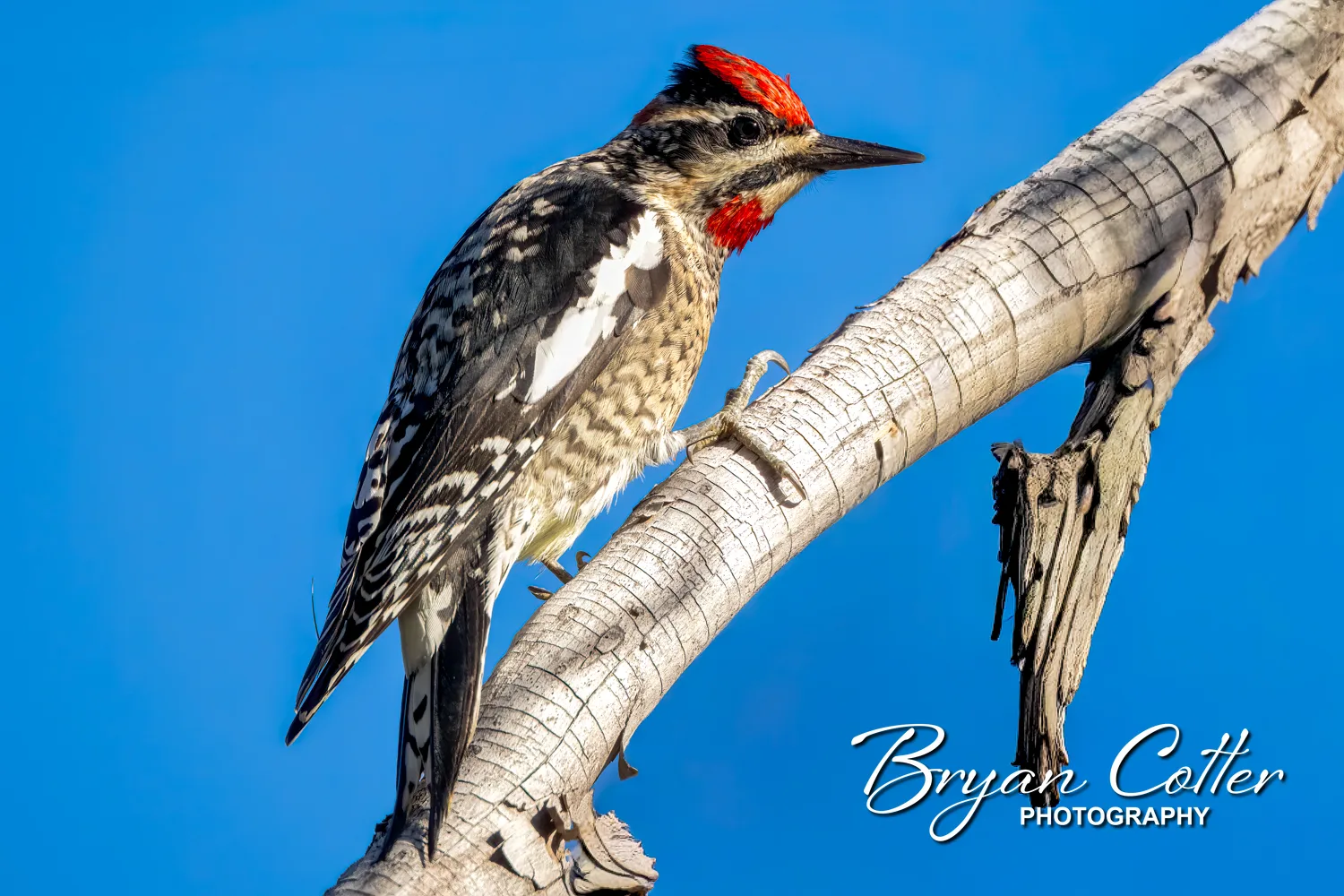
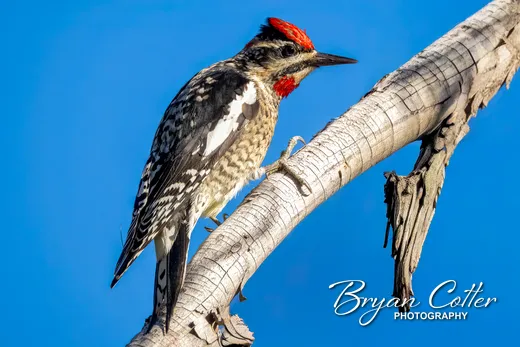
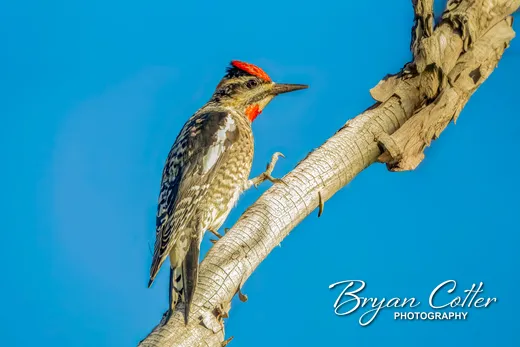
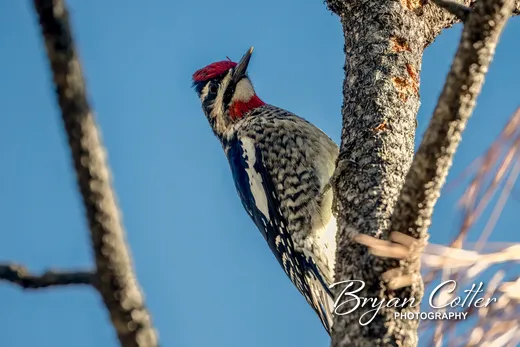
The Rocky Mountain cousin of the Yellow-bellied Sapsucker, and for years it was treated as the same species. It carries the same long white slash down the folded wing, the same black-and-white barred back, and the same red forecrown. The difference is in the details of the head: a small red patch on the back of the head, the nape the bird is named for, and a red throat that bleeds through the black frame around it instead of sitting neatly inside it. Females show some white at the chin; first-winter birds are a browner, softer version of the adult and can be a real puzzle.
Like every sapsucker, it earns its name honestly. It drills tidy horizontal rows of small square wells into living bark, then works a circuit of those wells to drink the sap that pools there and to pick off the insects the sap attracts. Hummingbirds, warblers, and squirrels all follow sapsuckers to those wells, which makes the bird a quiet keystone in the mountain forests where it breeds.
In Texas it is a bird of the far west. A few winter in the Trans-Pecos mountains and canyons each year, mostly from October into spring, and a sapsucker in the Guadalupe or Davis Mountains in late fall is far more likely to be this species than a Yellow-bellied. The safest field marks are that red nape spot and the extent of the red on the throat, so a clean side-on look at the head is worth waiting for.
These photos come from Dog Canyon in Guadalupe Mountains National Park on October 26, 2026, where the bird was working dead limbs and trunks in the last warm light of the evening. Seeing the nape and throat pattern this clearly is what turns a 'sapsucker sp.' into a confident Red-naped.
Join one of my guided birding tours! Fine art prints of my photos are also available — add any photo above to your print list.
© 2026 Bryan Cotter Photography camera gear privacy policy terms of use site by cotter designs