Black Scoter
Melanitta americana
About the Black Scoter
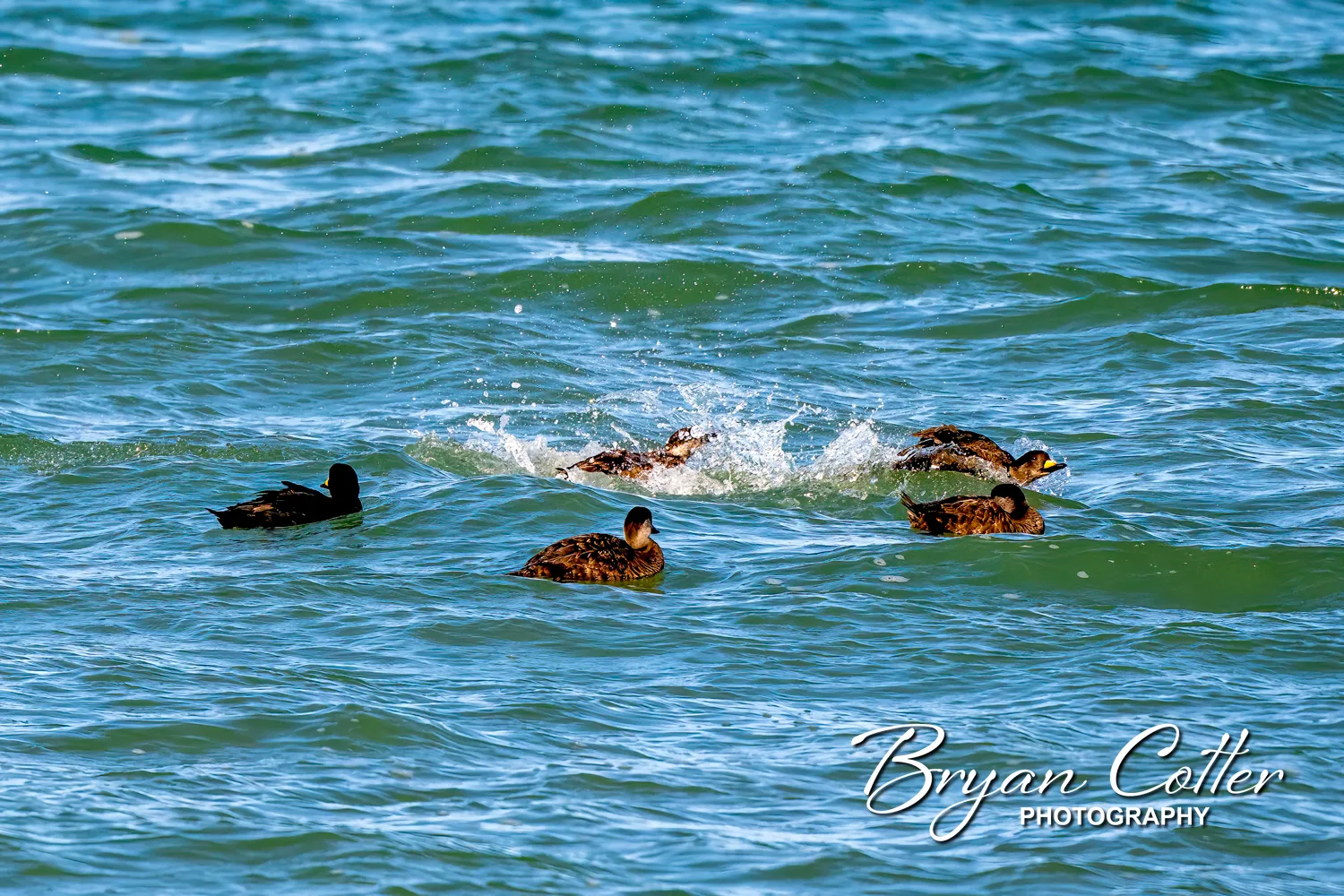
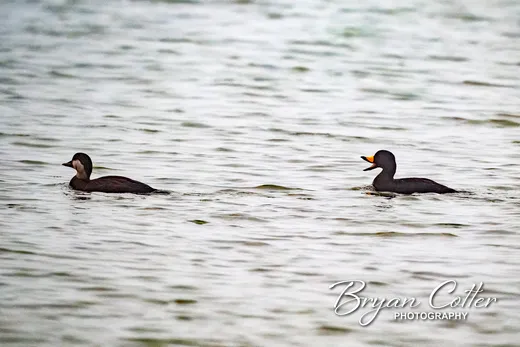
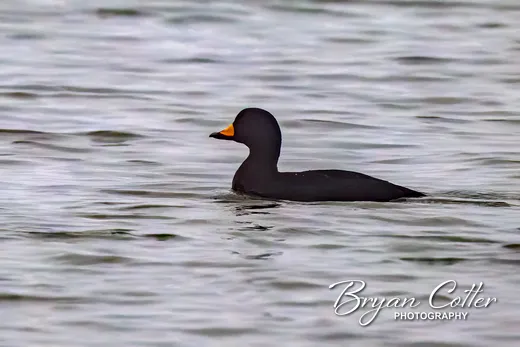
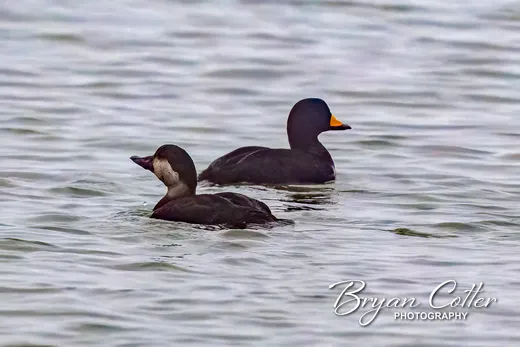
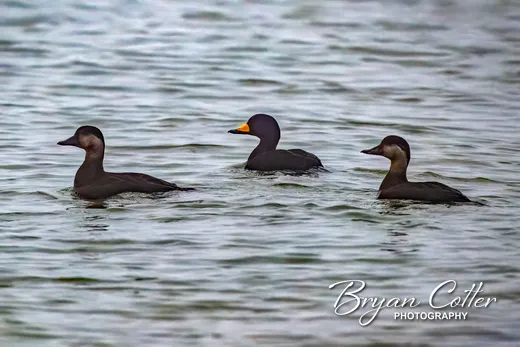
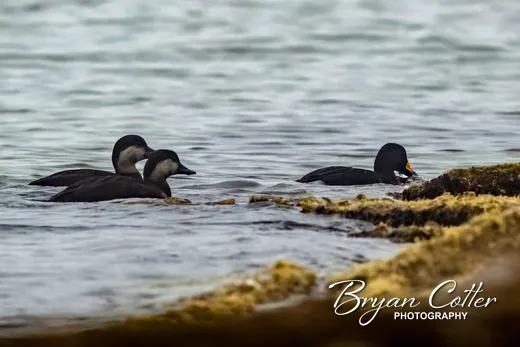
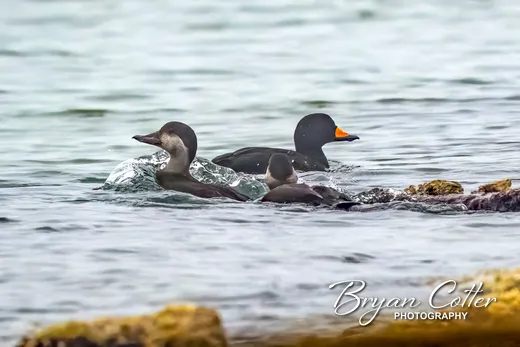
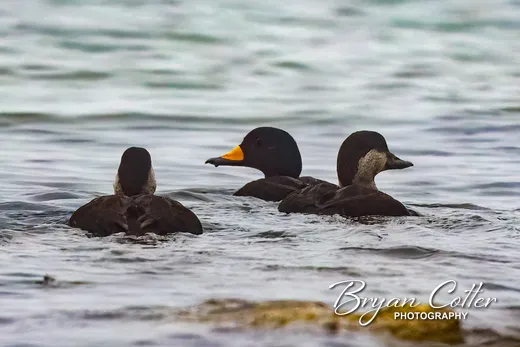
The Black Scoter is the plainest-looking of the three scoters, and that is exactly what makes the drake striking: an all-black sea duck with a single bright yellow-orange knob at the base of the bill. Hens and young birds are dusky brown with a dark cap and pale gray-buff cheeks, a two-toned face that sets them apart from the other scoters.
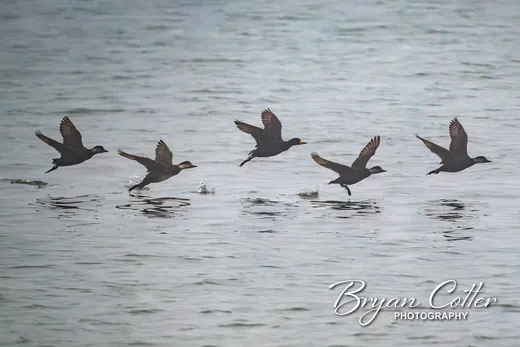
Like its relatives, it feeds by diving, prying mussels and clams off the bottom and swallowing them whole to be crushed in the gizzard. Flocks ride the swells just beyond the breakers, and drakes give a soft, mournful whistle -- unusual for a duck.
Black Scoters breed in the far north of Alaska and eastern Canada and winter along both ocean coasts. Texas sits at the very edge of the wintering range: a few turn up most winters in coastal bays or off jetties, and a stray on an inland reservoir is a genuine find, usually a young bird or a hen. The IUCN lists the species as Near Threatened because of long-term population declines.
Join one of my guided birding tours! Fine art prints of my photos are also available.
© 2026 Bryan Cotter Photography camera gear privacy policy terms of use site by cotter designs