Black-headed Grosbeak
Pheucticus melanocephalus
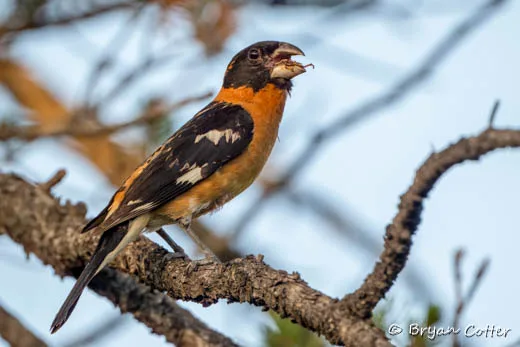
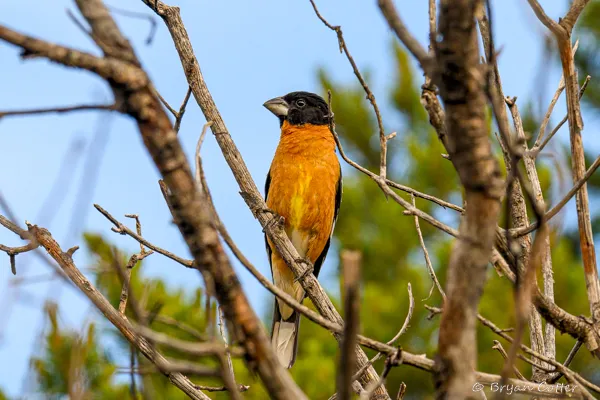
About the Black-headed Grosbeak
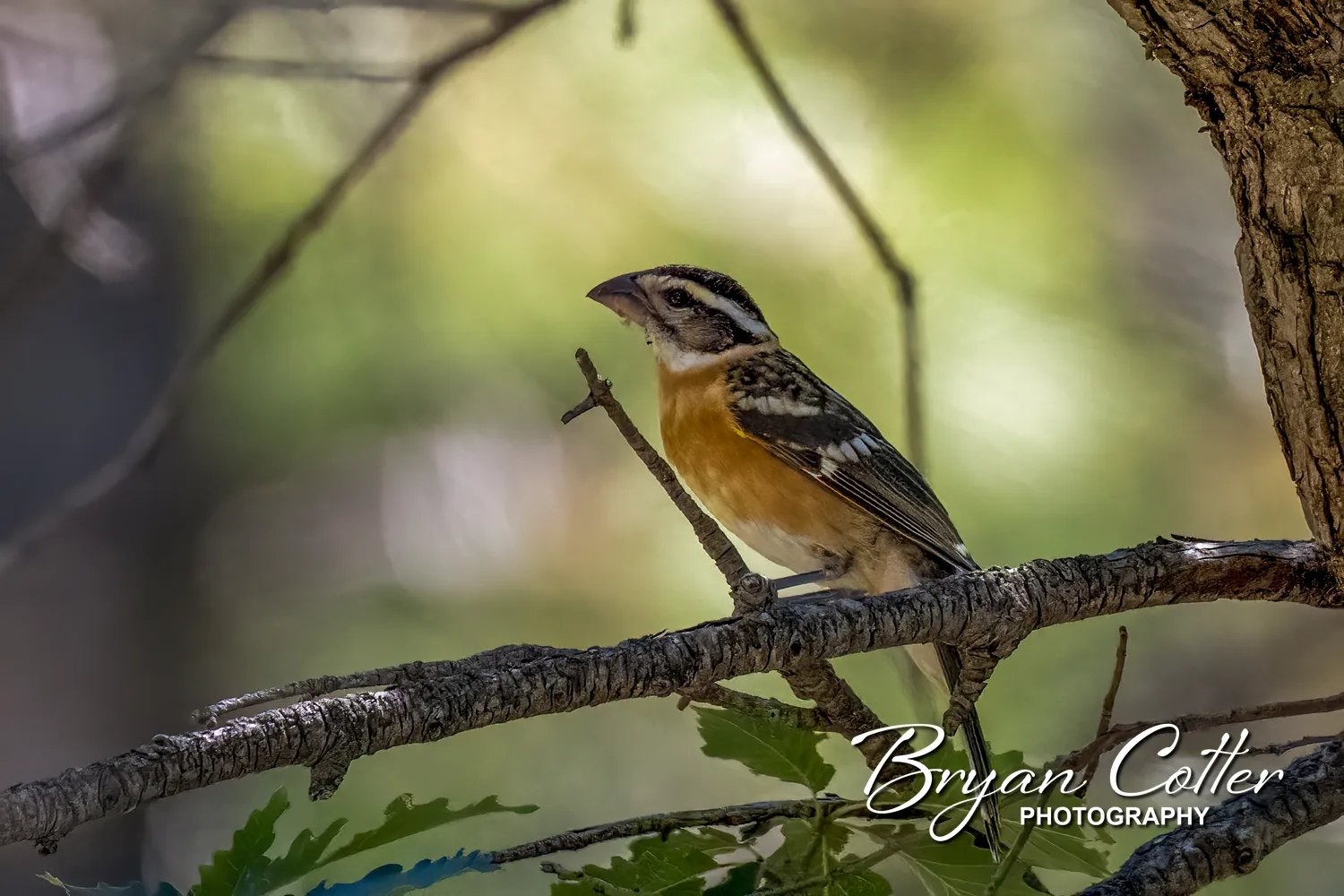
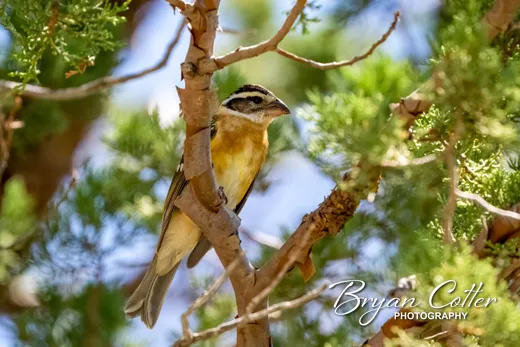
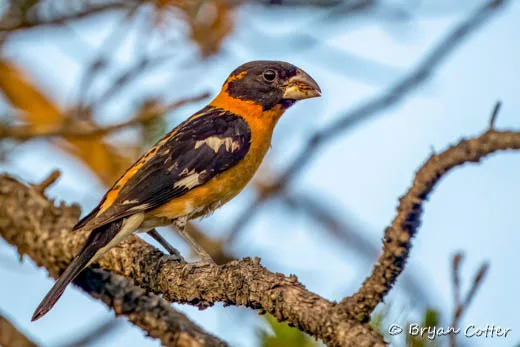
A robust, richly colored songbird of the West, the male Black-headed Grosbeak is warm burnt-orange and cinnamon with a black head, black-and-white wings, and a massive pale, conical bill built for cracking seeds. The female is a streaky brown with a bold face pattern and a warm wash below. Both sing a rich, rolling warble often likened to a robin in a hurry.
Black-headed Grosbeaks forage in trees and shrubs for seeds, insects, and fruit, and that powerful bill even lets them eat monarch butterflies that most birds avoid. They readily visit feeders for sunflower seeds.
In Texas they are warm-season birds of the western mountains and a migrant elsewhere, breeding in the wooded canyons of the Trans-Pecos and passing through the west in spring and fall.
A note from behind the lens: feeders and fruiting trees at a mountain lodge are reliable spots. Prefocus on a favored perch near the food source, wait for a male to pause with that big bill and orange breast in the open, and let soft canyon light do the rest.
Join one of my guided birding tours! Fine art prints of my photos are also available.
© 2026 Bryan Cotter Photography privacy policy terms of use site by cotter designs