Chuck-will's-widow
Antrostomus carolinensis


About the Chuck-will's-widow
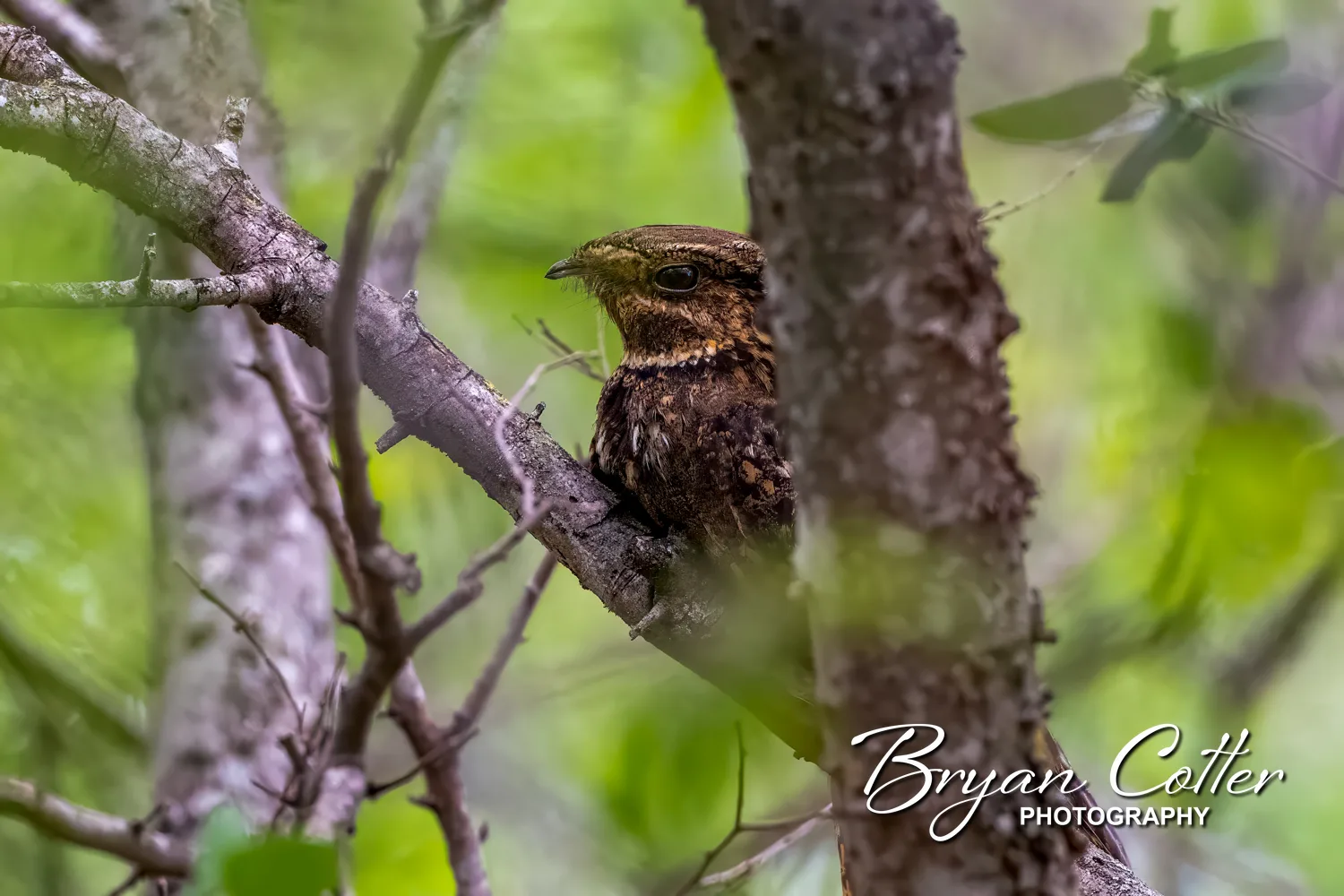
Chuck-will's-widow is the largest nightjar in North America and one of the most heard and least seen birds in Central Texas. On spring nights its loud, rolling call, chuck-WILL-WID-ow, repeats for hours from the edge of the woods.
By day it sleeps on a branch or on the leaf litter, and its mottled brown, rust, and gray plumage makes it nearly invisible. It has a huge gape fringed with bristles and can swallow large moths whole. Records of it eating small birds are real, if rare.
Nightjars have declined across the East, and this species is now listed as Near Threatened. These photographs come from Hornsby Bend in Austin and the Cedar Park Practice Fields in Williamson County during spring migration.
Join one of my guided birding tours! Fine art prints of my photos are also available.
© 2026 Bryan Cotter Photography privacy policy terms of use site by cotter designs