Chestnut-collared Longspur
Calcarius ornatus


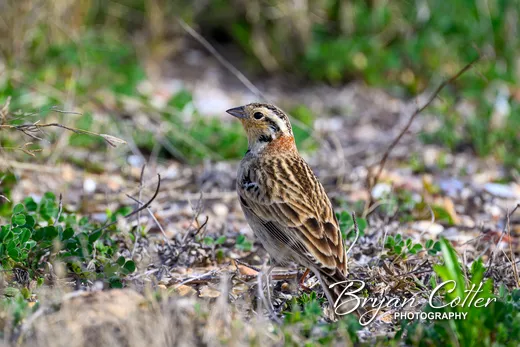
About the Chestnut-collared Longspur
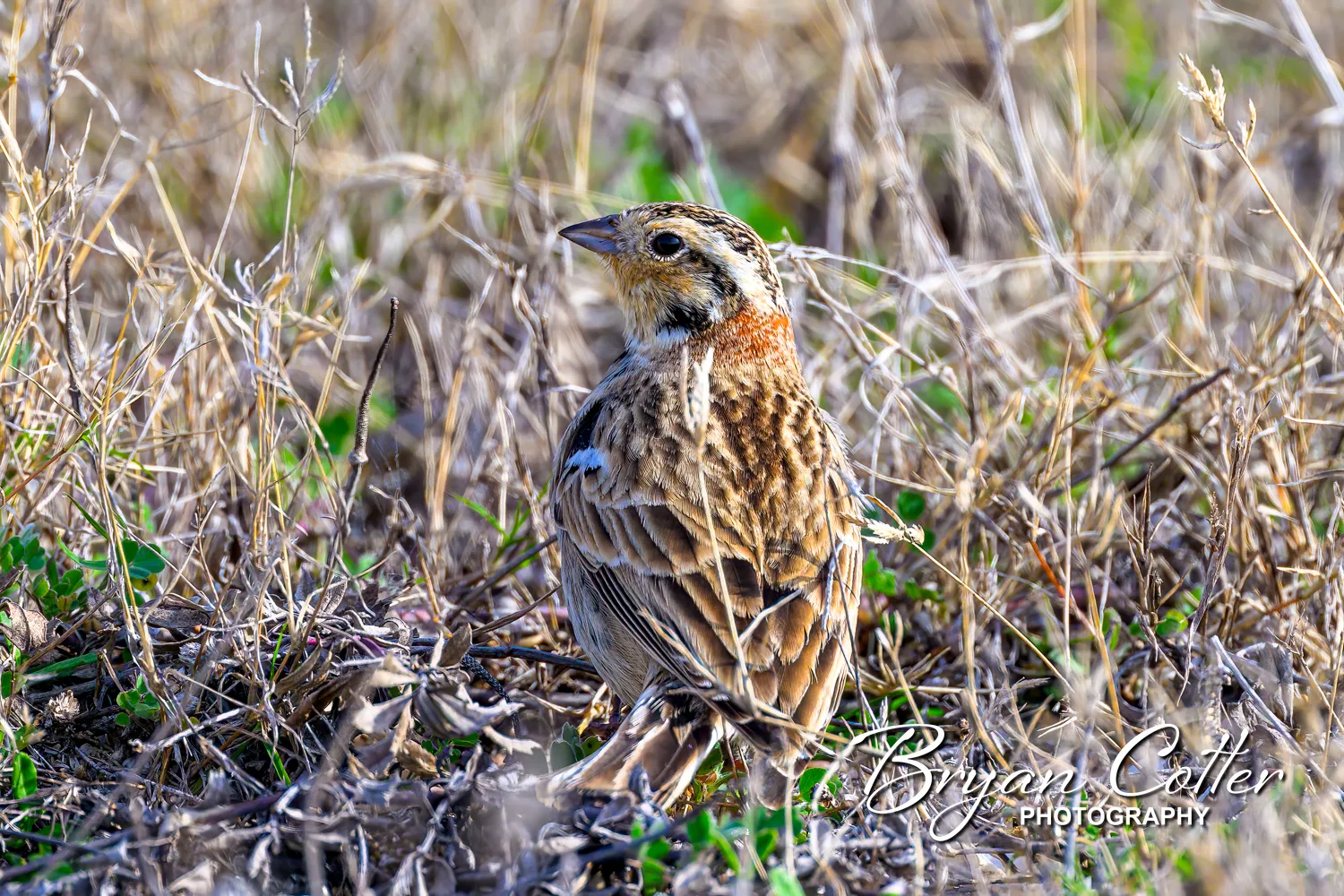
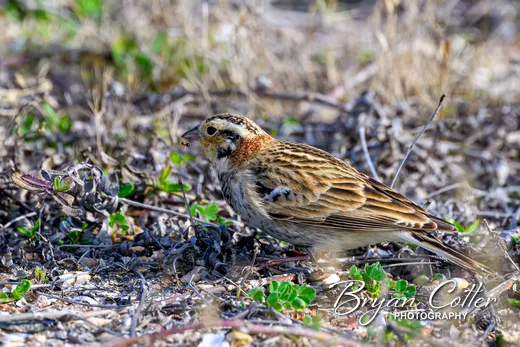
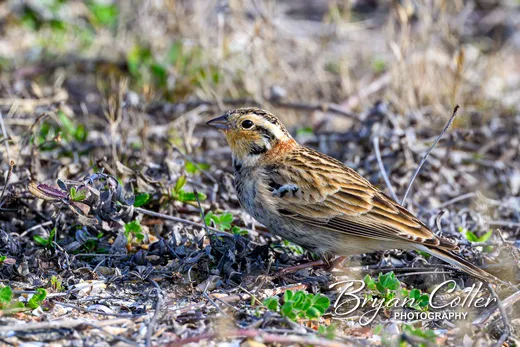
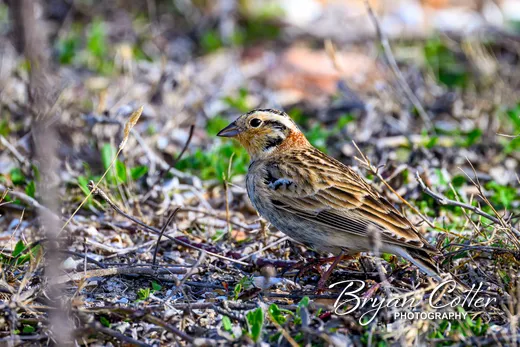
In breeding plumage the Chestnut-collared Longspur is a showstopper, with a black belly, a yellow face, and the rich chestnut nape that gives it its name. Texas birders mostly know the winter version: a small, sandy bird that hunkers in the short grass and flushes with a soft rattling call.
Longspurs love bare ground. Overgrazed pasture, plowed edges, and dry lakebeds are perfect, and when Lake Travis drops the exposed flats can hold a winter flock. The best field mark in flight is the tail, which is mostly white with a dark triangle at the tip.
This species has lost much of its native prairie and its population has fallen steeply, so it is now listed as Vulnerable. These photographs come from the exposed lakebed at Bob Wentz Windy Point Park on Lake Travis in February 2024.
Join one of my guided birding tours! Fine art prints of my photos are also available.
© 2026 Bryan Cotter Photography privacy policy terms of use site by cotter designs