Grasshopper Sparrow
Ammodramus savannarum
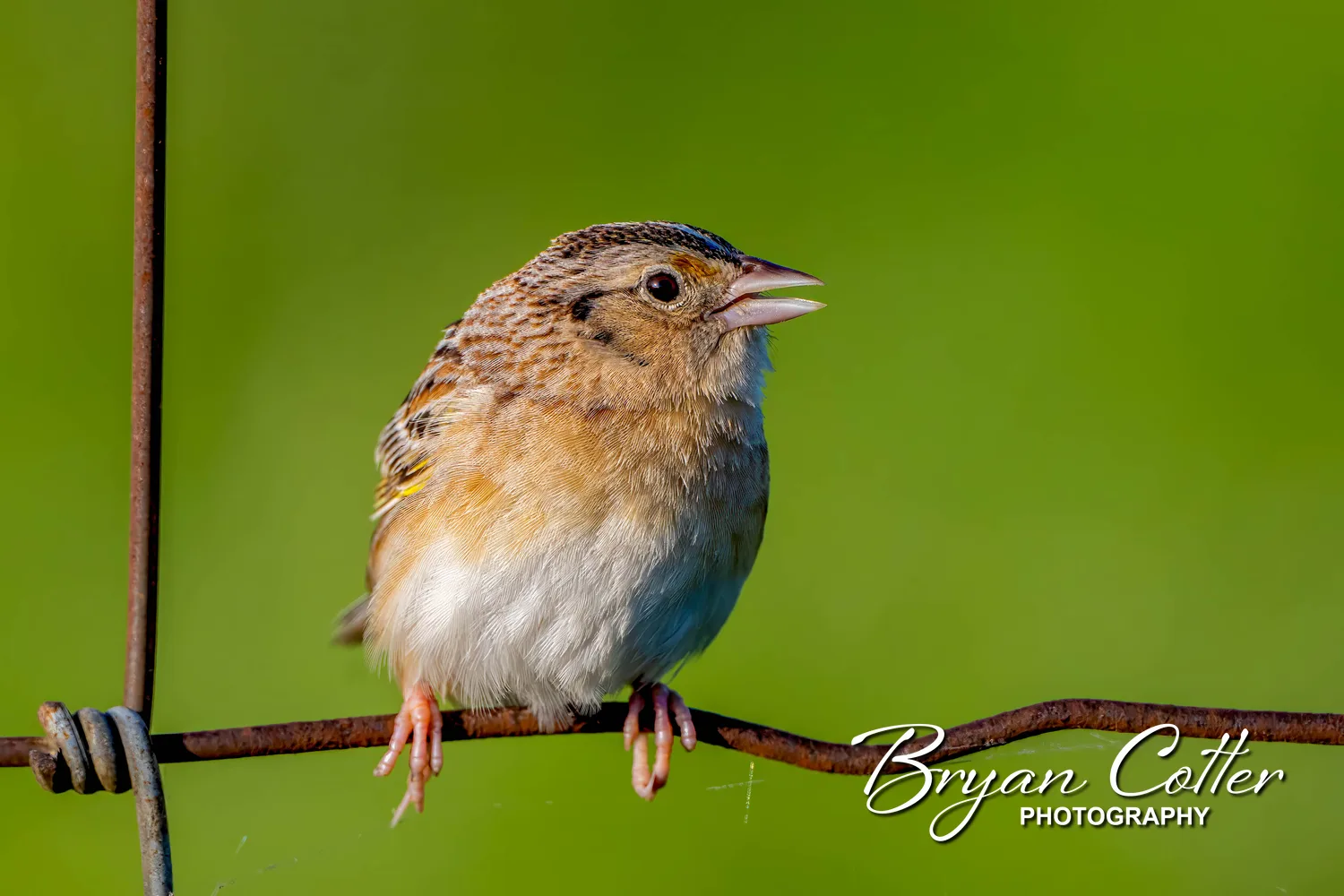
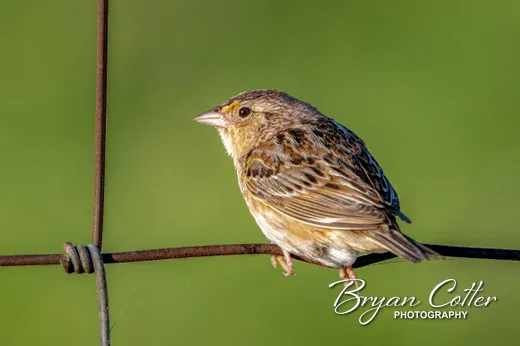
About the Grasshopper Sparrow
The Grasshopper Sparrow is named twice over: it eats grasshoppers by the hundreds, and its song IS a grasshopper -- a thin, dry insect buzz delivered from a weed stem, so convincing that most people walk past without registering a bird at all. Learning that buzz instantly adds a species to every summer pasture you drive by.
Seen well, it is a subtle beauty: a flat-headed, short-tailed little sparrow with an unstreaked buffy breast, a pale central crown stripe, and a spot of yellow-orange at the bend of the wing. "Seen well" is the catch -- they run through the grass like mice and flush only as a last resort, dropping back in within yards.
Grasshopper Sparrows live and die with native grassland, and their numbers have fallen steeply across the continent as prairie disappears -- another quiet argument for every unmown Texas field.
These photos come from a May 10, 2026 morning in Williamson County grassland, where a singing male finally chose a stem tall enough to clear the grass heads. That is the entire strategy: find the buzz, find the stem, and wait for the singer to climb to his stage.
Join one of my guided birding tours! Fine art prints of my photos are also available.
© 2026 Bryan Cotter Photography privacy policy terms of use site by cotter designs