Eared Grebe
Podiceps nigricollis





About the Eared Grebe
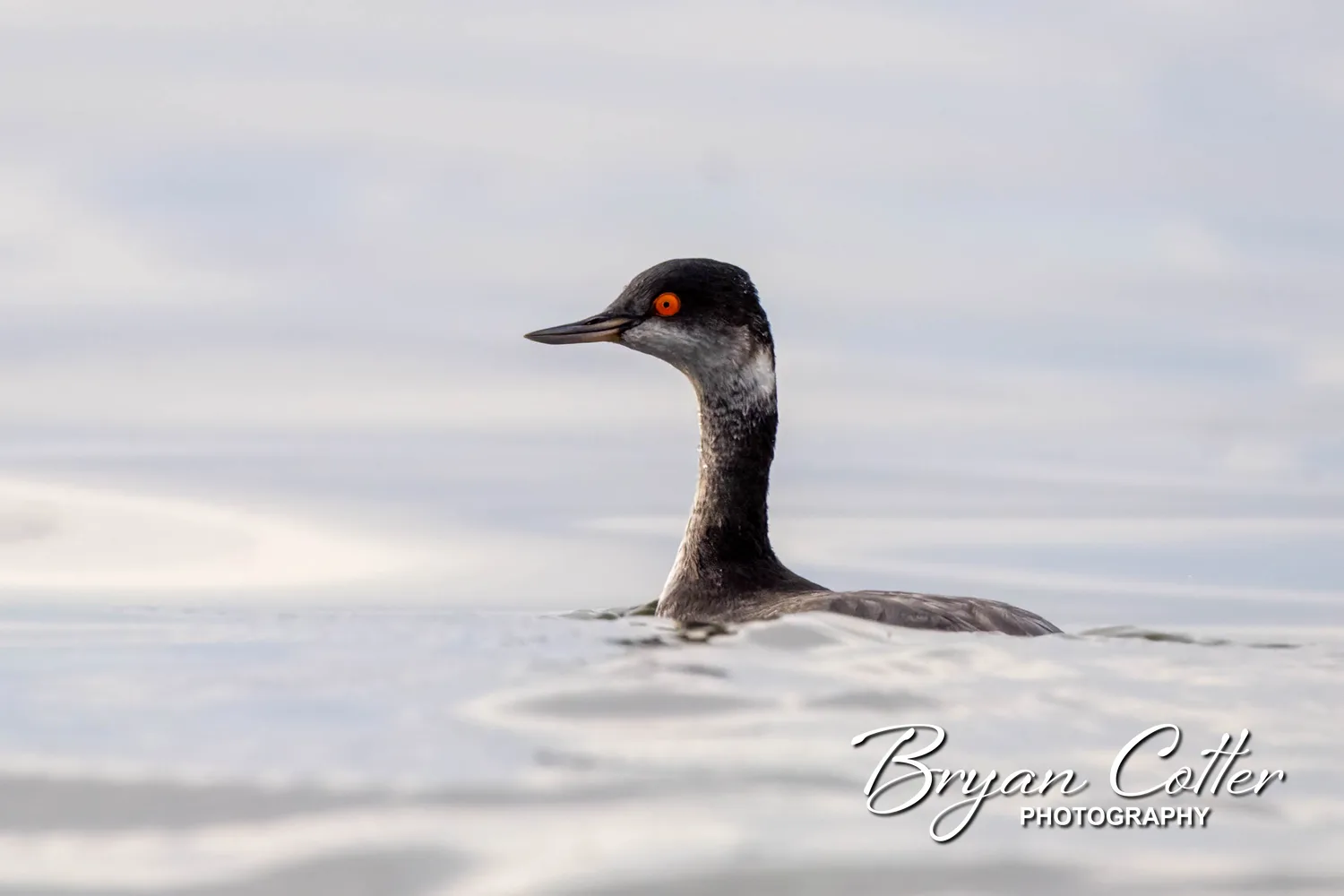
The Eared Grebe is a small diving bird with a big secret: it is the most abundant grebe on Earth, yet most Texans have never knowingly seen one. In winter dress it is a trim gray-and-white diver with a peaked crown, a thin dark bill, and a ruby-red eye that glows when the light hits right; breeding birds add golden ear fans against black.
Its life story is stranger than fiction. After nesting, virtually the entire North American population funnels to a couple of hypersaline lakes -- Mono Lake and the Great Salt Lake -- where the birds double their weight on brine shrimp, shrink their flight muscles until they are temporarily flightless, then rebuild themselves for a nonstop flight to wintering waters. An Eared Grebe spends up to nine months of the year unable to fly, the longest flightless period of any flying bird.
Central Texas reservoirs host modest winter numbers. My photos include birds from Lake Buchanan in January 2026 and a spring bird at Hornsby Bend in April 2024, molting toward its golden ears.
Grebes sink rather than flush, so a quiet drift pays off: cut the motor up-drift, let the boat slide, and the red eye comes up closer each dive.
Join one of my guided birding tours! Fine art prints of my photos are also available.
© 2026 Bryan Cotter Photography privacy policy terms of use site by cotter designs