Bumblebee
Bombus sp.
About the Bumblebee
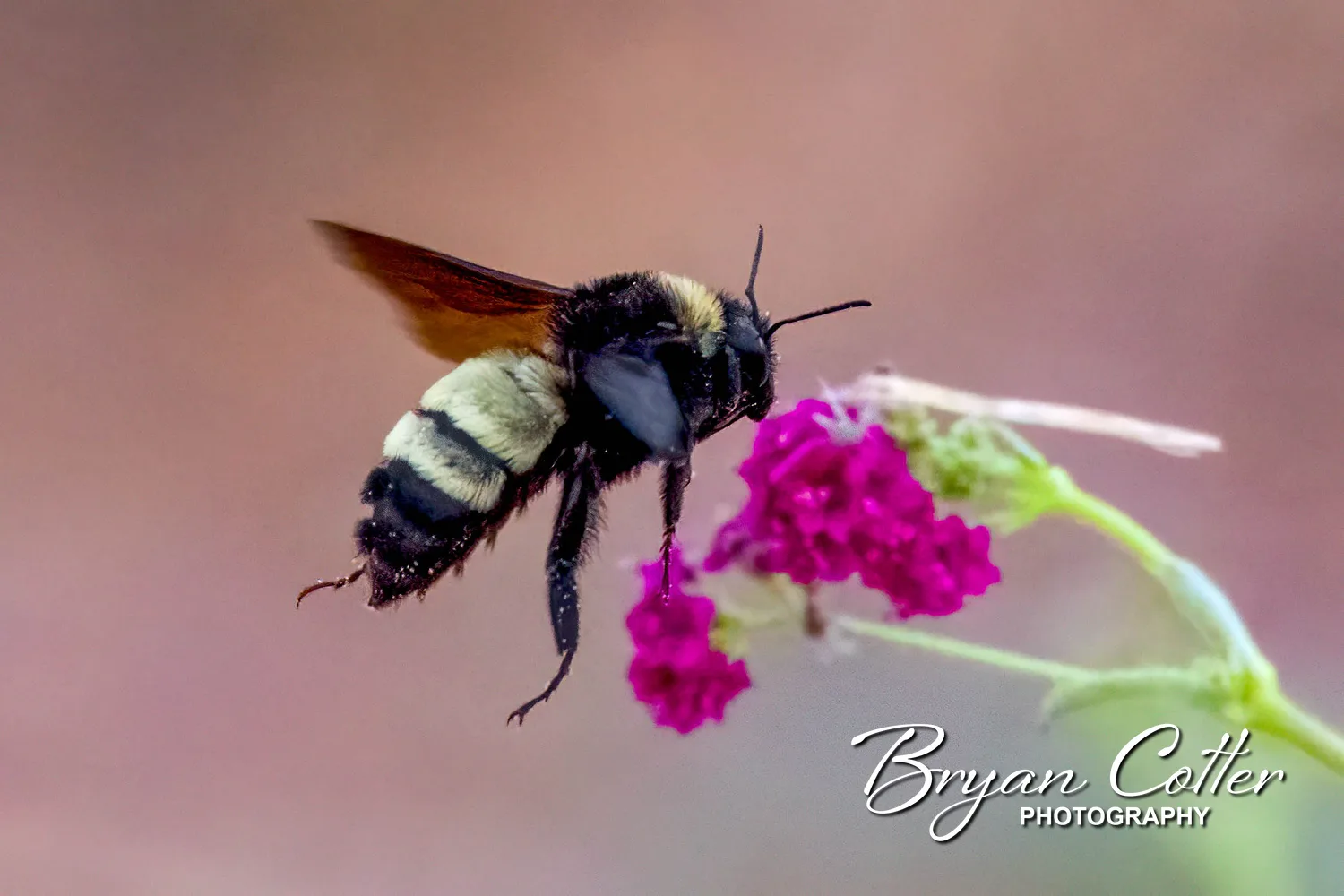
The bumblebee needs no introduction, but it repays a closer look. That furry coat is working equipment -- a bumblebee can shiver its flight muscles to warm up and fly in weather that grounds honey bees, which is why the first bee of a cold morning and the last one at dusk is usually a bumble.
Bumblebees are also the masters of buzz pollination: they grab a flower and vibrate at just the right frequency to shake pollen loose, a service honey bees cannot perform. Tomatoes, peppers, and a long list of Texas wildflowers depend on it. Colonies are small and annual -- a single overwintered queen starts each spring nest in an old rodent burrow or grass clump, and only new queens survive to the next year.
Texas hosts several bumblebee species, with the American Bumble Bee the classic big one of open country -- and, like many bumbles, it has declined sharply across its range, making every busy flower patch worth appreciating.
This one was photographed on September 12, 2026, working flowers in the early-fall bloom. Shoot bumblebees on cool mornings when they move slowly -- by mid-day they are a furry blur.
Join one of my guided birding tours! Fine art prints of my photos are also available.
© 2026 Bryan Cotter Photography privacy policy terms of use site by cotter designs