Inca Dove
Columbina inca
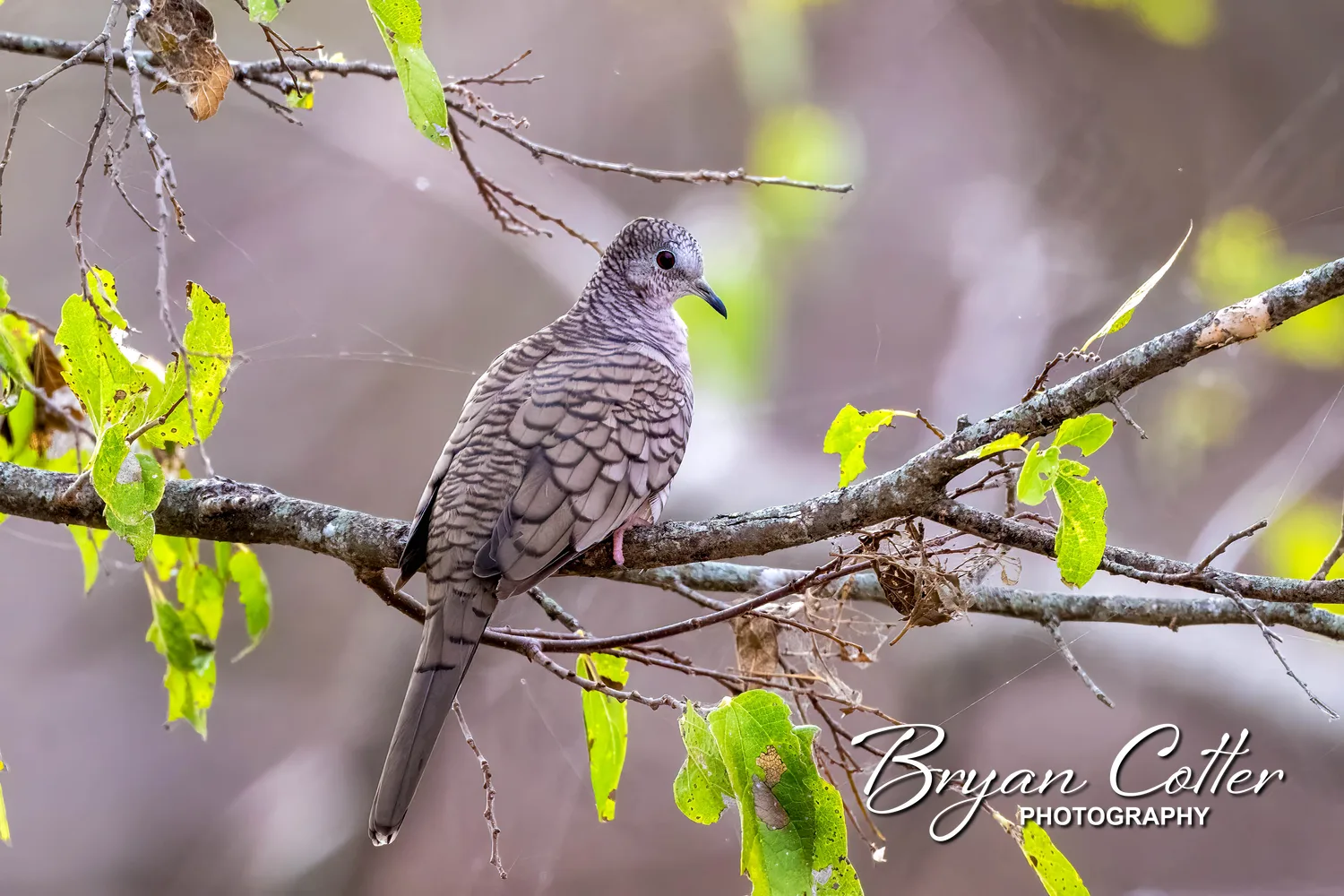
About the Inca Dove
The Inca Dove is a small, slender, long-tailed dove covered in a fine pattern of dark-edged feathers that makes it look scaly, as if it were wearing chain mail. It is pale gray-brown overall, with a pinkish wash on the breast in males. In flight it flashes rich chestnut in the wings and white edges on the long, narrow tail, and the wings make a dry rattling sound on take-off.
Despite the name, the Inca Dove has no connection to Peru. It ranges from the southwestern United States through Mexico to Costa Rica, and over the last century it has spread north and east through Texas, following towns, irrigation, and bird feeders. Today it is a common year-round resident across most of the state, usually seen in pairs or small groups feeding quietly on the ground in yards, parks, and farm lots.
The song is a soft, two-note coo that many people hear as "no hope," repeated patiently from a wire or branch. On cold winter nights Inca Doves huddle together for warmth, sometimes stacking two or three rows high in a small pyramid. Pairs build flimsy twig nests in shrubs and trees and can raise several broods a year in the long Texas warm season.
This bird was photographed at Hornsby Bend in Travis County on September 12, 2026.
Join one of my guided birding tours! Fine art prints of my photos are also available.
© 2026 Bryan Cotter Photography privacy policy terms of use site by cotter designs