Red-footed Cannibalfly
Promachus rufipes
About the Red-footed Cannibalfly
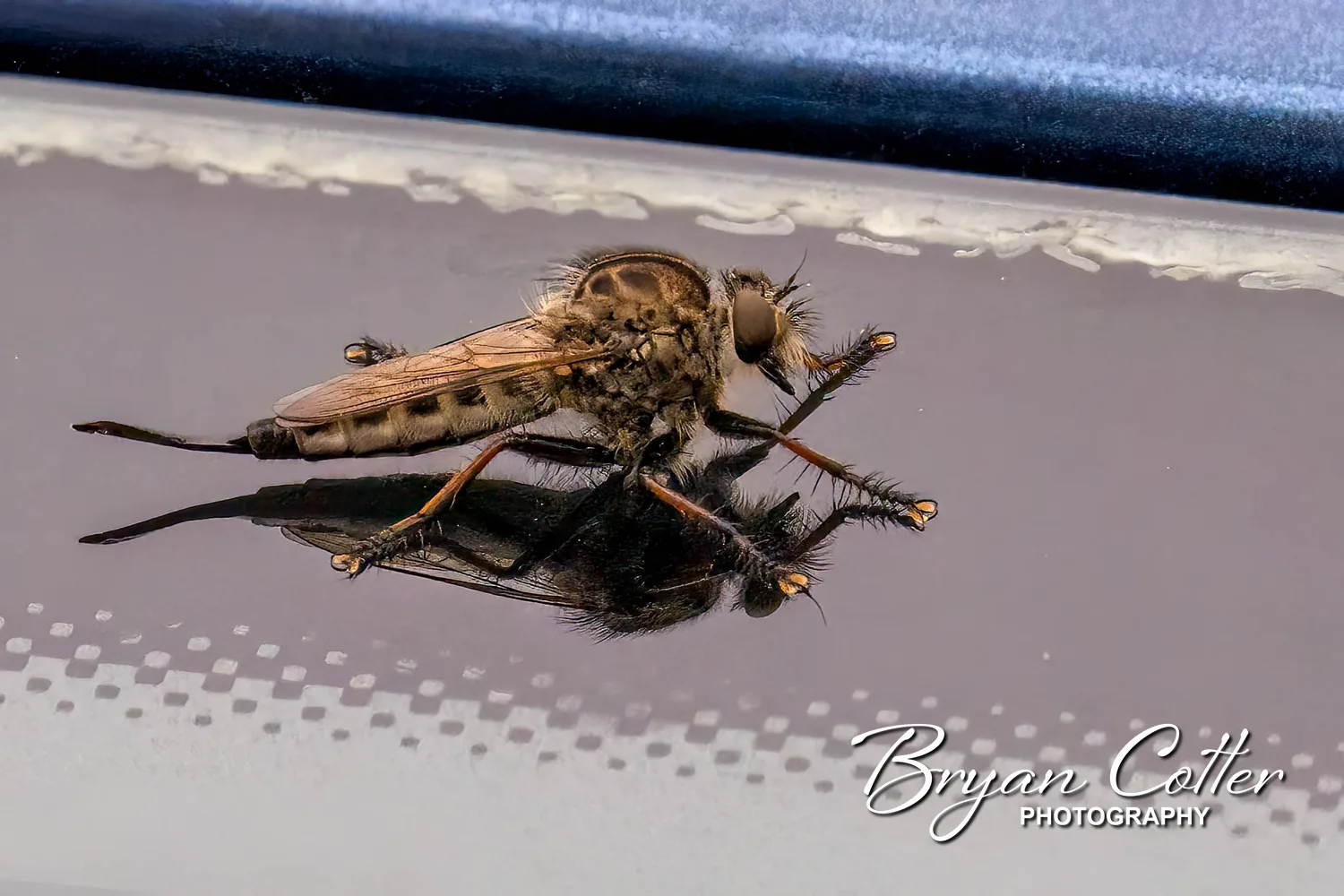
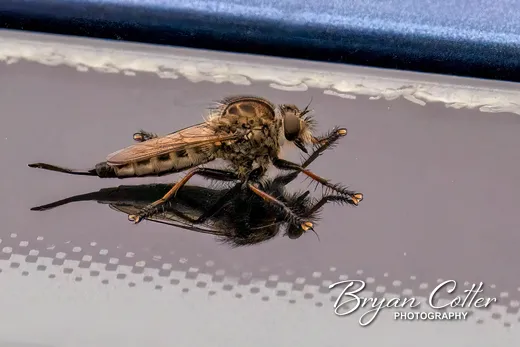
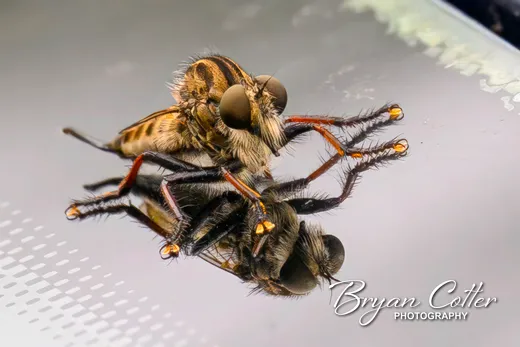
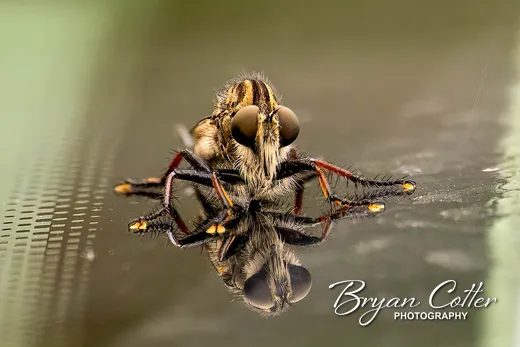
The Red-footed Cannibalfly is one of the giant robber flies of the genus Promachus, large, hairy predators that take prey as big as honey bees, wasps, dragonflies, and cicadas. It has a brownish-gray thorax with darker stripes, a banded gray and dark abdomen, and a dense pale beard of bristles over the face. The name comes from the legs, which are black with bright reddish-orange shins. That leg color is the best clue for separating it from other large Promachus robber flies in Texas.
Cannibalflies hunt from sunny perches on twigs, grass stems, and fence rails at the edges of fields, woods, and shorelines. They launch at passing insects, snatch them in flight with their long spiny legs, and stab them with a short, stout beak. The saliva paralyzes the prey and liquefies its tissues, and the fly returns to a perch to feed, often holding a meal nearly as large as itself. As the name suggests, they will also catch and eat other robber flies.
Adults are active in summer. Females lay their eggs in grasses and on low plants, and the larvae drop to the soil, where they develop by preying on the larvae of beetles and other insects.
These photos were taken at Windy Point Park on Lake Travis in Travis County on May 20, 2023. Identification is from photographs.
Join one of my guided birding tours! Fine art prints of my photos are also available.
© 2026 Bryan Cotter Photography privacy policy terms of use site by cotter designs