Rock Pigeon
Columba livia

About the Rock Pigeon
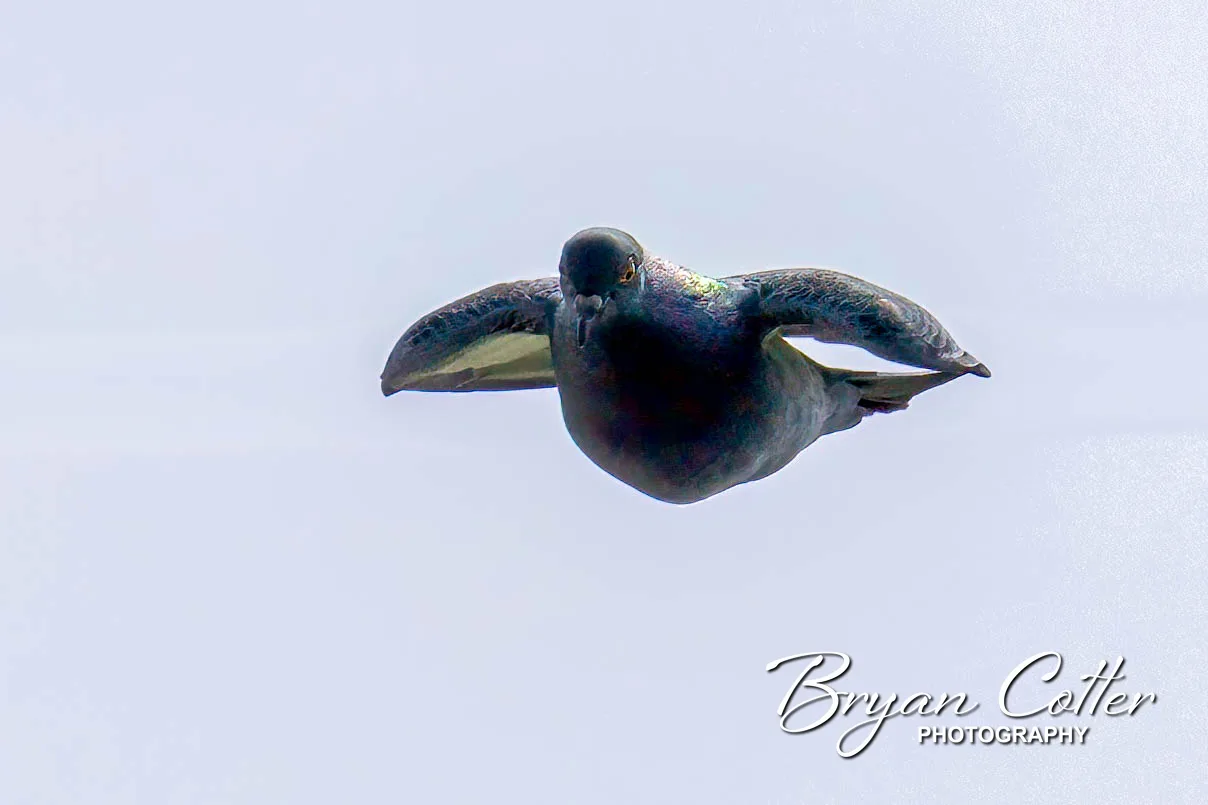
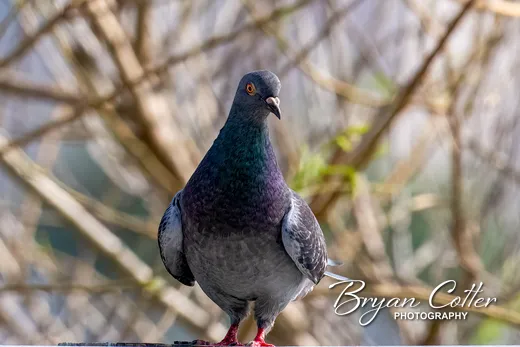
The Rock Pigeon is the familiar pigeon of city streets, but its wild ancestors lived on sea cliffs and rocky gorges in Europe, North Africa, and western Asia. The wild-type bird is blue-gray with two black bars across each wing, a white rump, and an iridescent green and purple sheen on the neck. Centuries of domestication have produced endless variations, so feral flocks mix checkered, rusty red, white, and nearly black birds.
People domesticated the species thousands of years ago for food and for carrying messages, and European settlers brought it to North America in the early 1600s. Escaped birds found that buildings, bridges, and grain elevators make fine substitutes for cliffs, and today the species lives in nearly every town in Texas. Pigeons are strong, fast fliers with a remarkable homing ability.
Pairs build simple nests on ledges and in sheltered spots and can breed in any month. Both parents feed the young "crop milk," a rich secretion produced in the throat, a trait pigeons share with only a few other bird groups. Rock Pigeons also have an important place in science, from studies of navigation to Charles Darwin's work on variation.
These photos were taken on South Padre Island in Cameron County on November 23, 2022.
Join one of my guided birding tours! Fine art prints of my photos are also available.
© 2026 Bryan Cotter Photography privacy policy terms of use site by cotter designs