Blue Grosbeak
Passerina caerulea


About the Blue Grosbeak
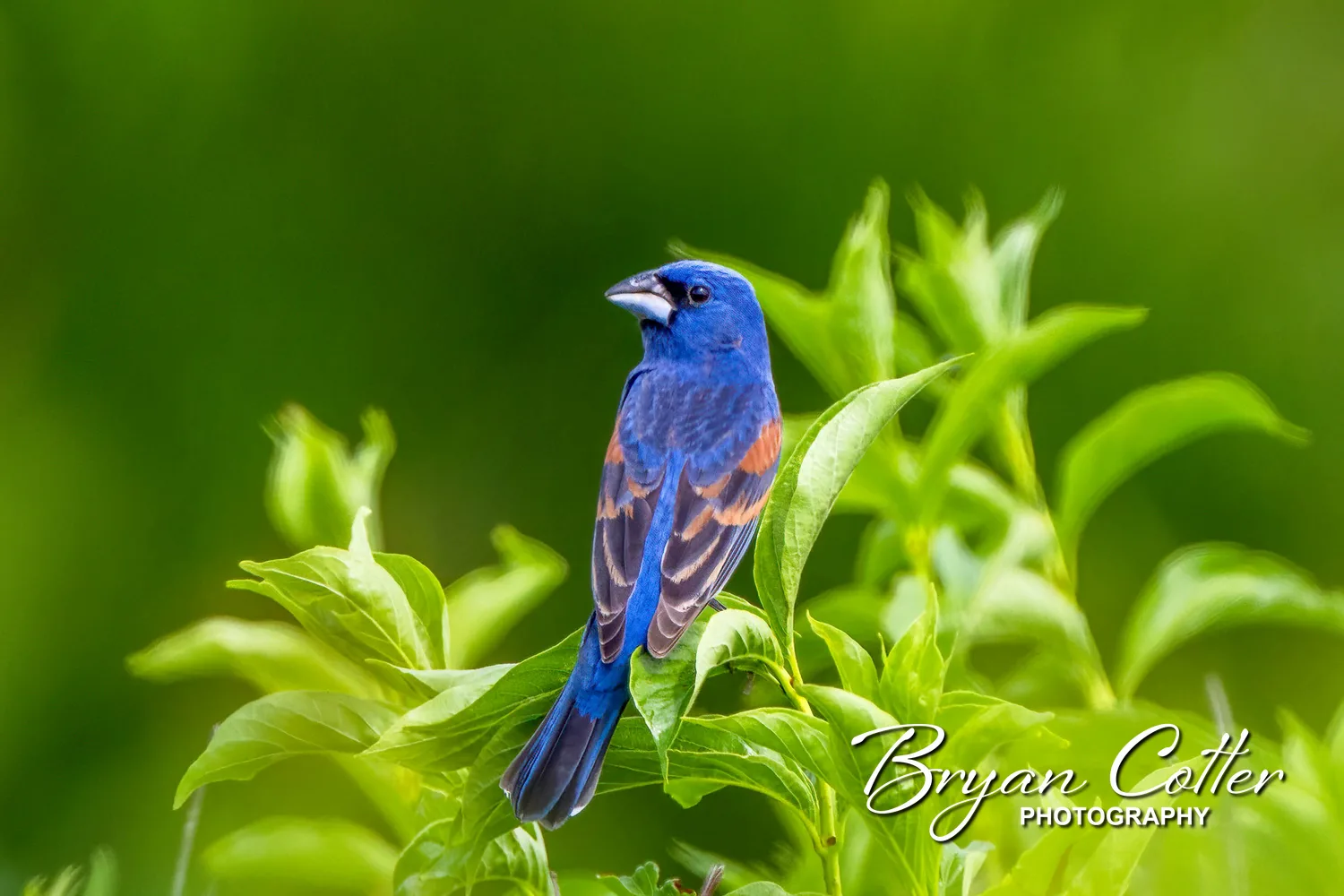
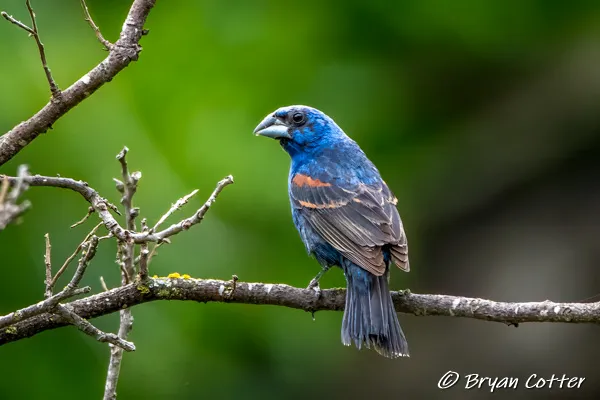
The male Blue Grosbeak is a deep, saturated blue with two rusty wing-bars and a heavy silver bill built for cracking seeds; in poor light he can look nearly black until the sun catches that rich cobalt. Females are a warm cinnamon-brown. Slightly larger and chunkier than the related Indigo Bunting, he often twitches and spreads his tail as he perches.
Blue Grosbeaks favor brushy, overgrown country - weedy fields, fencerows, roadside tangles, and the edges of woods - where they feed on insects and seeds and the male sings a rich, warbling song from an exposed perch.
In Texas they are warm-season breeders found nearly statewide, arriving in spring to shrubby open habitats and slipping south again by fall.
A note from behind the lens: look for singing males on the top wire of a fence or a bare snag above the brush. Early and late light turns that deep blue luminous - midday sun tends to flatten it - so work the golden hours and get low for a clean, brushy background.
Join one of my guided birding tours! Fine art prints of my photos are also available.
© 2026 Bryan Cotter Photography privacy policy terms of use site by cotter designs