Pectoral Sandpiper
Calidris melanotos
About the Pectoral Sandpiper
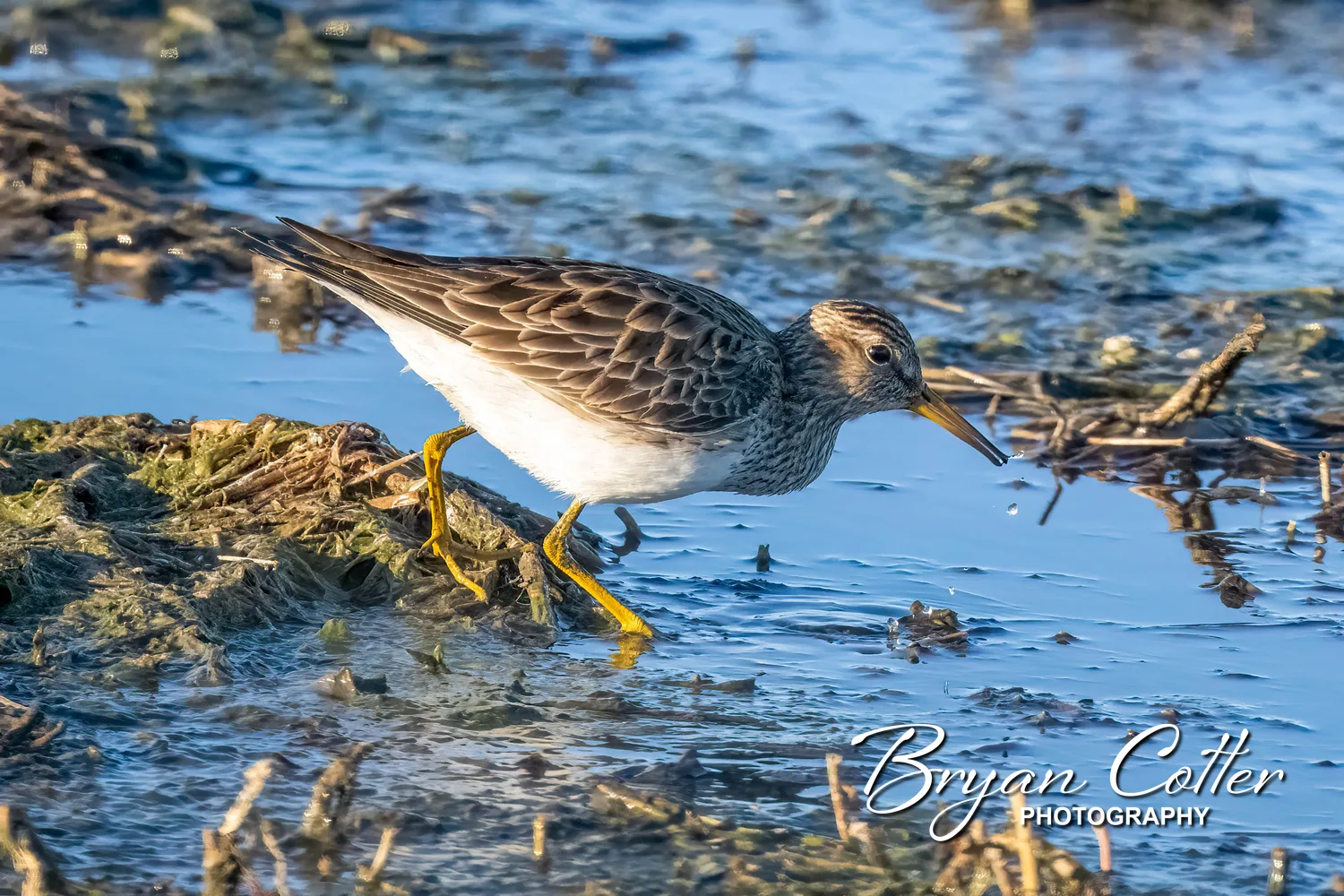
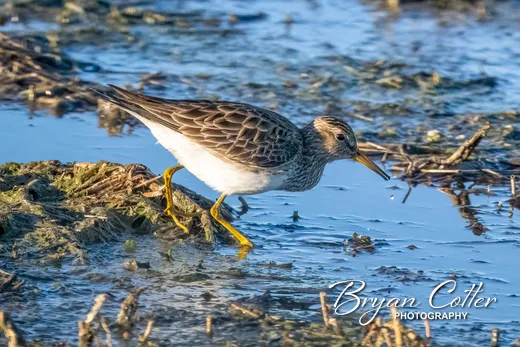
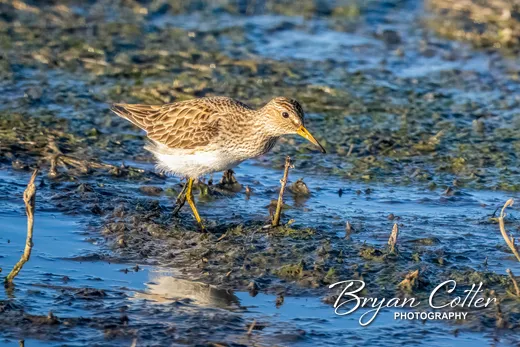
The Pectoral Sandpiper is a medium-sized, brown sandpiper named for the feature that identifies it best: a heavily streaked breast that ends in a sharp, clean line against the white belly, as if the bird were wearing a bib. It has yellowish legs, a slightly drooping bill with a pale base, and a warm, scaly brown back. Males are noticeably larger than females.
"Pecs" favor wet grass more than open mud, and they often feed along the vegetated edge of a pond or in flooded fields, where their brown plumage blends in until they flush with a low, reedy "prrrt." They are long-distance travelers, breeding on Arctic tundra from Siberia to Canada and wintering in southern South America.
On the breeding grounds, males inflate a pouch of air sacs on the breast and give a deep, hooting display call while flying low over the tundra. A single male may mate with several females and then leave; the female raises the chicks alone.
In Texas the Pectoral Sandpiper is a common migrant, especially inland, where it can be abundant in wet fields and sewage ponds in spring and again from late summer into fall. These photos were taken at Hornsby Bend in Travis County on March 9, 2025, an early date for the spring flight.
Join one of my guided birding tours! Fine art prints of my photos are also available.
© 2026 Bryan Cotter Photography privacy policy terms of use site by cotter designs