Gulf Coast Toad
Incilius nebulifer
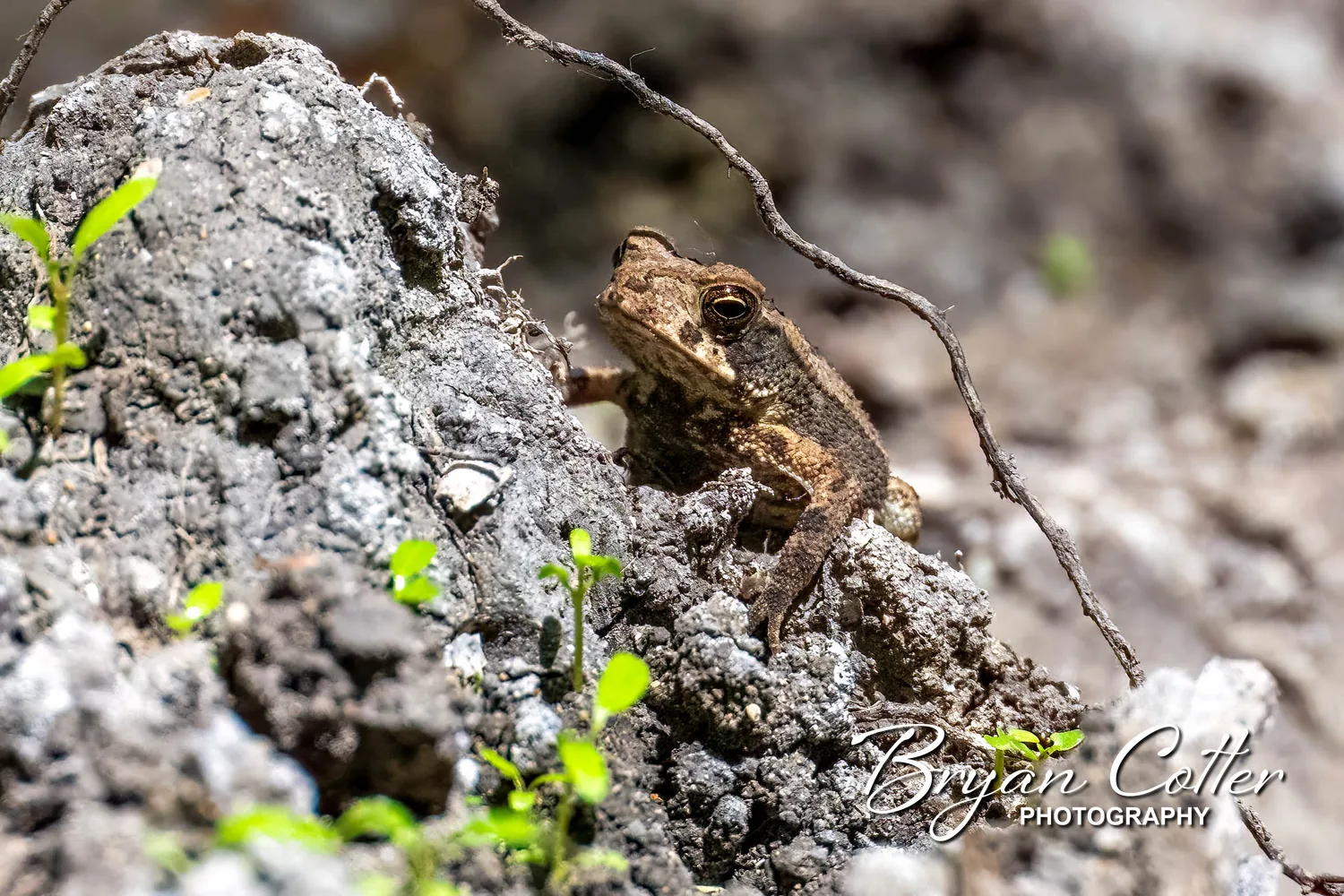
About the Gulf Coast Toad
The Gulf Coast Toad is the common toad of much of eastern and southern Texas. It is brown to gray, often with a pale stripe down the middle of the back and dark mottling along the sides, and its skin is covered in warts. The best field mark is on the head: a pair of high, bony ridges runs back from between the eyes and forms a deep "V" or trough shape, much more pronounced than on other Texas toads.
Despite the name, the species is not limited to the coast. It ranges across East, Central, and South Texas and into Louisiana and Mexico, and it has adapted well to towns, where it is often found hunting beneath porch lights and streetlights at night. By day it hides under boards, leaf litter, or in shallow burrows.
Gulf Coast Toads breed after warm rains, gathering in ditches, flooded fields, and temporary pools. The male's call is a short, dry trill, repeated over and over. Females lay long strings of eggs that hatch within days, and the tadpoles transform quickly, before their pools dry out. Like other toads, adults have glands behind the eyes that produce a mild toxin, which discourages many predators.
This toad was photographed at the San Gabriel unit of Granger Lake in Williamson County on July 11, 2024.
Join one of my guided birding tours! Fine art prints of my photos are also available.
© 2026 Bryan Cotter Photography privacy policy terms of use site by cotter designs