Cave Swallow
Petrochelidon fulva
About the Cave Swallow
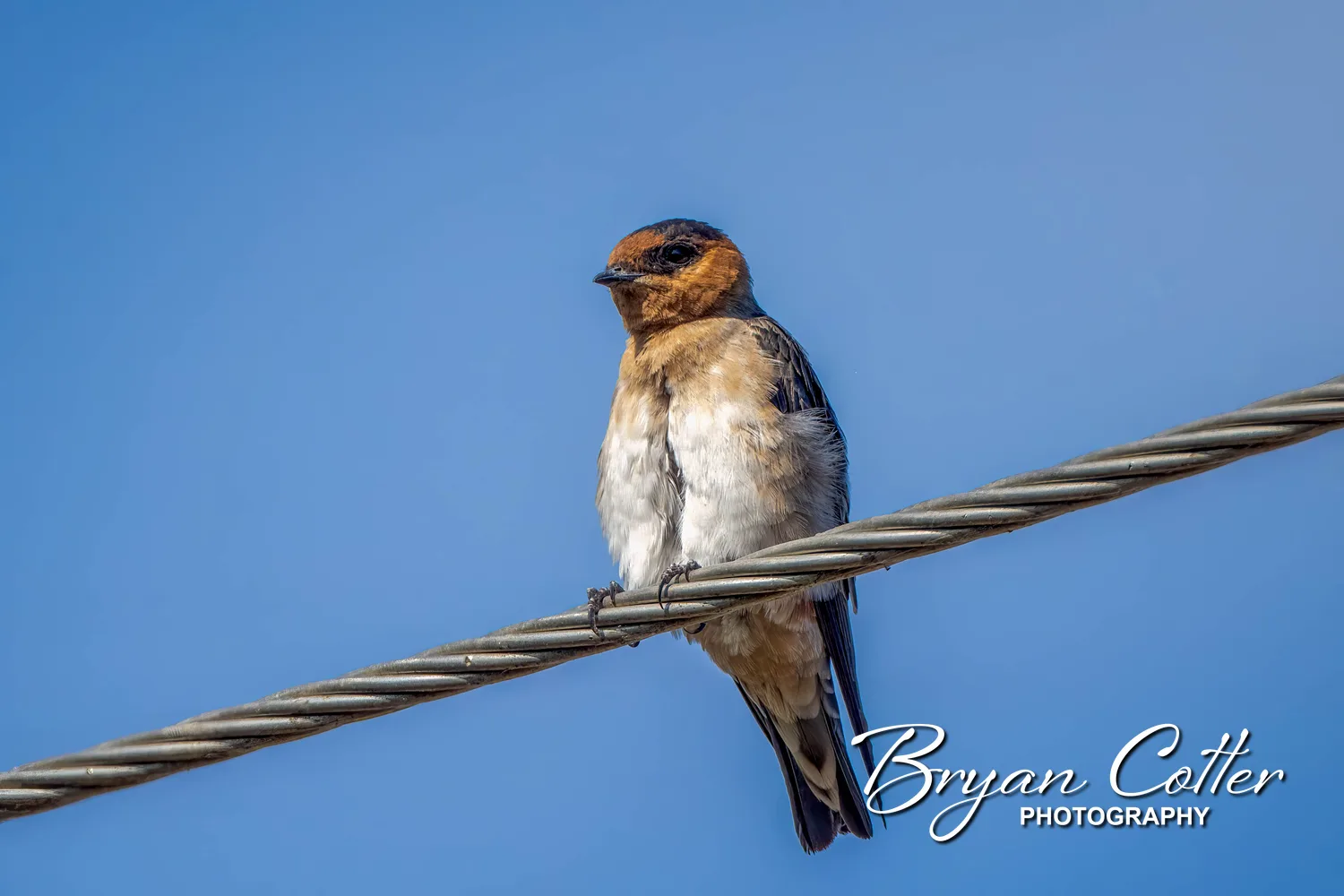
The Cave Swallow is a stocky, square-tailed swallow and a true Texas specialty. It looks much like the more widespread Cliff Swallow, with a dark blue-black back and a pale buffy rump, but the face pattern gives it away: a Cave Swallow has a pale, cinnamon-buff throat and cheeks with a dark cap, while a Cliff Swallow has a dark chestnut throat and a pale forehead patch.
As the name suggests, the species originally nested in limestone caves and sinkholes. Over the last century it has moved into bridges, highway culverts, and buildings, and that switch fueled a dramatic expansion across Texas and into neighboring states. Cave Swallows build cup-shaped mud nests, open at the top, stuck to a vertical wall or ceiling, and they often nest in colonies alongside Barn and Cliff Swallows.
Like all swallows, they feed on the wing, sweeping low over water, fields, and sewage ponds for flying insects. In Texas they are common from spring into fall, and small numbers now stay through the winter, especially in the southern half of the state. Fall stragglers sometimes wander far to the northeast, turning up along the Atlantic coast.
This bird was photographed at Hornsby Bend in Travis County on September 4, 2025, where Cave, Cliff, and Barn Swallows all feed together over the ponds.
Join one of my guided birding tours! Fine art prints of my photos are also available.
© 2026 Bryan Cotter Photography privacy policy terms of use site by cotter designs