Blue-fronted Dancer
Argia apicalis
About the Blue-fronted Dancer
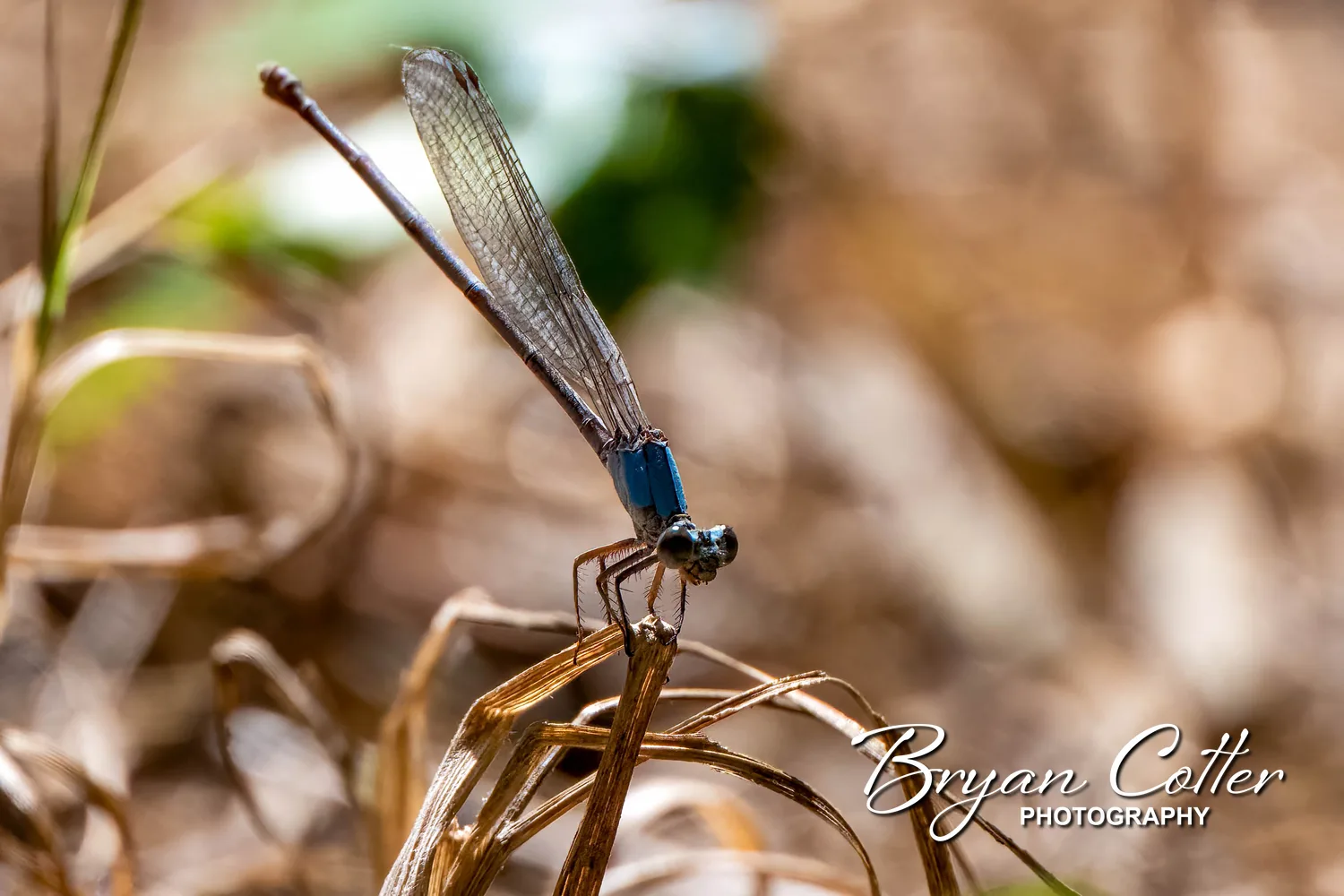
The Blue-fronted Dancer is a slender pond damselfly whose males are easy to pick out once you know the trick: the thorax is a clean powder blue, while most of the long abdomen is dark, ending in a bright blue tip. Females come in two forms, one brownish and one bluish, and both are plainer than the males. Like other dancers, it holds its wings closed over the back at rest and perches flat on the ground, on rocks, or on low stems.
The "dancer" name comes from the group's bouncy, stop-and-go flight. Rather than patrolling open water like a dragonfly, a dancer hops from perch to perch along the bank, darting out to snatch gnats and other tiny insects. Males guard short stretches of shoreline, and pairs are often seen in tandem, the male clasping the female behind the head while she lays eggs into floating plants or wet wood.
The larvae live underwater among roots and debris, hunting even smaller aquatic prey before crawling out to emerge as adults. Across most of Texas the species is common along slow rivers, creeks, and pond margins from spring well into fall.
This male was photographed at Hornsby Bend in Travis County on September 4, 2025, along the Colorado River edge where several dancer species can share the same stretch of bank.
Join one of my guided birding tours! Fine art prints of my photos are also available.
© 2026 Bryan Cotter Photography privacy policy terms of use site by cotter designs