Yellow-collared Scape Moth
Cisseps fulvicollis
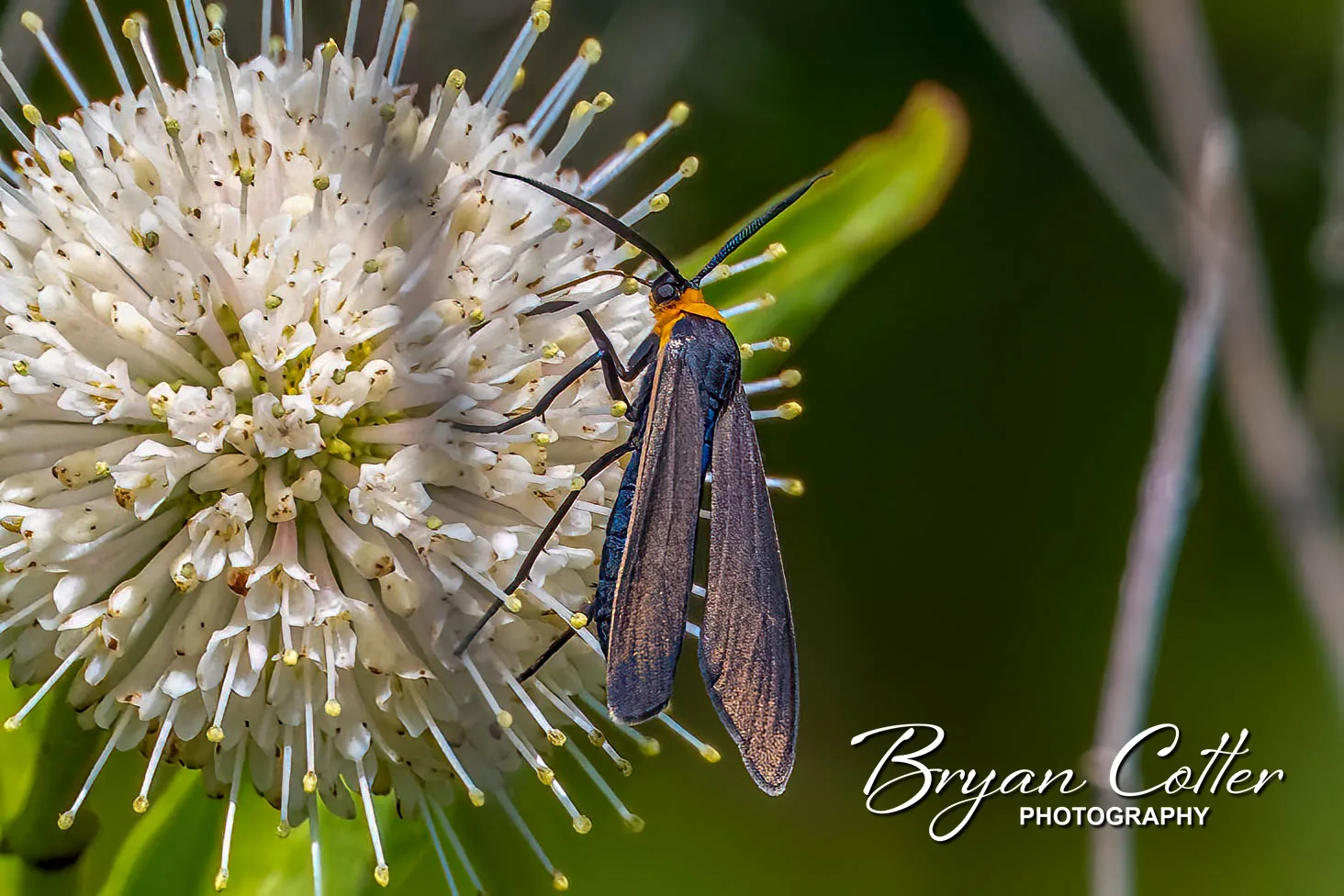
About the Yellow-collared Scape Moth
The Yellow-collared Scape Moth is a day-flying moth doing its best wasp impression. Sooty black wings and body, a bright orange-yellow collar behind the head, and a narrow-winged, deliberate flight all add up to a convincing costume -- predators that have learned to avoid wasps give it a free pass, and more than one birder has dismissed it as one too.
Despite the name, the collar runs more orange than yellow on most individuals. Look closely at the wings in good light and they show a thin translucent shine; this moth is related to the tiger moths, a family full of bold mimics and chemical defenses.
Adults are flower moths, nectaring in the open in broad daylight -- goldenrod, mistflower, and frostweed pull them in numbers during fall, and in Texas they will fly on any mild day, even midwinter. The caterpillars feed quietly on grasses and sedges, which is why field edges and unmown corners produce so many of them.
This one was nectaring in the open when I photographed it in January 2025. Day-flying moths are a gateway into macro work between birds: they sit still longer than butterflies, and the wasp mimics practically pose.
Join one of my guided birding tours! Fine art prints of my photos are also available.
© 2026 Bryan Cotter Photography camera gear privacy policy terms of use site by cotter designs