Short-eared Owl
Asio flammeus
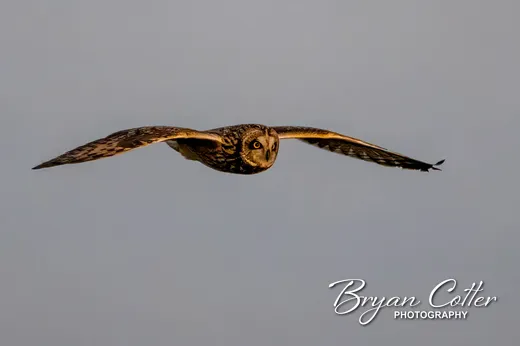
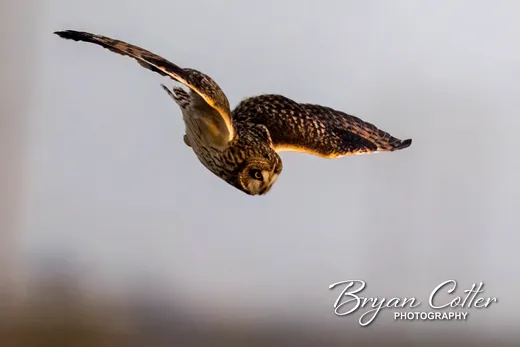
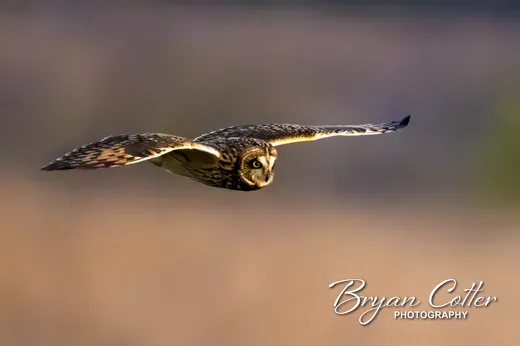
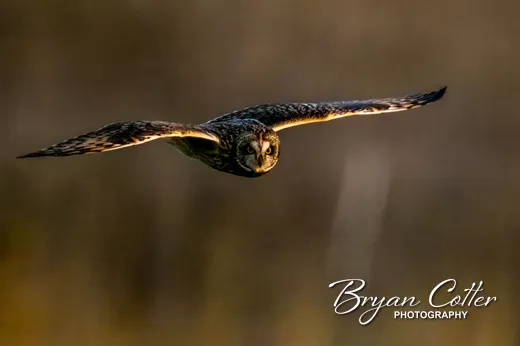


About the Short-eared Owl
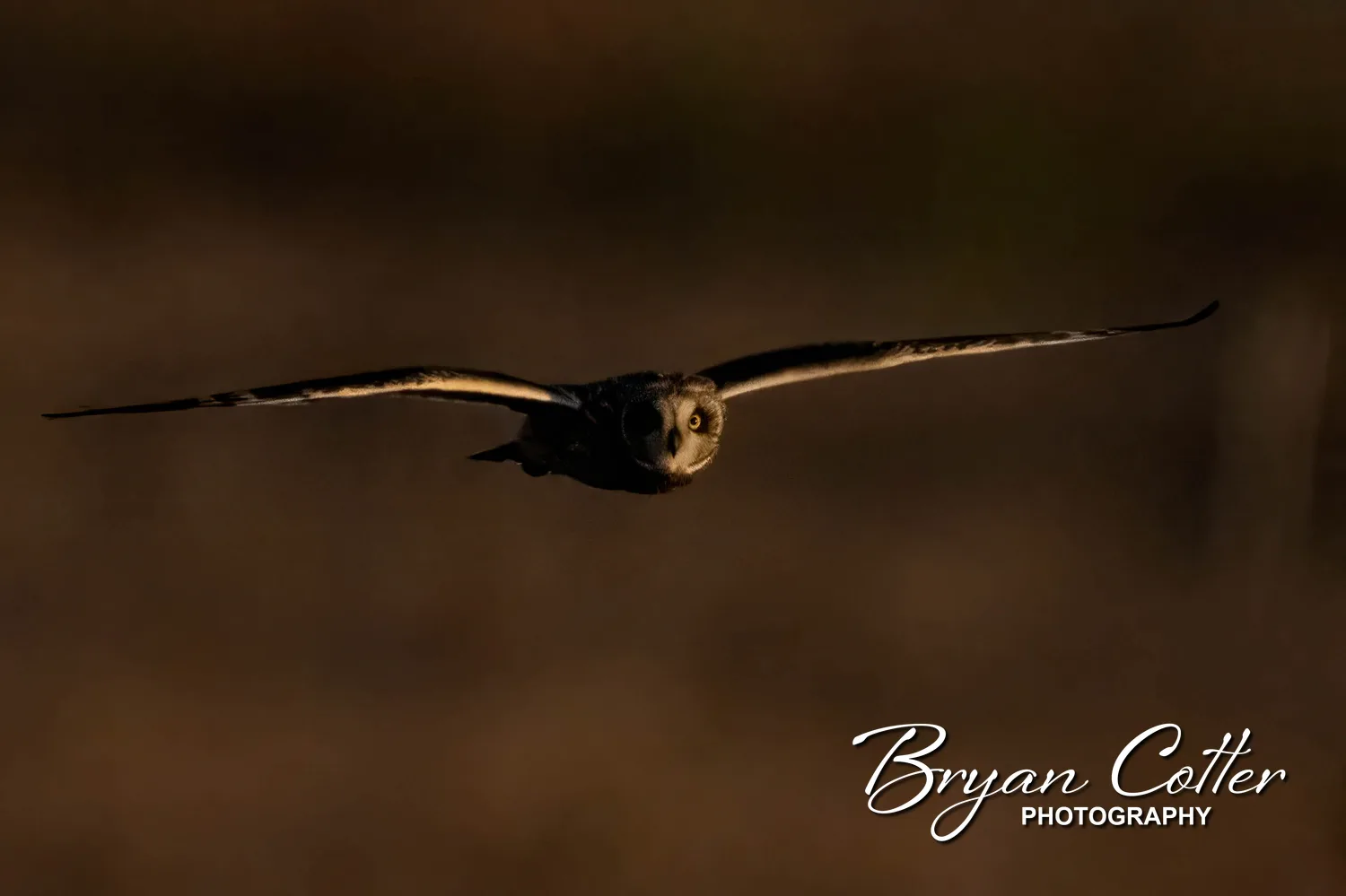
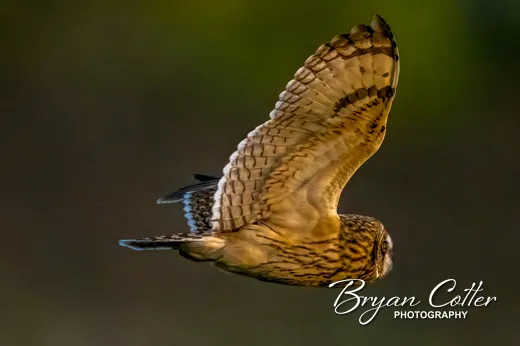
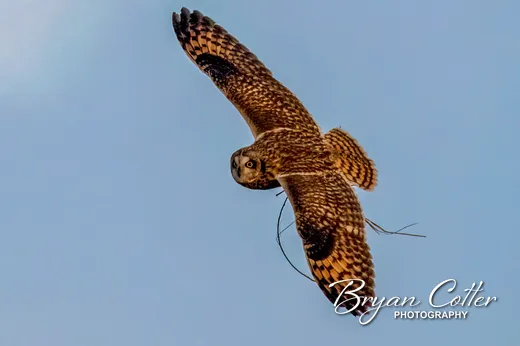
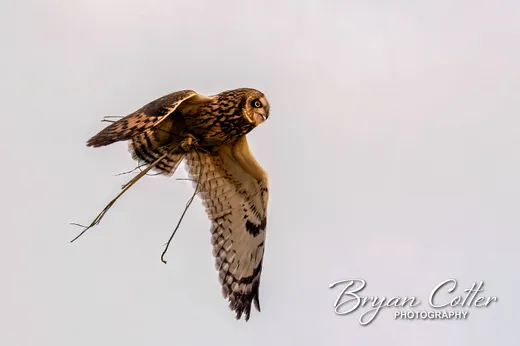
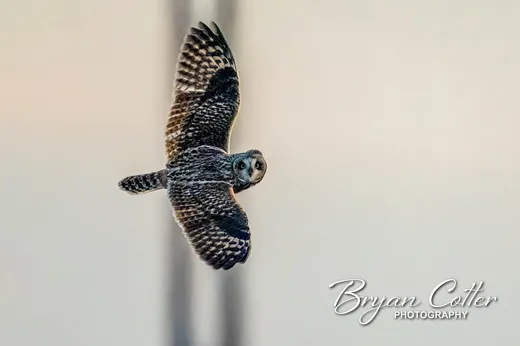
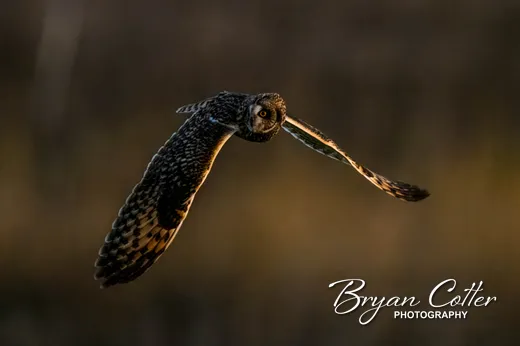
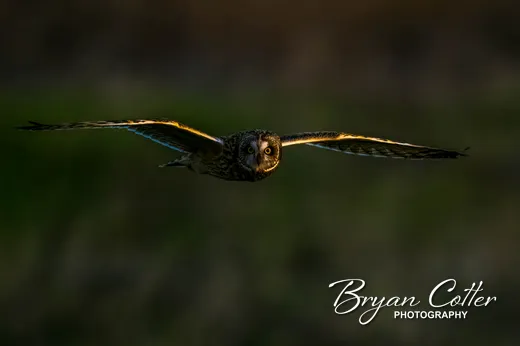
The Short-eared Owl is the owl that keeps daylight hours - a bird of wide-open country that comes out in late afternoon to hunt low over grassland on long wings, flying with deep, floppy strokes that observers compare to a giant moth. No treeline needed, no darkness required.
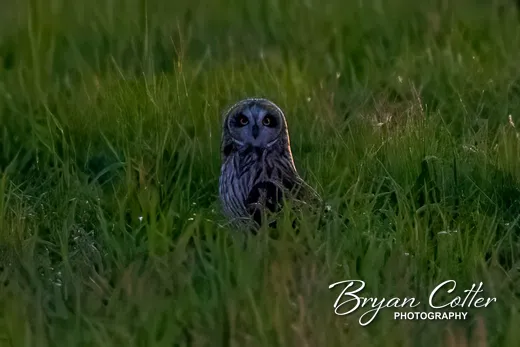
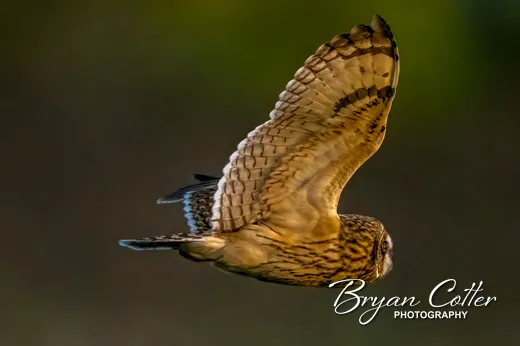
It is a medium-sized, warm-toned owl with a round facial disc, piercing yellow eyes set in black sockets, and the tiny ear tufts that give the species its name - usually flattened and invisible in the field. In flight it shows a big buffy patch on the outer wing and dark wrist crescents.
Short-eareds breed across the far north and the northern plains, then spread south in winter in numbers that track the vole supply. In Texas they are winter birds of the Panhandle playas, coastal prairie, and big grassland tracts, sometimes gathering by the dozen where rodents are thick.
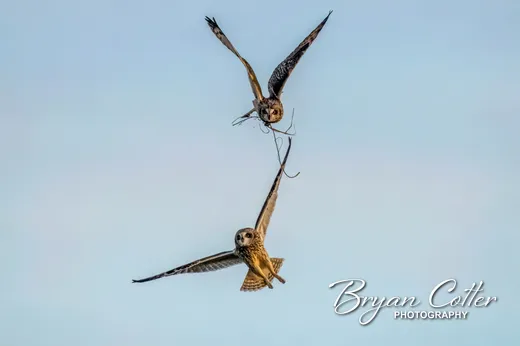
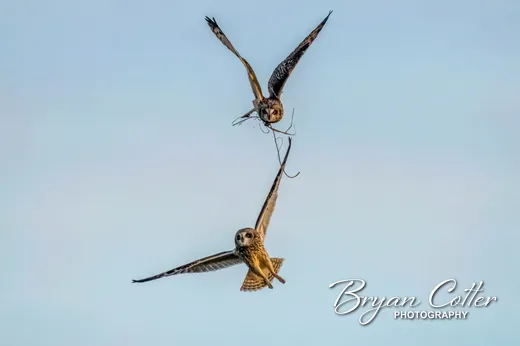
The evening show is the draw: owls coursing and hovering over the grass at last light, dropping feet-first onto prey, occasionally sparring with a Northern Harrier working the same field - two styles of low-flying hunter disputing one rodent supply.
Join one of my guided birding tours! Fine art prints of my photos are also available.
© 2026 Bryan Cotter Photography camera gear privacy policy terms of use site by cotter designs