Northern Harrier
Circus hudsonius



About the Northern Harrier
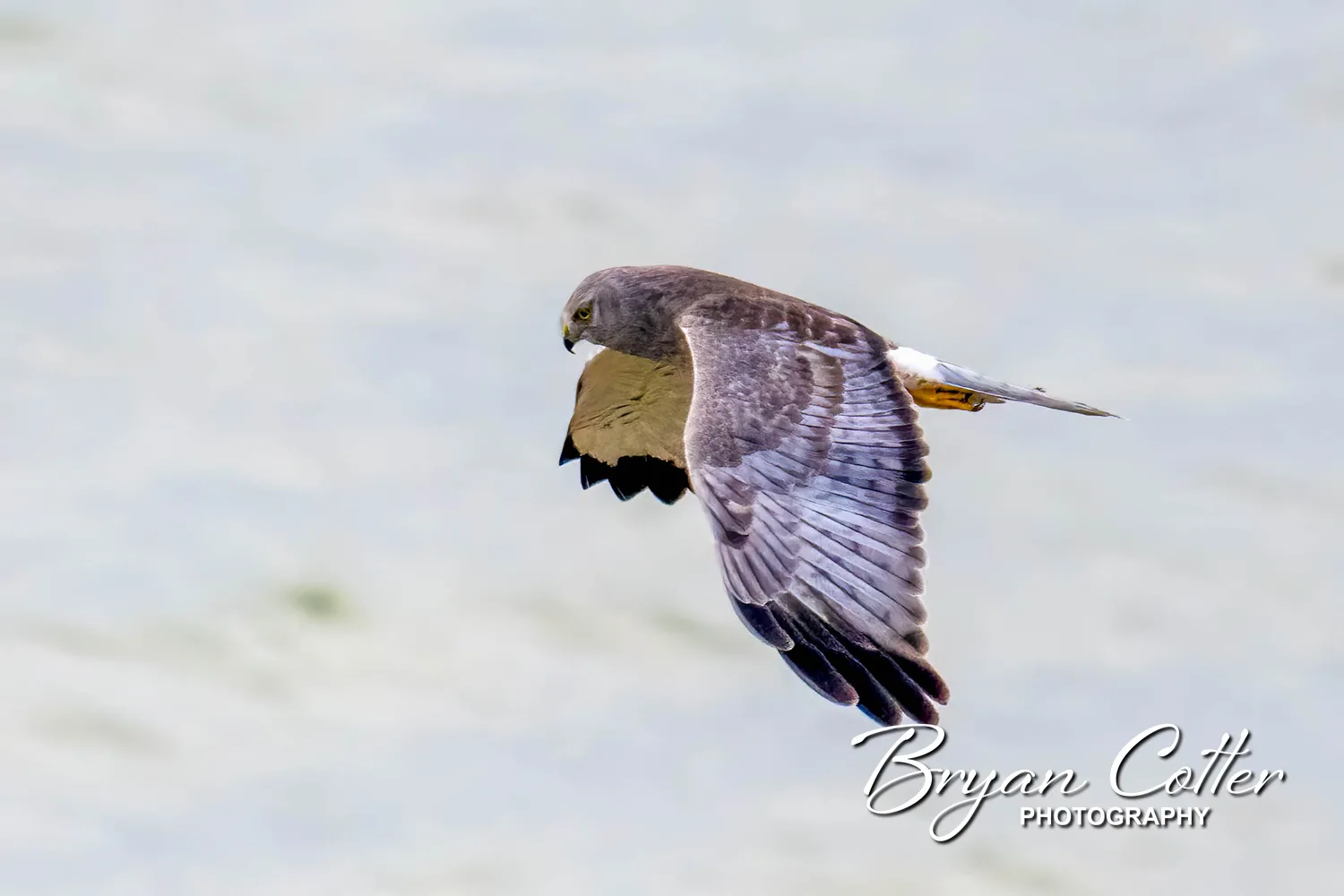
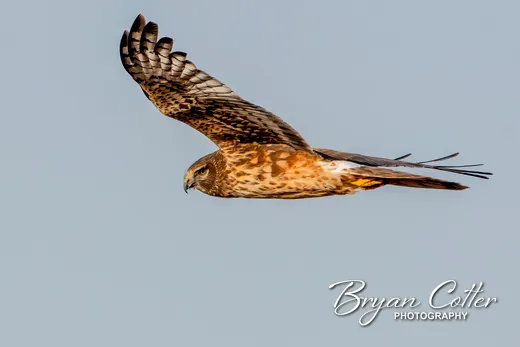
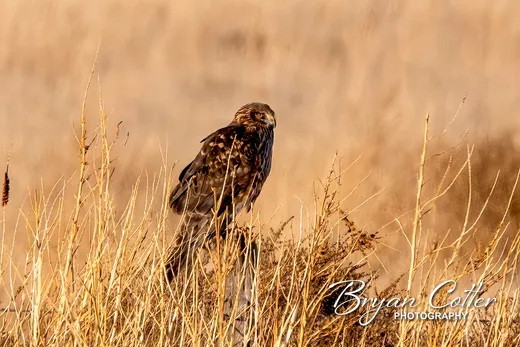
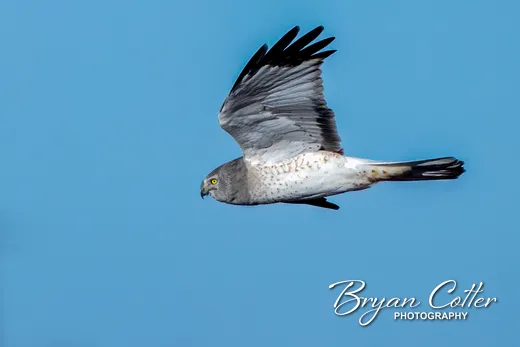
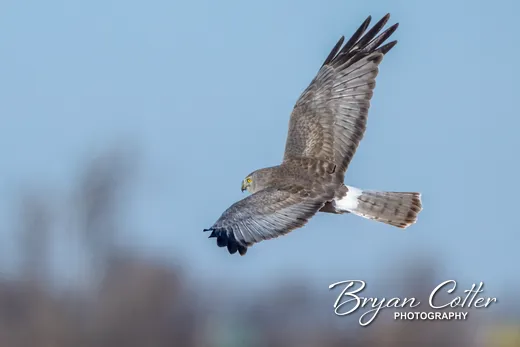
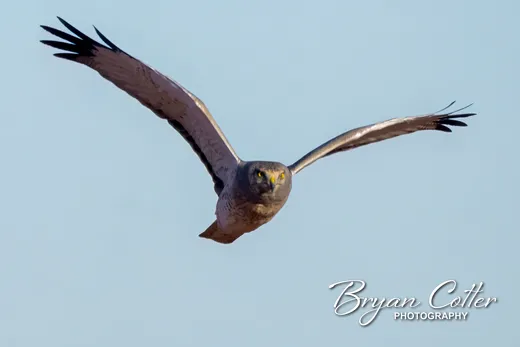
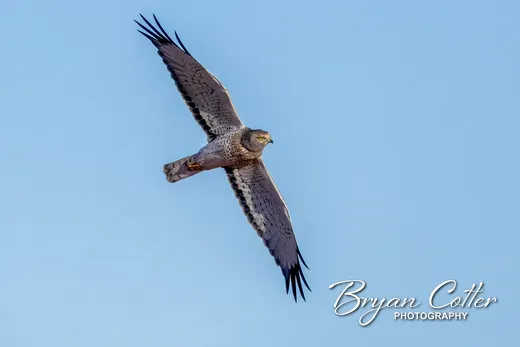
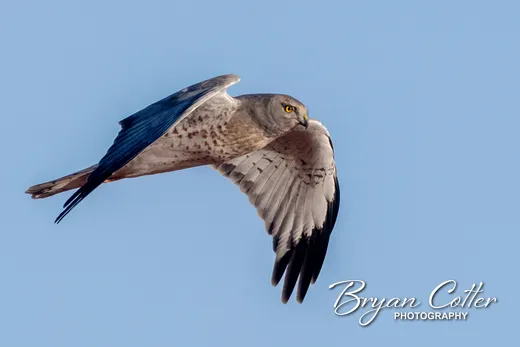
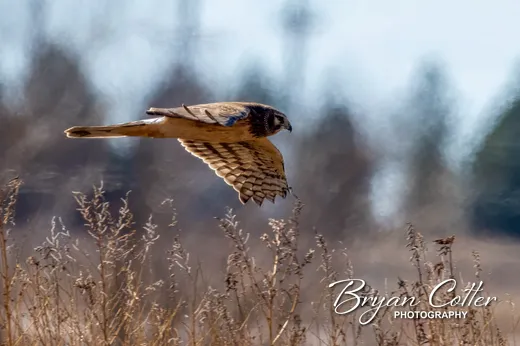
No Texas raptor hunts quite like the Northern Harrier. Instead of soaring high or perching and waiting, the harrier quarters low and slow over open ground - wings held in a shallow V, body tilting and rocking - listening as much as looking. An owl-like facial disc funnels the rustle of voles and sparrows to its ears, letting it hunt by sound in cover its eyes cannot penetrate.
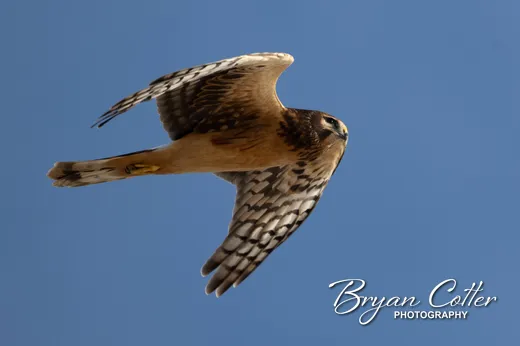
Every harrier shows a brilliant white rump patch at the base of the tail, the field mark that identifies the species at extreme range. Beyond that the sexes differ dramatically: adult males are pale silver-gray - the "gray ghost" of birders' affection - while females and young birds are warm brown, streaked below.
Harriers arrive in Texas each fall from northern breeding grounds and spread across the state's grasslands, crop stubble, playas, and coastal marsh for the winter.
A gray ghost drifting over a winter field, rocking on the wind with that white rump flashing, is one of the finest sights the Texas open country offers between November and March.
Join one of my guided birding tours! Fine art prints of my photos are also available.
© 2026 Bryan Cotter Photography camera gear privacy policy terms of use site by cotter designs