Castor Oil Plant Seeds
Ricinus communis
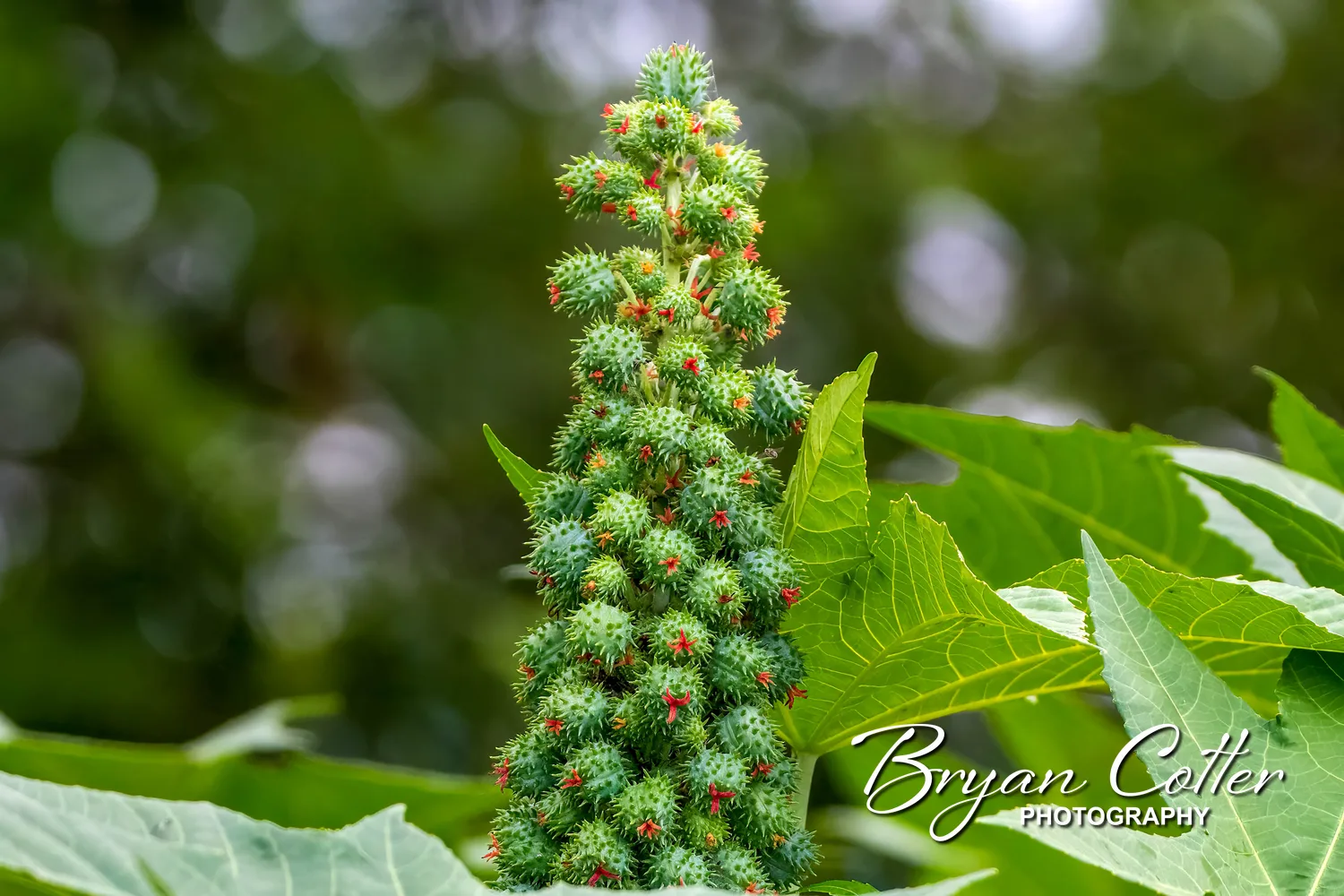
About the Castor Oil Plant Seeds
The castor oil plant is a fast-growing tropical shrub with a long human history and a dark reputation. Native to Africa, it has been planted worldwide for ornament and for castor oil, and it now grows semi-wild in warmer parts of Texas - especially the Rio Grande Valley, where it springs up along roadsides, canals, and disturbed lots.
The seed pods photographed here are the plant's most distinctive feature: spiky, reddish capsules clustered on upright stalks, each splitting into three segments that fling out large, glossy, bean-like seeds patterned like little polished stones.
Those beautiful seeds are the catch. They contain ricin, one of the most toxic naturally occurring compounds known, and a handful of chewed seeds can be fatal to people, livestock, or pets. Commercial castor oil is safe because the toxin stays behind in processing, but the raw seeds deserve real respect.
For all its danger the plant earns a place in the landscape photographs of South Texas - big tropical star-shaped leaves, red stems, and those sci-fi seed pods make it one of the most recognizable roadside plants in the Valley.
Join one of my guided birding tours! Fine art prints of my photos are also available.
© 2026 Bryan Cotter Photography camera gear privacy policy terms of use site by cotter designs