White-faced Ibis
Plegadis chihi
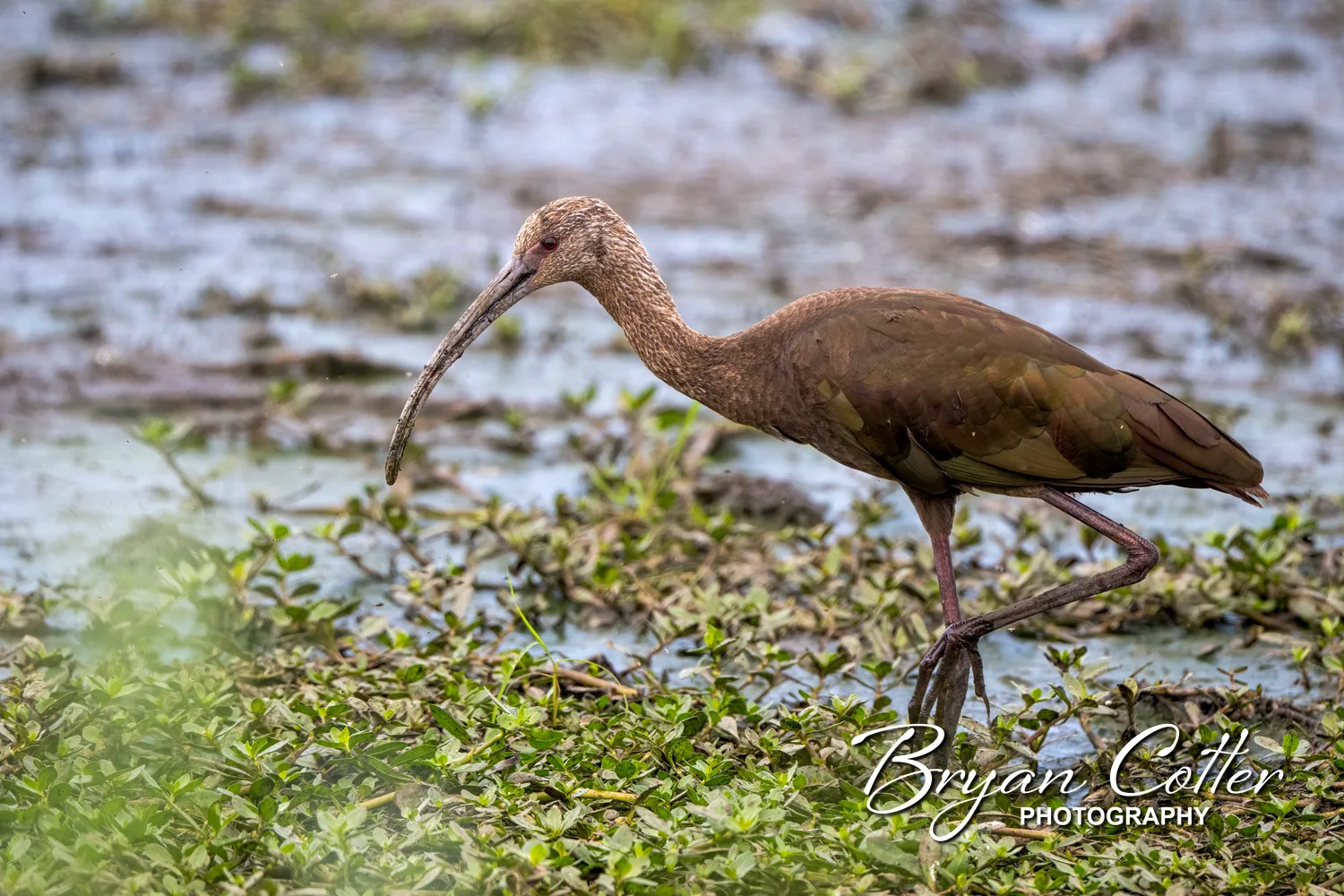
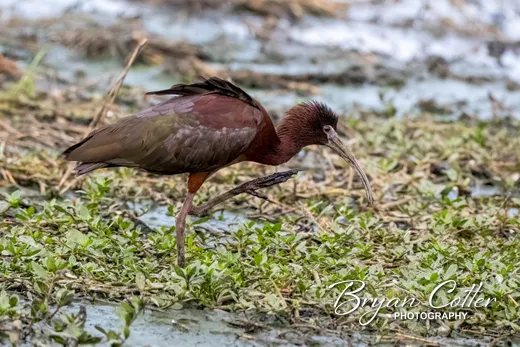
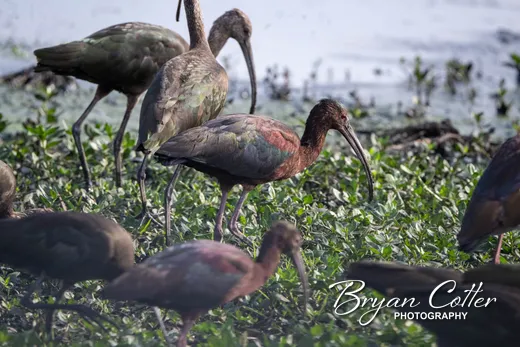
About the White-faced Ibis
At a distance a White-faced Ibis reads as simply dark, but let the sun hit one and the bird ignites - deep chestnut-maroon body, wings glossed with metallic green and bronze, all carried on long legs behind that signature down-curved bill. Breeding adults add the namesake: a crisp rim of white feathering around a bare red face, with red legs to match.
This is the common dark ibis of Texas, replacing the nearly identical Glossy Ibis of the Atlantic coast. Flocks work flooded rice fields, coastal marshes, and playa edges, sweeping those curved bills through mud and shallow water for crayfish, worms, and insect larvae - touch feeders, hunting by feel rather than sight.
Ibis are wonderfully social. They feed shoulder to shoulder, commute in wavering lines and V's that trade flapping and gliding, and nest in noisy colonies in marsh vegetation, often alongside herons and egrets.
Water is everything to this species: wet years spread flocks across the state and dry years pull them back to the coast, making the White-faced Ibis a kind of living gauge of wetland conditions across Texas.
Join one of my guided birding tours! Fine art prints of my photos are also available.
© 2026 Bryan Cotter Photography camera gear privacy policy terms of use site by cotter designs