Stilt Sandpiper
Calidris himantopus
About the Stilt Sandpiper
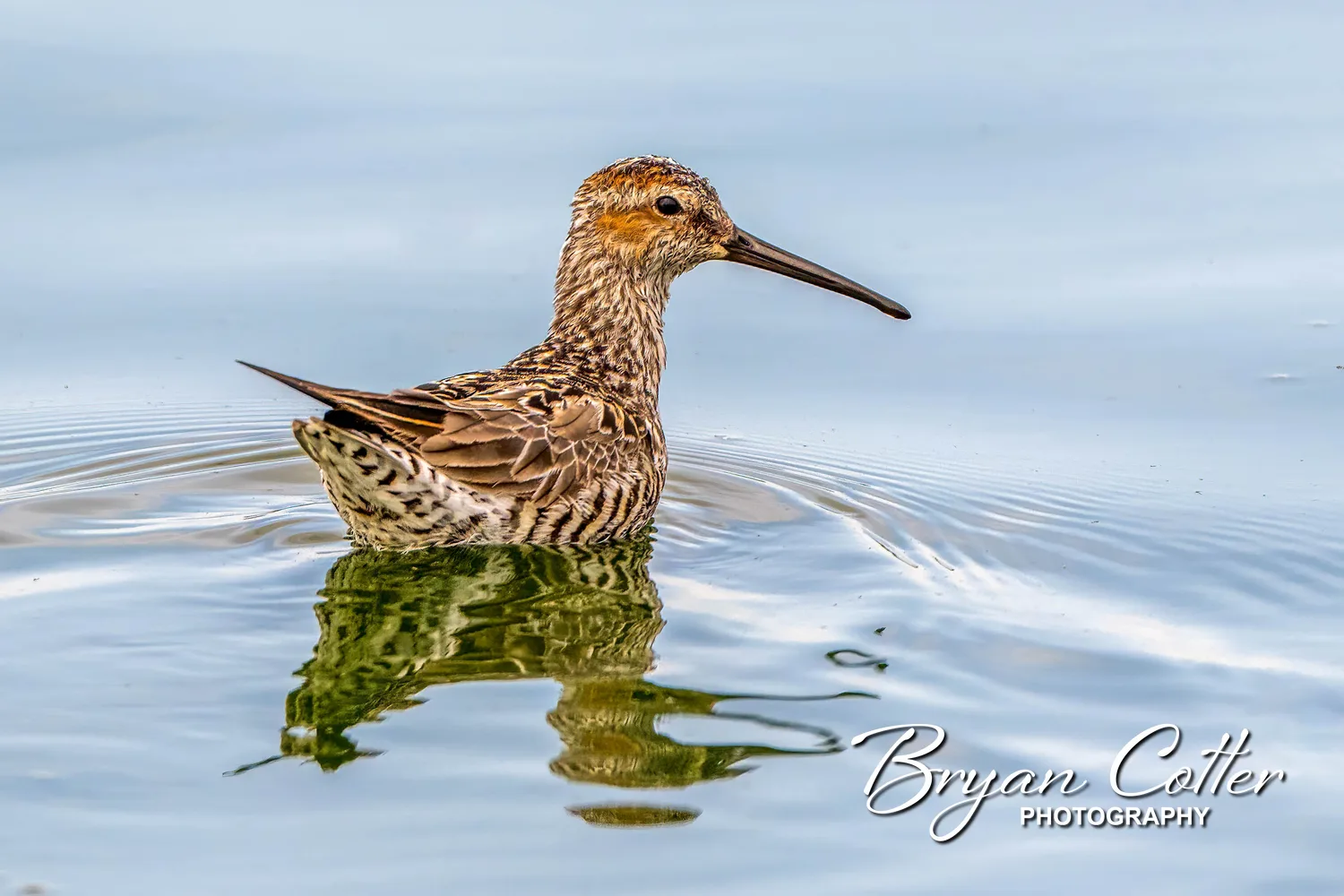
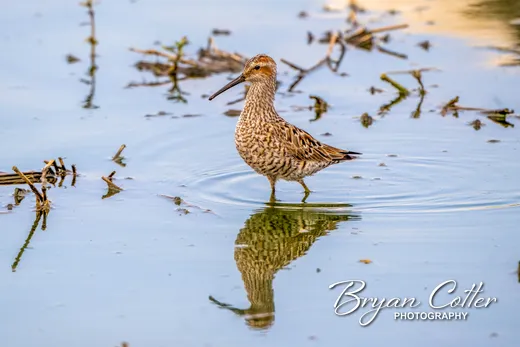
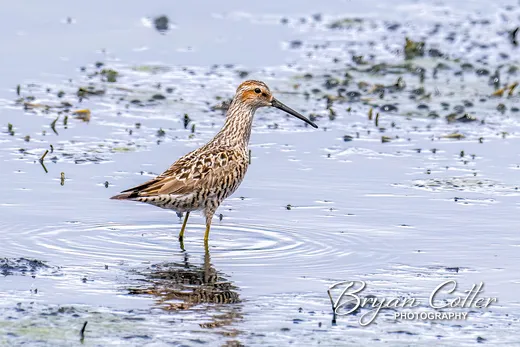
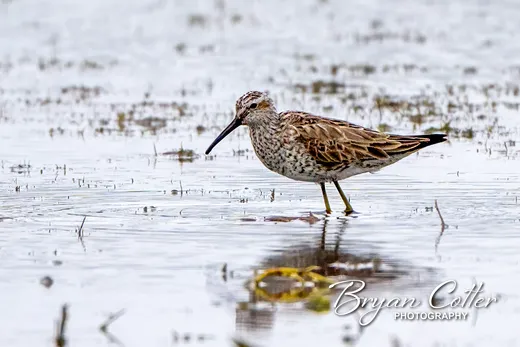
The Stilt Sandpiper is a shorebird built like a compromise - the long greenish-yellow legs of a yellowlegs under the body of a dowitcher-style feeder - and that combination is exactly how to find one in a crowd. It wades belly-deep in shallow pools and stitches the bottom with a rapid up-and-down sewing-machine motion, often with its head underwater.
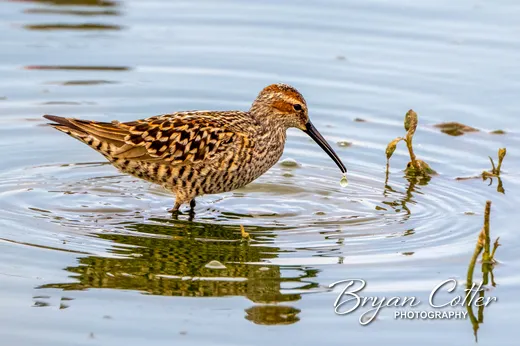
Spring adults are handsome: a rusty cheek patch, and heavy dark barring across the entire underside, unlike any similar sandpiper. Fall birds are plain gray above with a clean white eyebrow and that faintly drooped bill.
Texas sees Stilt Sandpipers in both migrations as they travel between Arctic tundra breeding grounds and South American wetlands. Flooded rice fields, sewage ponds, playa lakes, and coastal lagoon edges are their kind of water - shallow, still, and full of invertebrates.
They typically feed in tight, methodical groups, mixed in with dowitchers and yellowlegs, which turns every scan into a puzzle: same water, similar sizes, three different silhouettes. Picking the barred, long-legged birds out of that lineup is one of the small satisfactions of Texas shorebirding.
Join one of my guided birding tours! Fine art prints of my photos are also available.
© 2026 Bryan Cotter Photography camera gear privacy policy terms of use site by cotter designs