Scarlet Tanager
Piranga olivacea
About the Scarlet Tanager
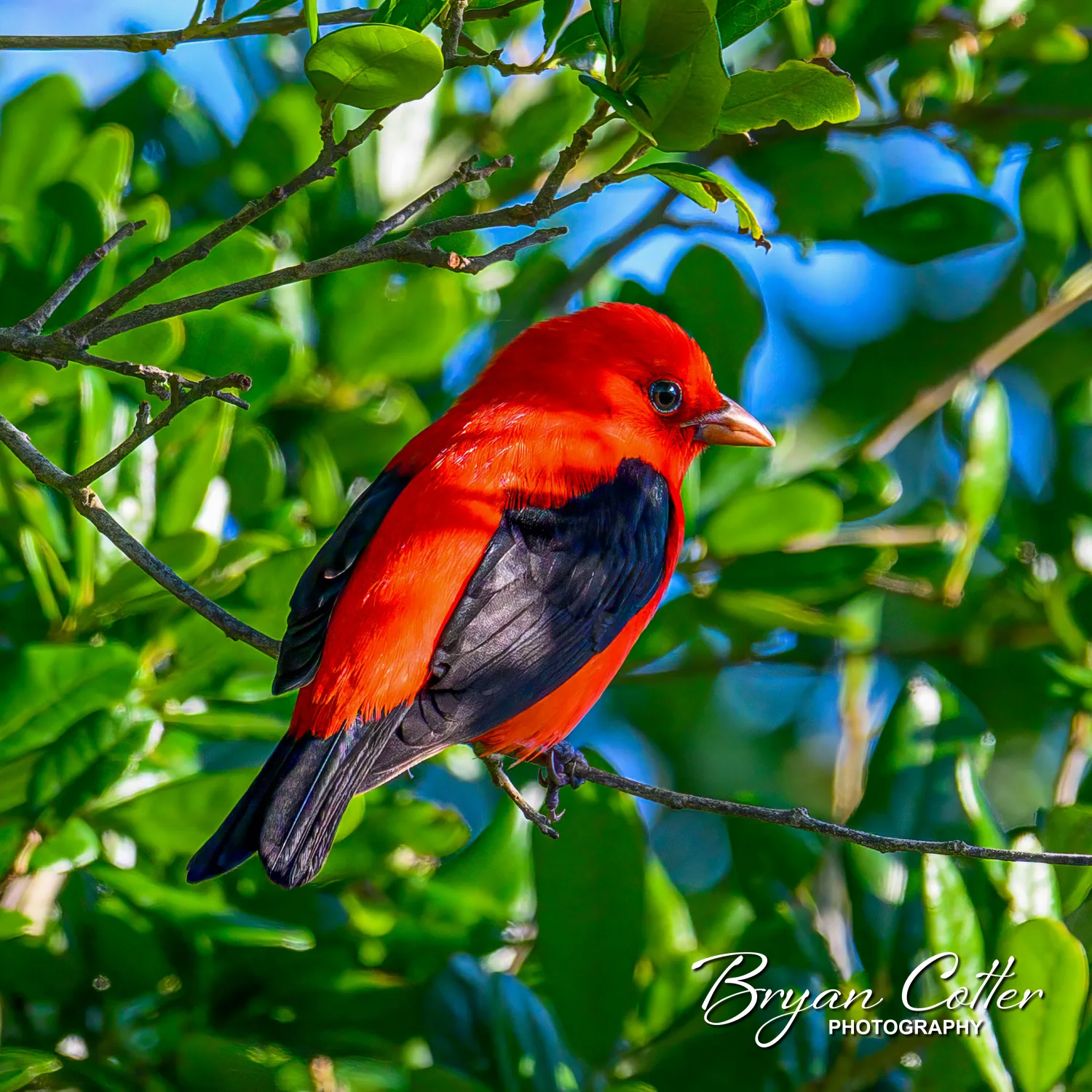
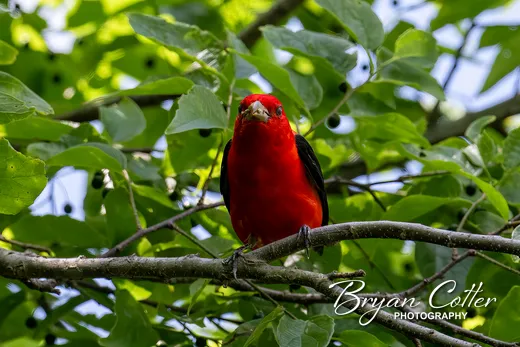
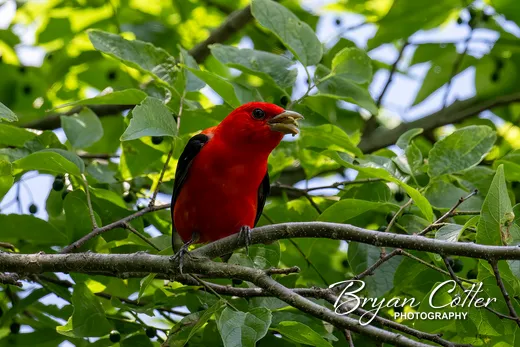
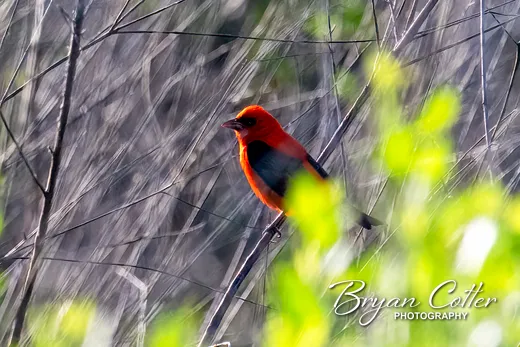
Few North American birds hit as hard as a male Scarlet Tanager in spring: a body of impossible flame-red set against jet-black wings and tail. Even seasoned birders stop and stare. Females and fall males trade the red for greenish-yellow, but keep those contrasting dark wings.
In Texas the Scarlet Tanager is a migrant, passing through in April-May and again in early fall between South American winter forests and breeding woods in the eastern United States. The upper coast is the classic place to find one, especially when spring storms over the Gulf force migrants down into the oak mottes of High Island, Sabine Woods, and similar coastal sanctuaries - the famous "fallout" conditions that can put a dozen tanagers in one tree.
For all that color, breeding Scarlet Tanagers are surprisingly hard to see, staying high in the canopy where the male's hoarse, burry song - like a robin with a sore throat - is often the only clue.
They are also accomplished bee-eaters, raking stingers off against a branch before swallowing. A male in full sun, fresh off a Gulf crossing, is one of the great prizes of a Texas spring.
Join one of my guided birding tours! Fine art prints of my photos are also available.
© 2026 Bryan Cotter Photography camera gear privacy policy terms of use site by cotter designs