Eastern Kingbird
Tyrannus tyrannus
About the Eastern Kingbird
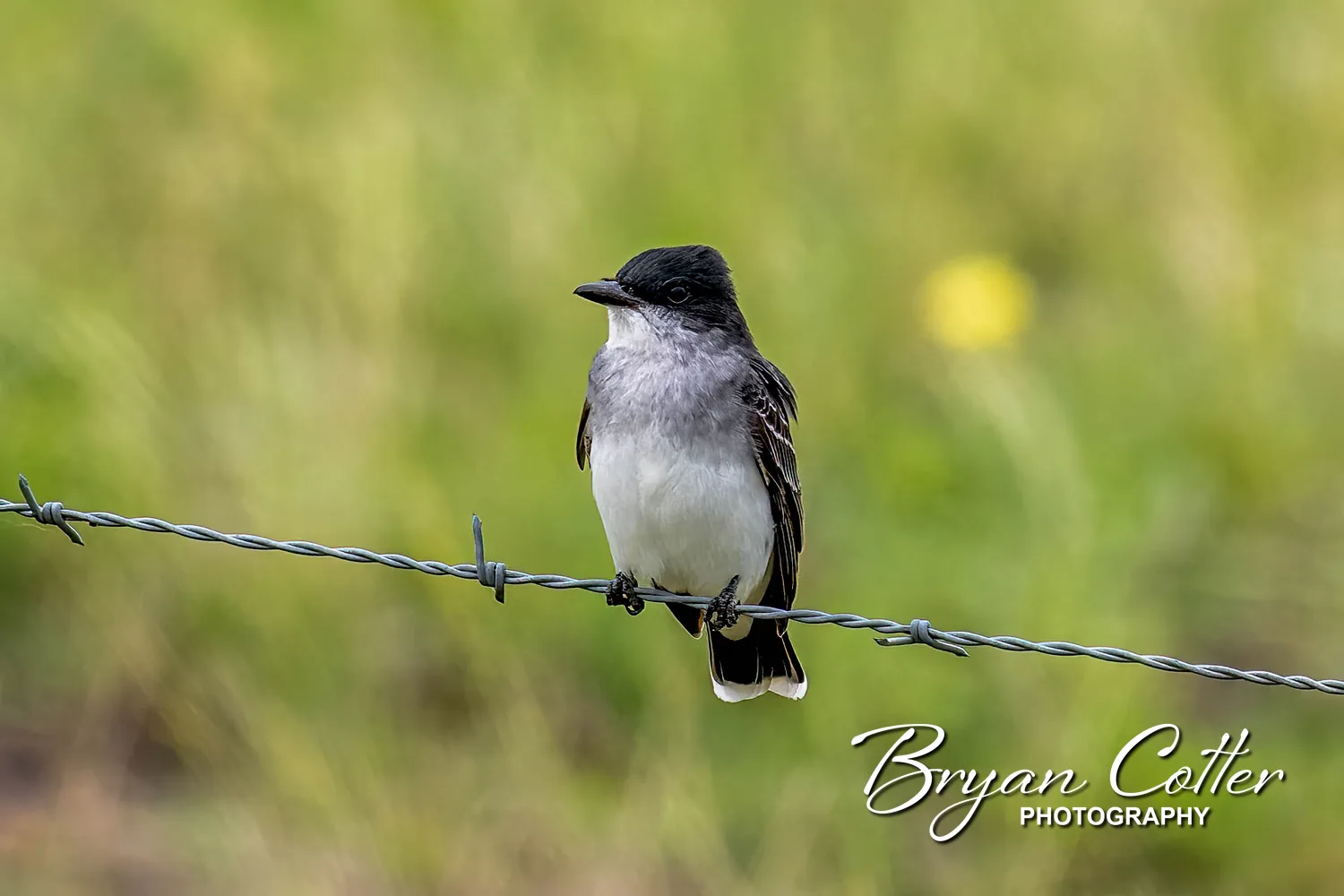
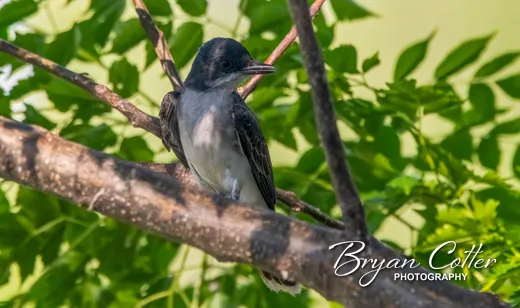
Dressed in a crisp charcoal-and-white suit with a neat white band across the tail tip, the Eastern Kingbird looks like it means business - and it does. The scientific name Tyrannus tyrannus, "tyrant of tyrants," is well earned: this flycatcher will fearlessly chase hawks, crows, and anything else that drifts too near its nest.
Kingbirds hunt from exposed perches - a fence wire, a bare snag, the top strand of a barbed-wire fence - sallying out to snap flying insects from the air with an audible click of the bill before circling back to the same lookout. That upright, big-headed silhouette on a wire is a classic piece of Texas summer scenery.
Hidden under the black crown is a surprise: a concealed patch of red-orange feathers, flared only in moments of high aggression and almost never seen in the field.
For all its summer ferocity, the Eastern Kingbird lives a double life. After breeding, the birds gather into flocks and head for South America, where they spend the winter quietly eating fruit in the Amazon canopy - a complete personality change from the insect-hawking tyrant of a Texas fencerow.
Join one of my guided birding tours! Fine art prints of my photos are also available.
© 2026 Bryan Cotter Photography camera gear privacy policy terms of use site by cotter designs