Sandhill Crane
Antigone canadensis
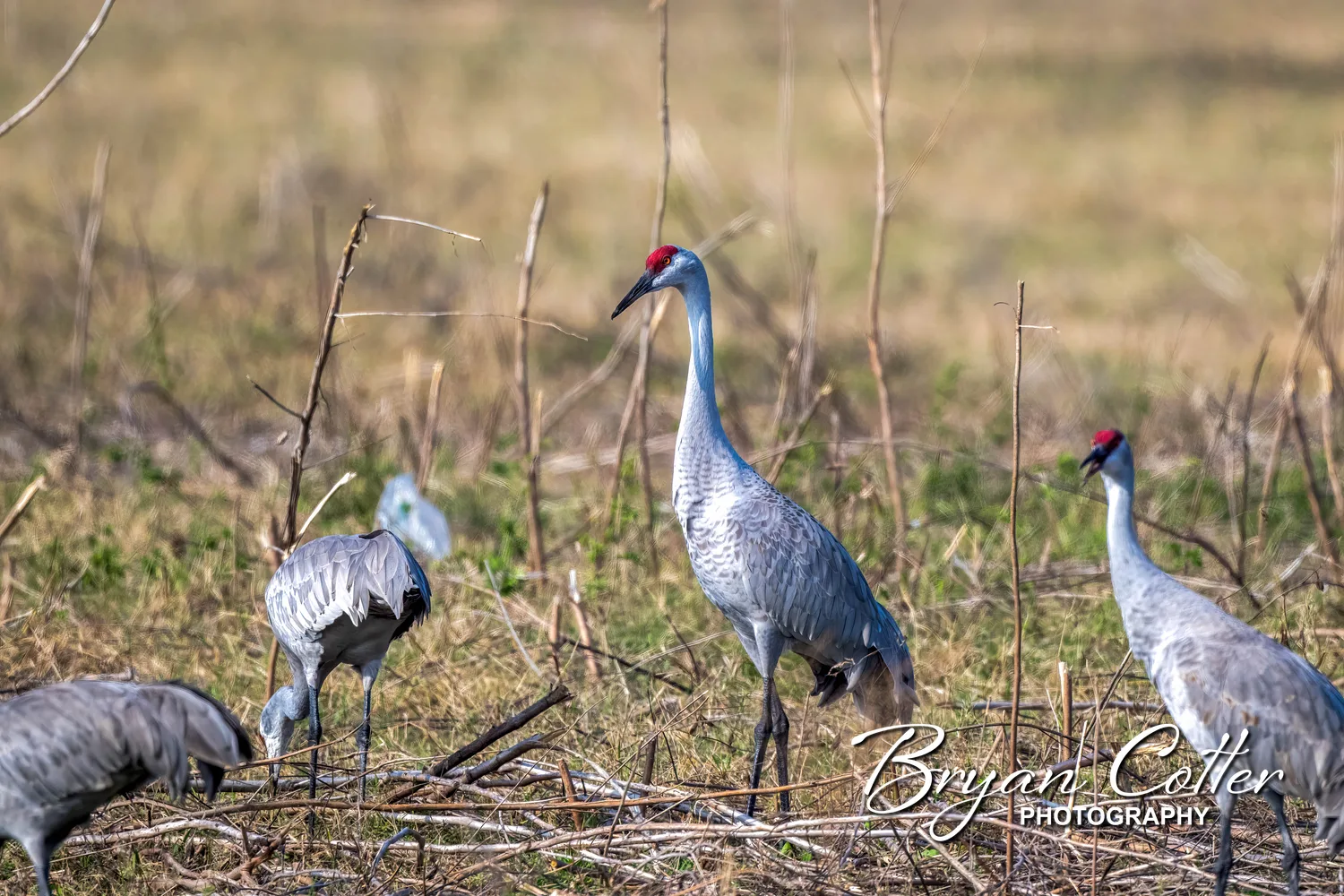

About the Sandhill Crane
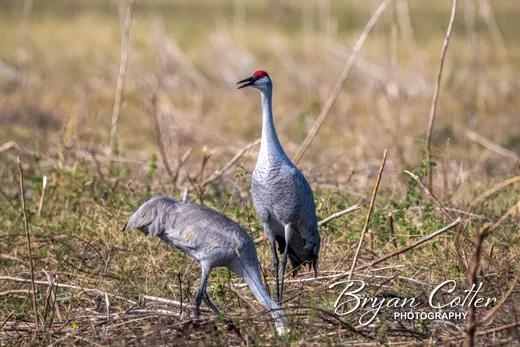
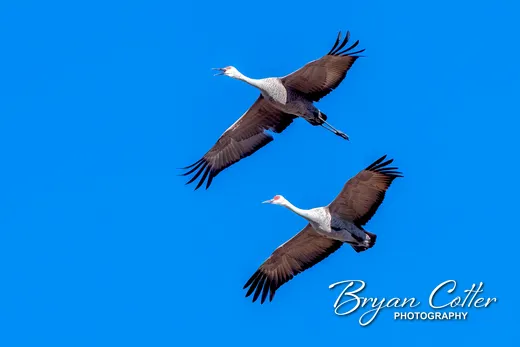
The Sandhill Crane is the sound of a Texas winter sky - a rolling, throaty bugle audible for two miles or more, often from flocks flying so high they take real searching to find. The bird making it is a stately gray crane with a bare red crown, a plume-like bustle over the tail, and a wingspan pushing seven feet.
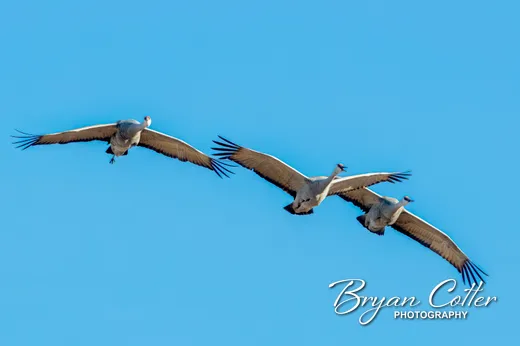
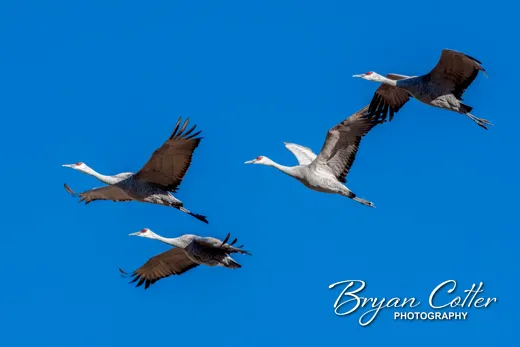
Hundreds of thousands winter in Texas, roosting at night standing in shallow water - playa lakes, reservoir flats, coastal marsh - and commuting out at dawn in long wavering lines to feed in grain fields and pastures on waste corn, sorghum, tubers, and insects. The evening return to roost, wave after bugling wave dropping out of a red sky, is one of the great wildlife spectacles the state offers.
Sandhill Cranes dance in every season - leaping, bowing, wing-spreading, tossing grass - behavior that cements lifelong pair bonds and seems, at times, purely exuberant. Pairs raise one or two chicks ("colts") that stay with their parents through the first winter, which is why winter flocks resolve into little family knots of two and three on close inspection.
The species is also a survivor from deep time: fossil cranes essentially identical to the modern Sandhill go back over two million years, making this one of the oldest bird species on Earth. In Texas they arrive in October and leave by March, and the first bugle of fall overhead is, for many, the true start of winter.
Join one of my guided birding tours! Fine art prints of my photos are also available.
© 2026 Bryan Cotter Photography camera gear privacy policy terms of use site by cotter designs