Crane Fly
Tipula sp.
About the Crane Fly
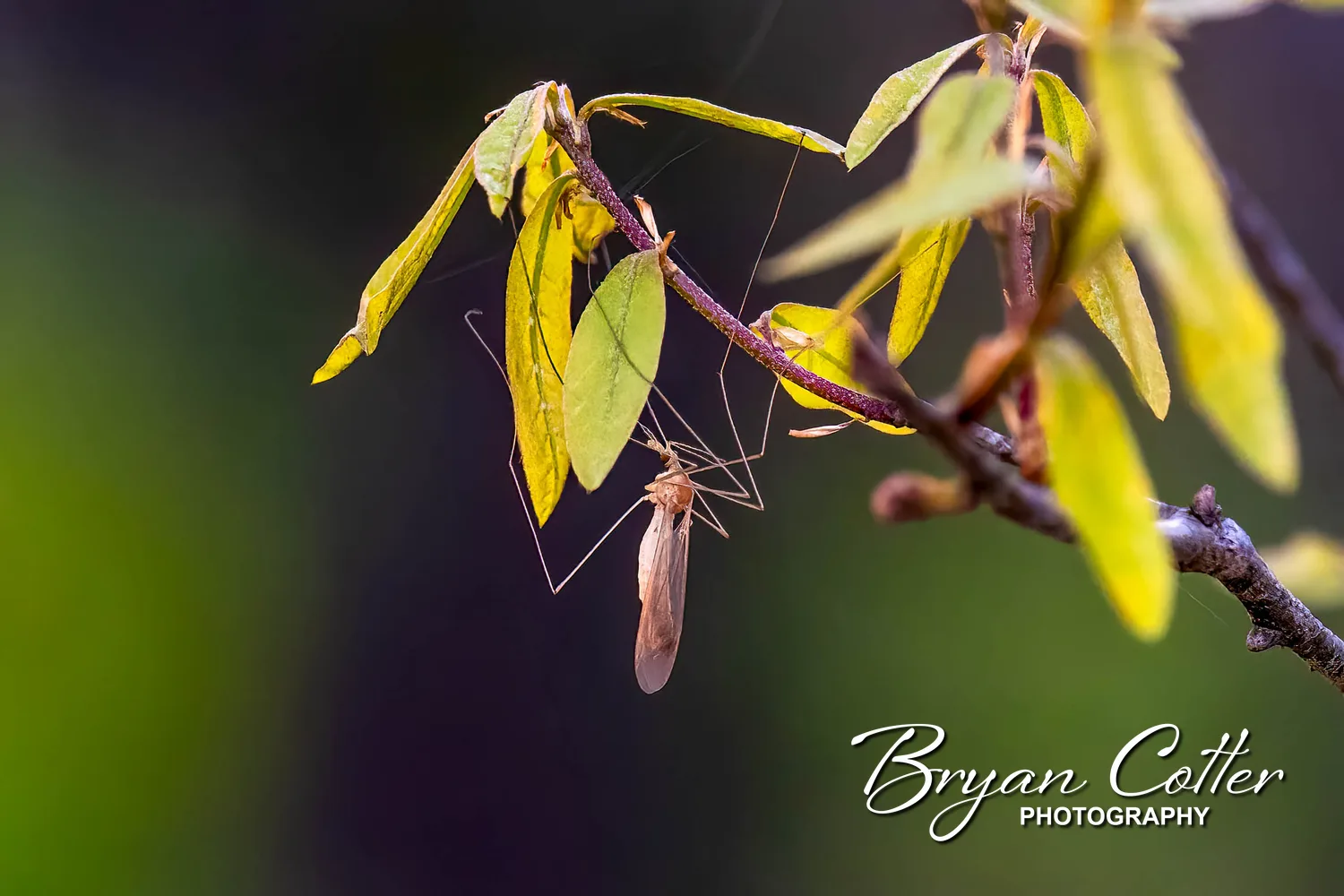
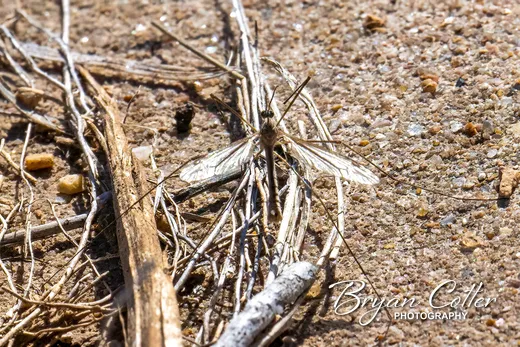
Every Texan knows this insect by the wrong name: the giant mosquito. The crane fly is no mosquito at all - it does not bite, does not sting, and most adults never eat a meal, living a week or so on the fat they carried out of the larval stage. Their whole adult job is finding a mate.
Those absurd trailing legs are break-away equipment: grab a crane fly by the leg and the leg is what you keep, while the fly wobbles off. The gangly, drifting flight that looks so helpless around a porch light is actually harder for birds to intercept than it appears.
The larvae - gray, leathery grubs called leatherjackets - live in soil and damp leaf litter, eating roots and decaying vegetation. In wet years a Texas lawn can host thousands, which explains the spring evenings when crane flies seem to rise out of the grass by the hundred and drape themselves on every wall.
They are also a quiet gift to the food chain: the spring crane fly flush feeds swallows, wrens, lizards, and spiders at exactly the moment nesting season needs the calories. A harmless insect with an undeserved reputation - and up close, on a macro lens, unexpectedly elegant.
Join one of my guided birding tours! Fine art prints of my photos are also available.
© 2026 Bryan Cotter Photography privacy policy terms of use site by cotter designs