Gemsbok
Oryx gazella
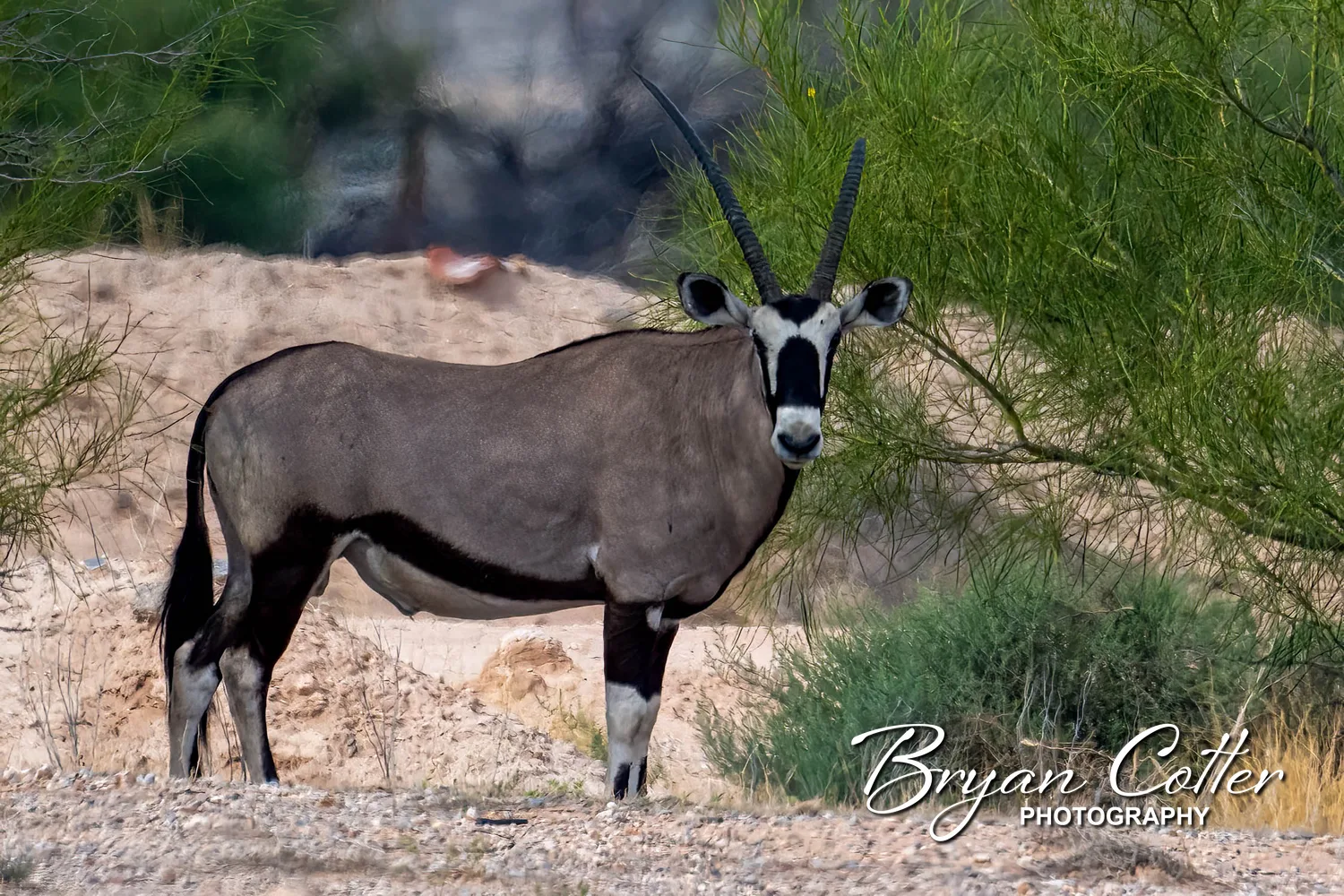


About the Gemsbok
A piece of the Kalahari grazing Texas rangeland. The gemsbok - the southern African oryx - carries rapier horns up to a yard long, a painted black-and-white face, and a gray body trimmed in black racing stripes. Both sexes wear the horns, and a herd standing head-up in open country looks heraldic, like something off a coat of arms.
Gemsbok came to North America through the exotic-ranching trade, and Texas holds substantial numbers on game ranches, mostly in the west and the Hill Country. Across the state line, New Mexico's White Sands herd - released in the 1970s - now runs entirely wild. Few introduced animals are better matched to the Chihuahuan Desert, because the species is built for drought: it can live indefinitely without drinking, cooling its blood through a nasal heat-exchange network that lets body temperature climb past what would kill most mammals.
In Africa the species anchors the arid savanna ecosystem from Namibia to the Kalahari; here it shares pasture with native pronghorn and mule deer and thrives on range that stresses cattle.
Approach with the sun behind you and the black face-mask resolves into its precise, painted geometry - one of the most photogenic heads in the animal kingdom.
Join one of my guided birding tours! Fine art prints of my photos are also available.
© 2026 Bryan Cotter Photography privacy policy terms of use site by cotter designs