Common Side-blotched Lizard
Uta stansburiana
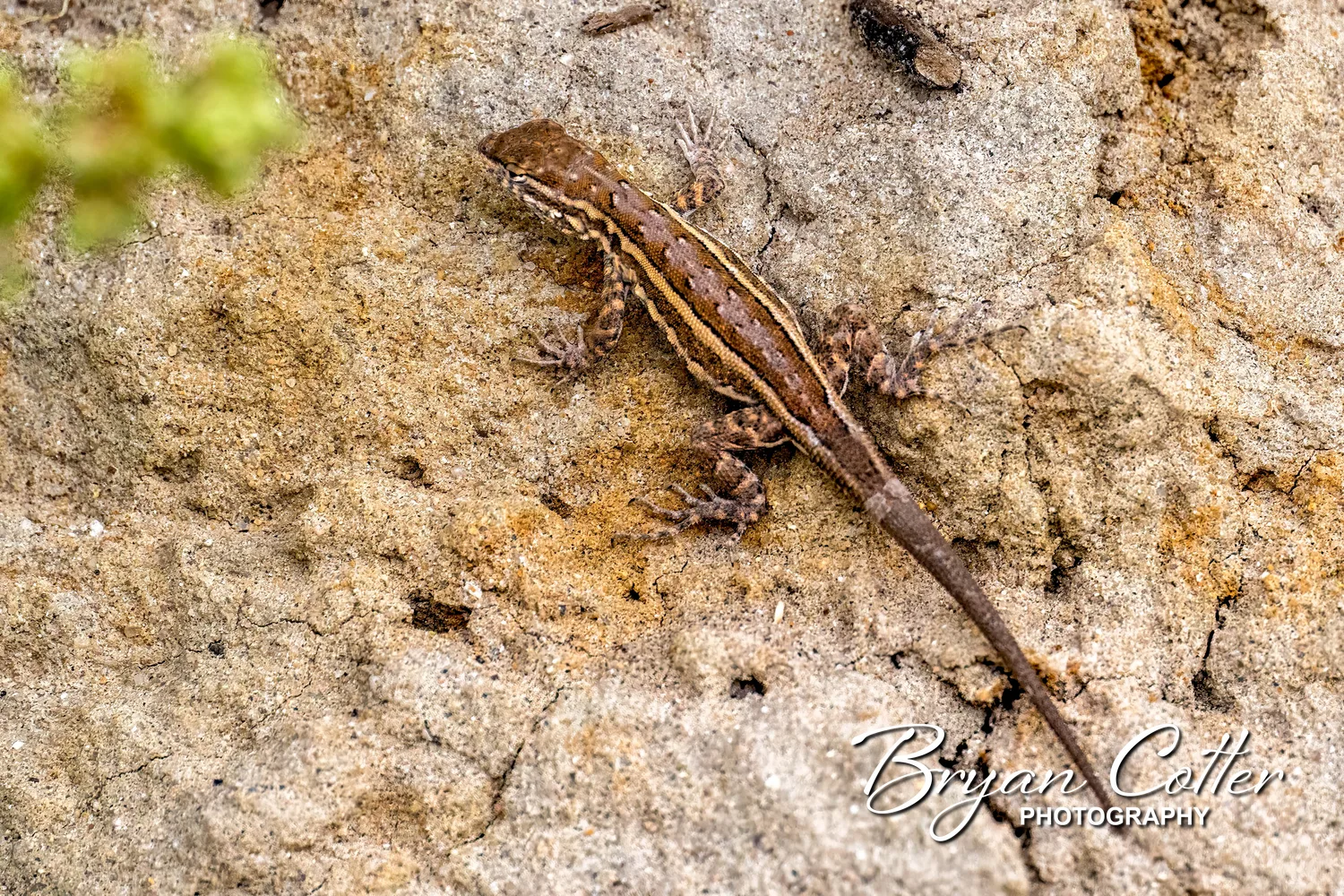
About the Common Side-blotched Lizard
A small, quick lizard of the desert floor, named for the dark blotch tucked behind each front leg. Males wear speckles of blue and orange across the back; females stay in businesslike browns. In much of the Trans-Pecos this is the lizard you see most - a flicker of motion at every third step along a rocky trail.
The species is famous in biology far beyond its size, because its males play an evolutionary game of rock-paper-scissors. Orange-throated males are aggressive and hold big territories; blue-throated males guard single mates closely; yellow-throated males sneak matings by mimicking females. Orange beats blue, blue beats yellow, yellow beats orange - and the three strategies cycle in frequency across generations, a textbook case studied for decades.
Side-blotched lizards live fast: most breed in their first year and few see a second, which keeps populations young and abundant. They are a staple prey item for roadrunners, snakes, and shrikes - a load-bearing species in the desert food web.
Photograph one on a cool morning while it baskets on a sunlit stone; by midday they move too fast to bother trying.
Join one of my guided birding tours! Fine art prints of my photos are also available.
© 2026 Bryan Cotter Photography privacy policy terms of use site by cotter designs