White-tailed Deer
Odocoileus virginianus
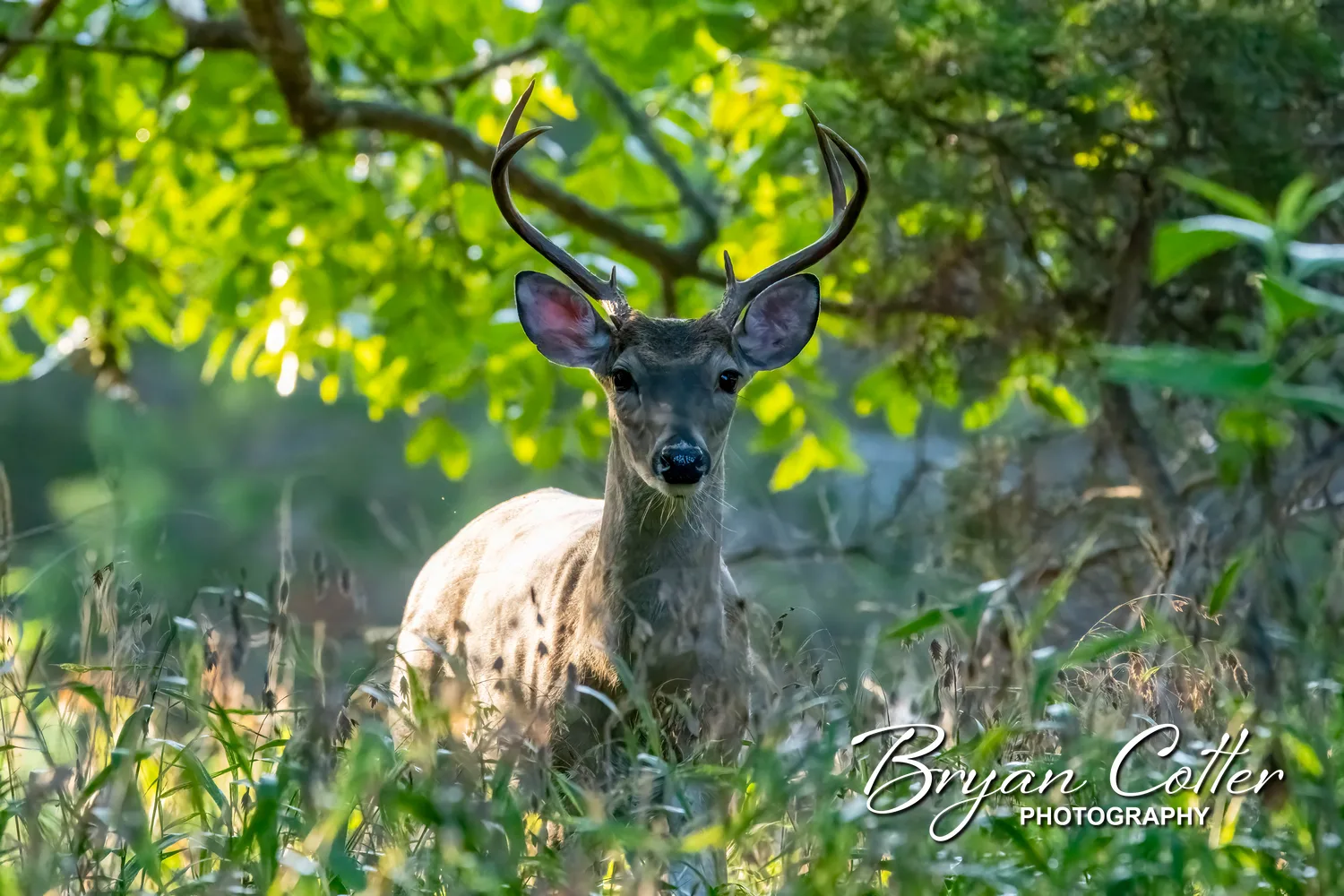
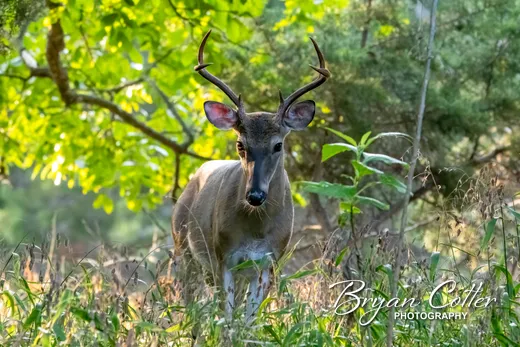
About the White-tailed Deer
Texas holds more white-tailed deer than any other state - several million - and in the Hill Country they are as much a part of the landscape as the oaks. Edge animals by nature, they thrive exactly where brush meets open grass, which describes both a ranch pasture and a Austin-area subdivision equally well.
The year runs on a strict calendar. Spotted fawns arrive in May and June, lying motionless and nearly scentless while the doe feeds away from them - the strategy that fools coyotes and well-meaning people alike; a lone fawn is almost never abandoned. Bucks grow antlers through the summer under velvet, strip them in September, and spend November in the rut, trailing does with their noses down and their judgment gone. By late winter the antlers drop, and the woods are full of shed-hunting possibilities.
Whitetails browse rather than graze - leaves, twigs, forbs, acorns in quantity, and garden roses when available. Their numbers today are a conservation whiplash story: nearly wiped out of Texas by 1900, then restored by regulation and restocking into the most abundant big game animal on the continent.
That raised white flag of a tail is the species' name and its signature - the last thing you usually see, bounding away through the cedar.
Join one of my guided birding tours! Fine art prints of my photos are also available.
© 2026 Bryan Cotter Photography privacy policy terms of use site by cotter designs