Wilson's Warbler
Cardellina pusilla
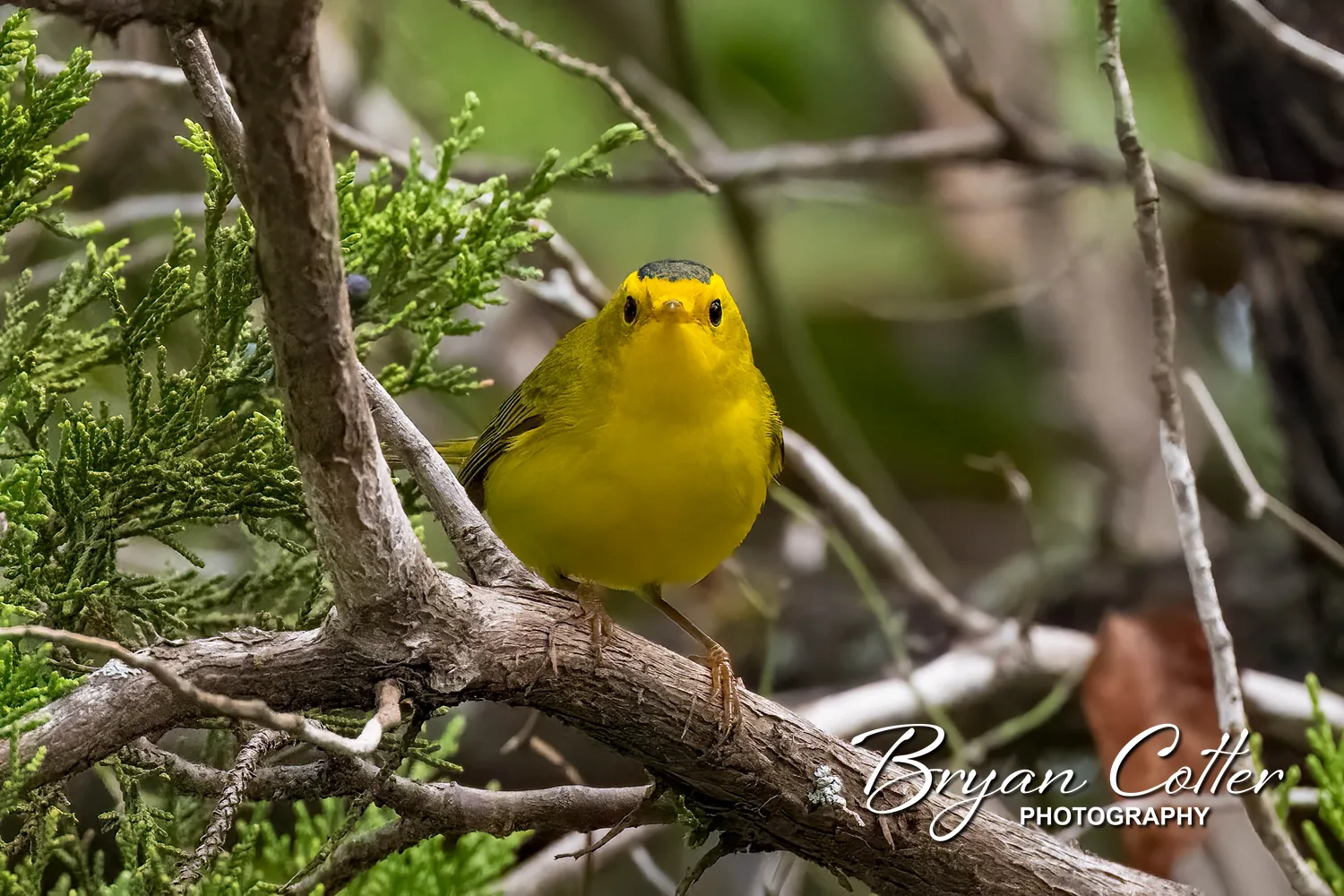
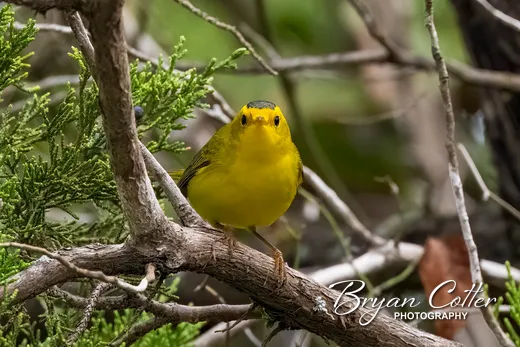
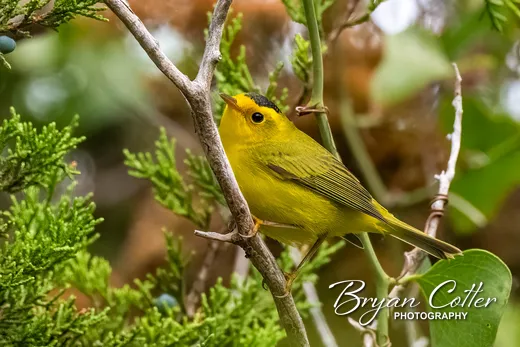
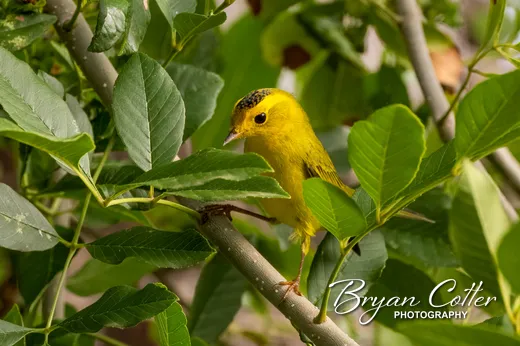
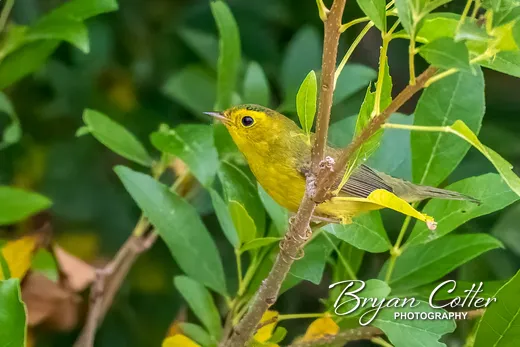


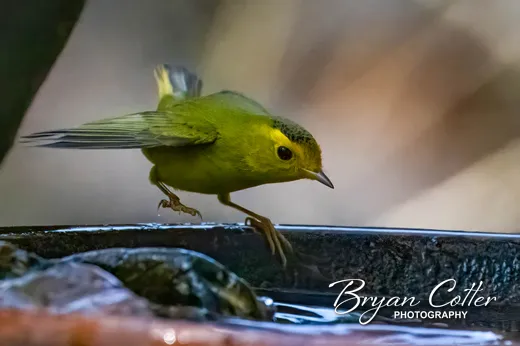

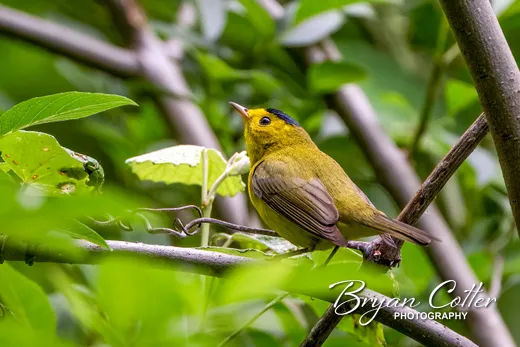

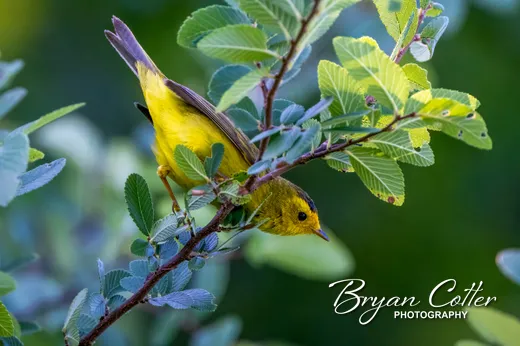
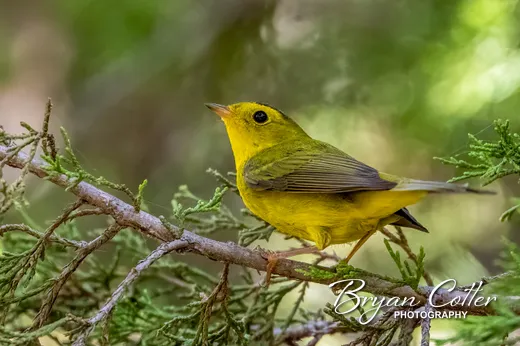
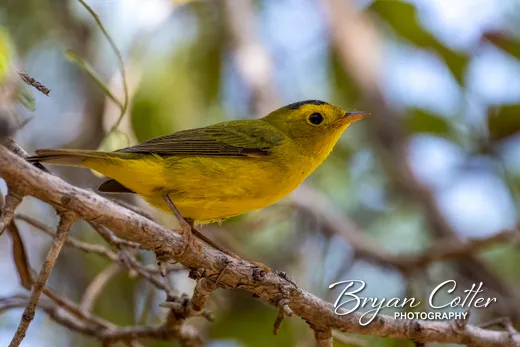
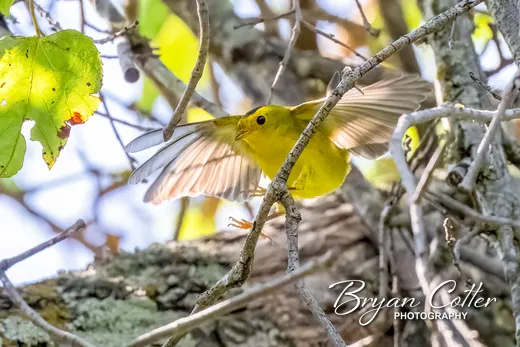
About the Wilson's Warbler
A little lemon-yellow sprite in a neat black cap, always in motion - flicking its tail, sallying after gnats, dropping from twig to twig, never holding a pose. Wilson's Warbler is among the smallest warblers that pass through Texas, and it packs more restlessness per gram than any of them.
They move through Central Texas in April-May and again from late August into October, keeping low in willows, brush, and streamside tangles rather than the high canopy - which puts them at camera height more often than most of their family, if you can keep up. A pishing sound often pulls one to the edge of the brush for a few indignant seconds.
The species breeds in willow and alder thickets from Alaska across Canada and down the western mountains, and winters from Mexico through Central America, where it is one of the commonest warblers in shade coffee. Like many long-haul migrants it has declined sharply in recent decades, particularly in the West.
The black cap is glossy and sharp-edged on males, faint or absent on females - but that constant tail-flicking, low in the willows, identifies the bird before any field mark resolves.
Join one of my guided birding tours! Fine art prints of my photos are also available.
© 2026 Bryan Cotter Photography privacy policy terms of use site by cotter designs