Tall Goldenrod
Solidago altissima
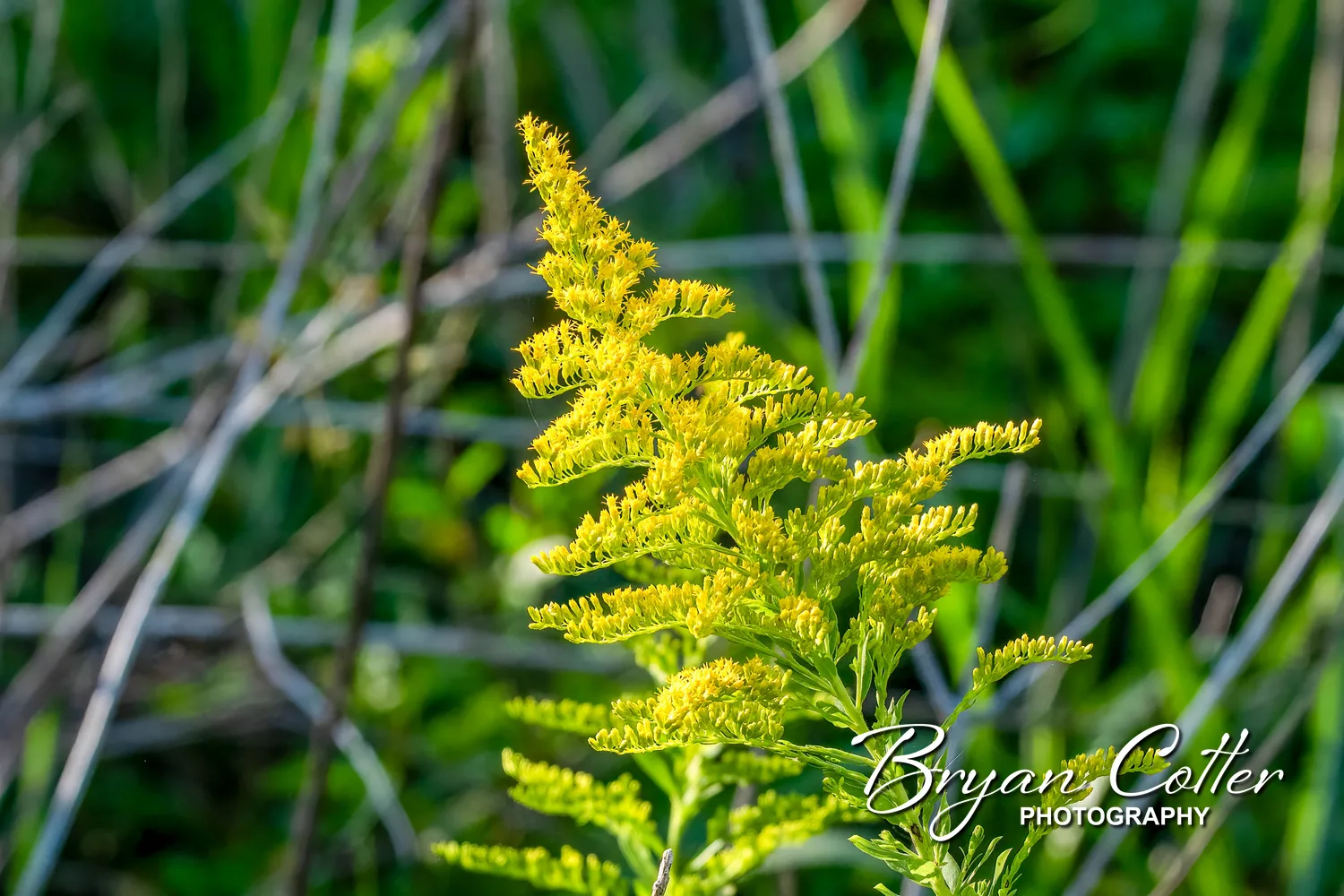
About the Tall Goldenrod
Julia's Goldenrod is a Texas specialty - a compact native goldenrod of the Edwards Plateau, its arching sprays of tiny golden flower heads lighting up limestone slopes and creek margins in late summer and fall when little else is blooming. Botanists know it as Solidago juliae, and its heart is the Hill Country.
Goldenrods are keystone fall plants: the dense flower panicles feed migrating monarchs, queens, native bees, wasps, and beetles by the hundreds, and the seeds carry finches and sparrows into winter. Goldenrod also carries an unearned grudge - its heavy, insect-carried pollen does not cause hay fever; the real culprit is ragweed, blooming invisibly nearby at the same time.
On a warm October afternoon in central Texas, a stand of Julia's Goldenrod is as busy as any flower patch in the state - and a natural backdrop for photographing the butterflies and bees of a Hill Country fall.
Join one of my guided birding tours! Fine art prints of my photos are also available.
© 2026 Bryan Cotter Photography privacy policy terms of use site by cotter designs