Rain Lily
Cooperia pedunculata
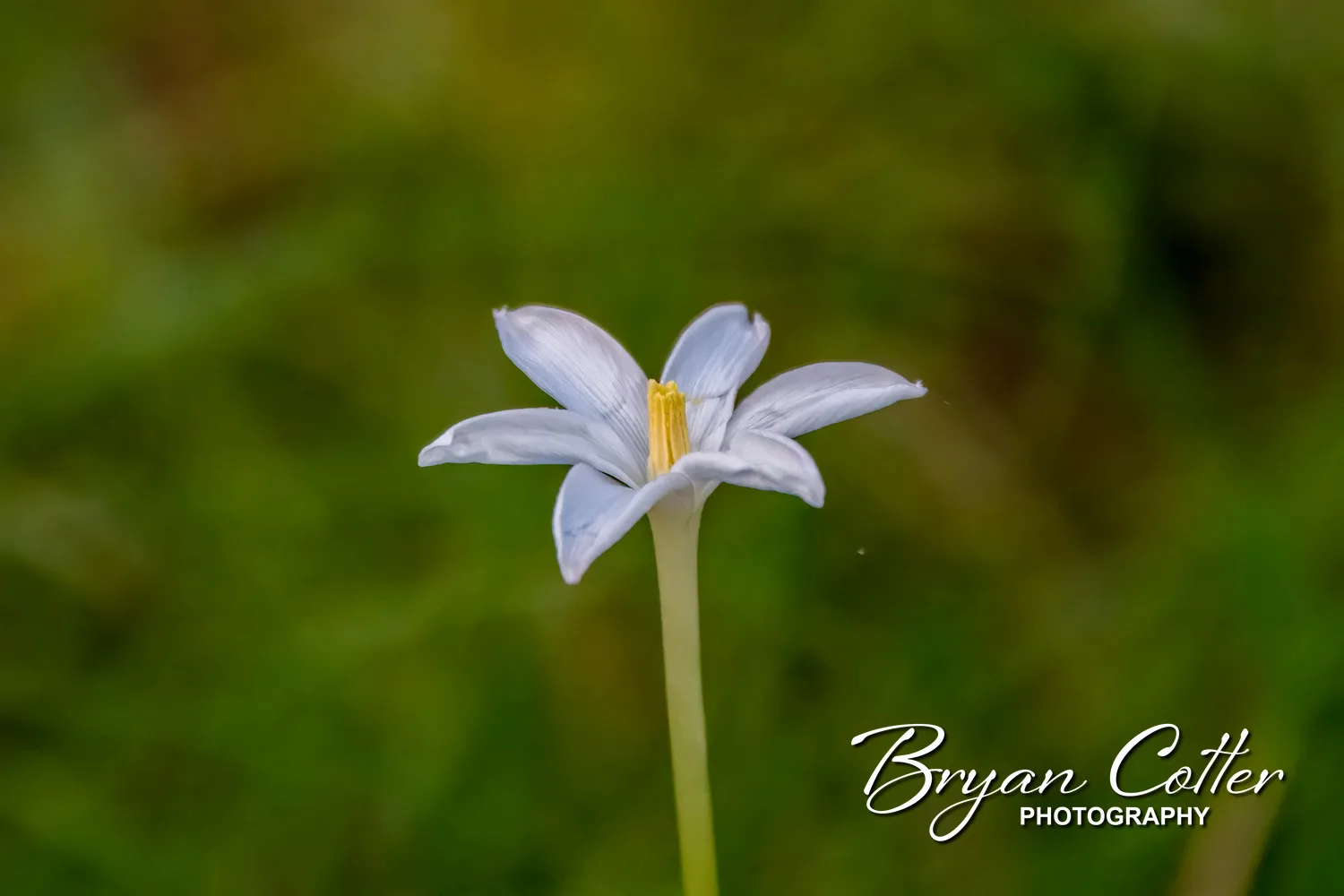
About the Rain Lily
The reward for a good soaking rain: two or three days later, white trumpet flowers stand suddenly in lawns, pastures, and roadsides where nothing was blooming before. Rain lilies spend most of the year as underground bulbs, waiting out drought, and can repeat the trick several times between spring and fall - each rain event triggering a fresh, brief flush.
The flowers open in the evening, fresh and fragrant, angled up like small white stars, and each lasts only two to four days - blushing pink as it ages. Their night opening and gentle scent serve the moths that pollinate them; by the second morning the bloom has usually been found.
This is the large native rain lily of Central Texas, the giant rain lily, with flowers held on foot-tall stems - a Texas and Mexico specialty. Whole colonies synchronize on the same rain, so a pasture can hold hundreds of blooms one week and none the next.
Photographing them is a game of timing: the flush announces itself, but softly. After the next real summer storm, check the roadsides on day three, early, before the sun climbs - the flowers are at their freshest and the light at its kindest.
Join one of my guided birding tours! Fine art prints of my photos are also available.
© 2026 Bryan Cotter Photography privacy policy terms of use site by cotter designs