Green Anole
Anolis carolinensis
About the Green Anole
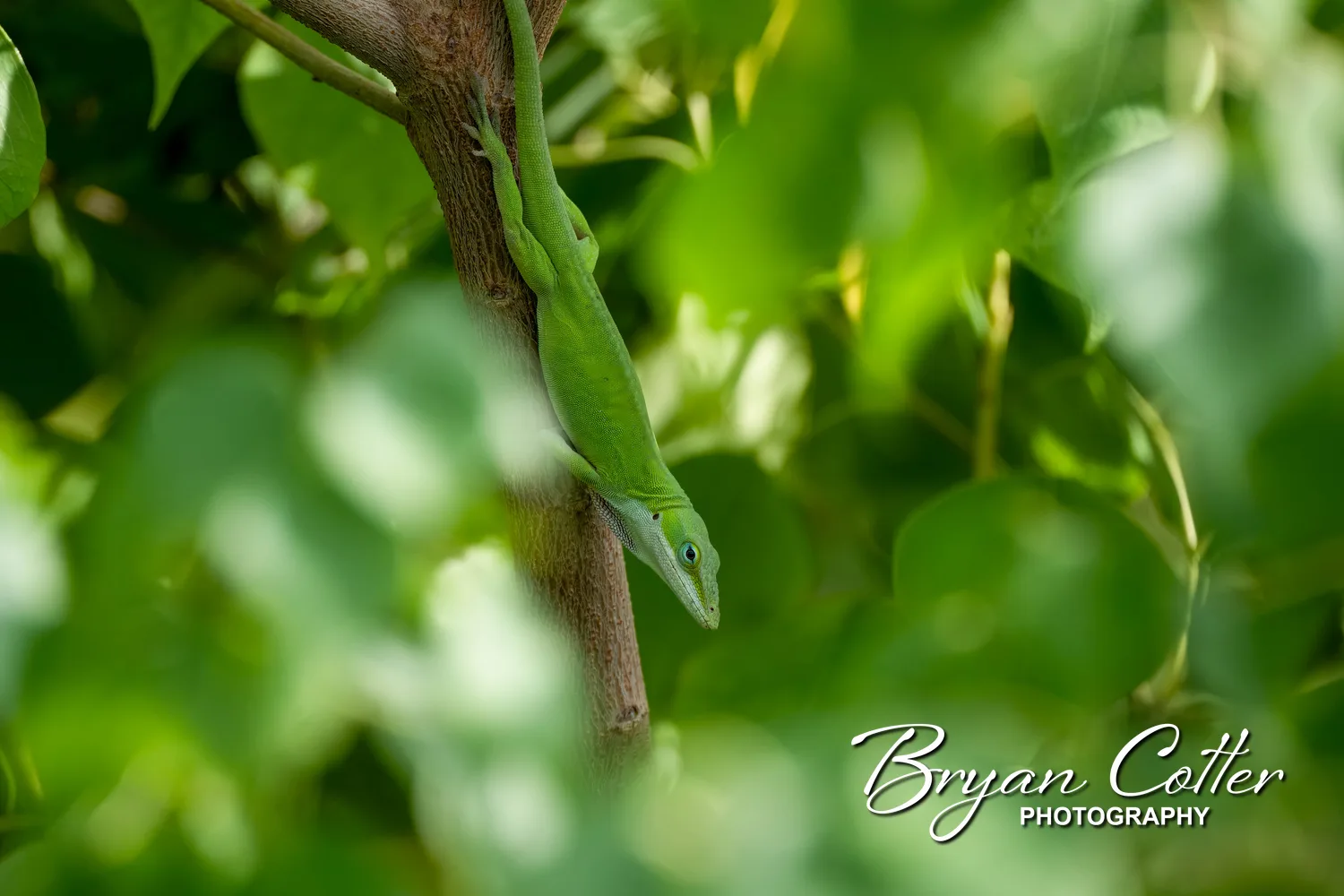
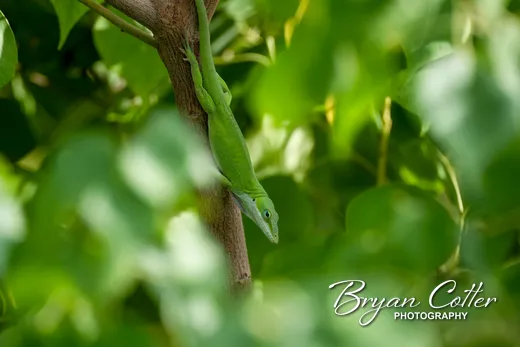
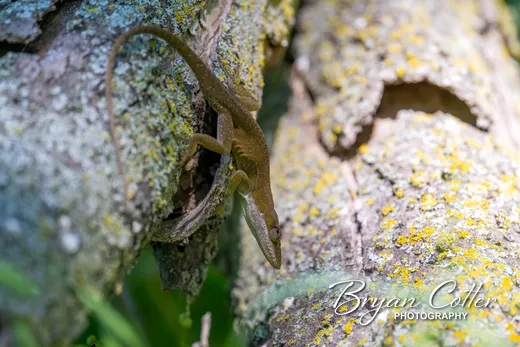
Our native color-changer, sliding between leaf-green and bark-brown with its temperature, mood, and social standing - a stressed or cold anole goes brown, a warm confident one glows green. Often called a chameleon, the green anole is actually kin to the iguanas, and its color change runs on hormones rather than a chameleon's quick nerve signals.
Males do push-ups and flare a rose-pink throat fan - the dewlap - to claim a fence rail or shrub, and a springtime standoff between rivals, all head-bobs and sidelong posturing, is theater worth watching. Each male patrols a small territory containing a few females, chasing intruders all season.
Anoles are the resident insect patrol of Texas gardens, taking flies, moths, spiders, and crickets, hunting by day with excellent color vision. They climb on toe pads built from microscopic hair-like structures - the same technology as a gecko's, evolved independently.
The species now shares the state with the introduced brown anole, which has pushed it higher into shrubs and trees in some cities. A green anole basking at eye level on a fence, dewlap half-flared, remains one of the easiest and best macro-wildlife shots in Texas.
Join one of my guided birding tours! Fine art prints of my photos are also available.
© 2026 Bryan Cotter Photography privacy policy terms of use site by cotter designs