Common Grackle
Quiscalus quiscula
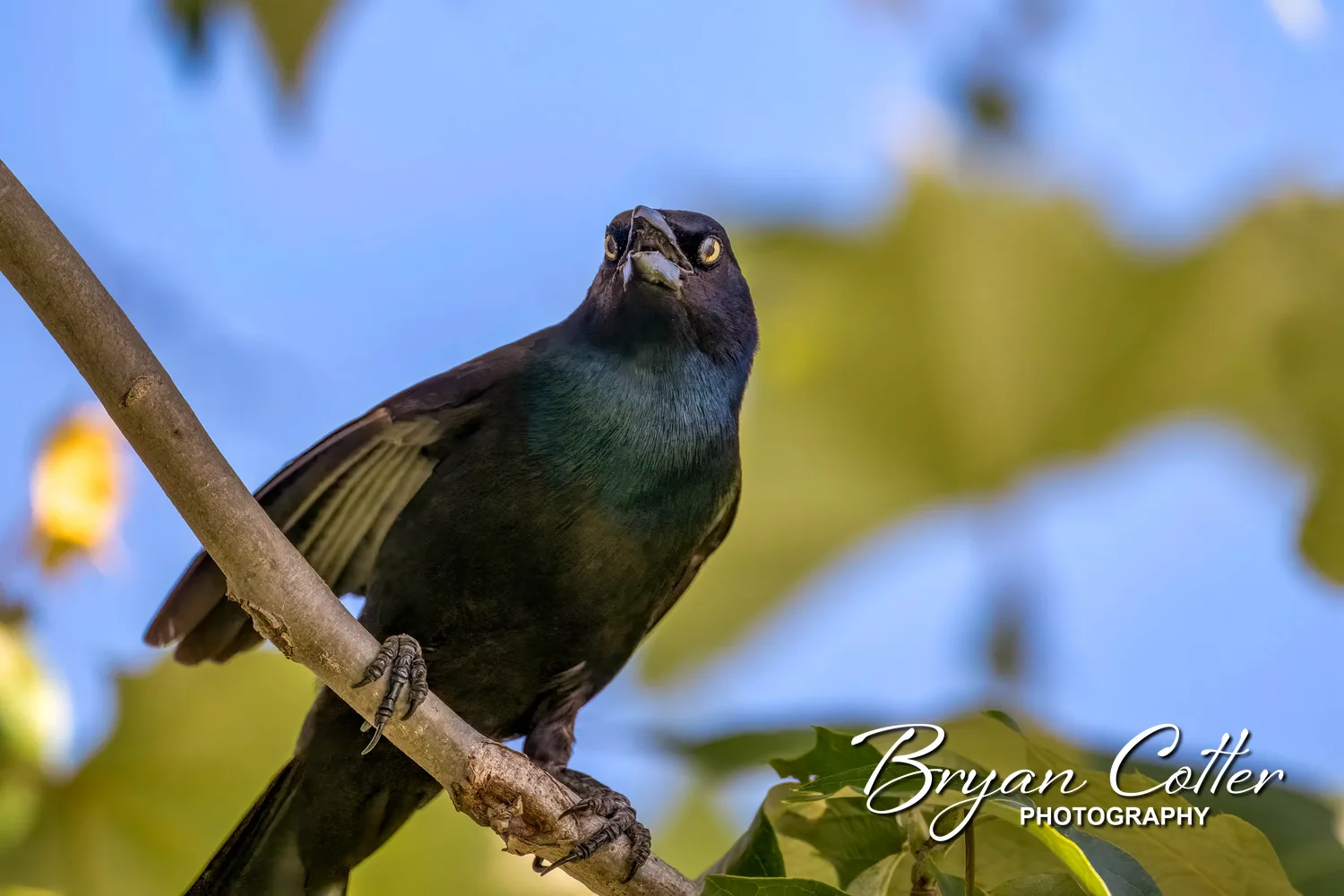
About the Common Grackle
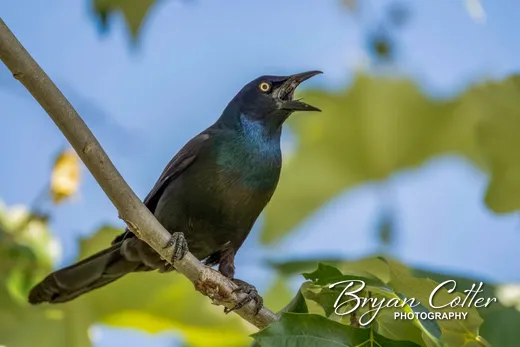
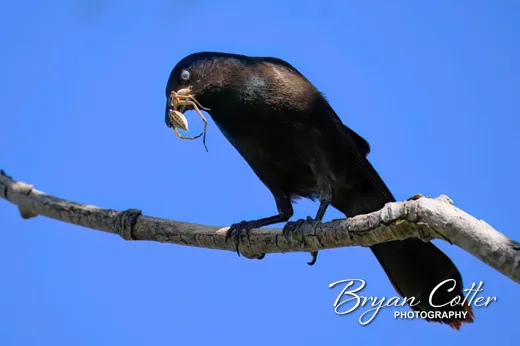
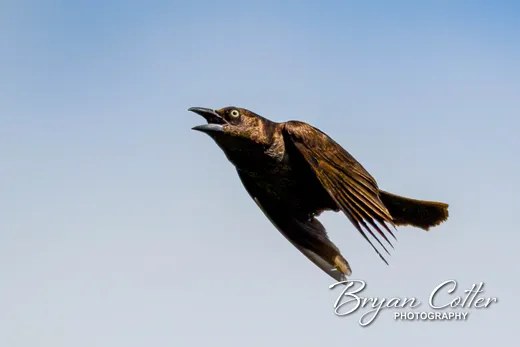
In good light a Common Grackle is anything but plain - the head burns glossy blue-purple against a bronze body, with a pale staring eye that gives the bird its perpetually indignant expression. The iridescence is structural, shifting with every degree the bird turns.
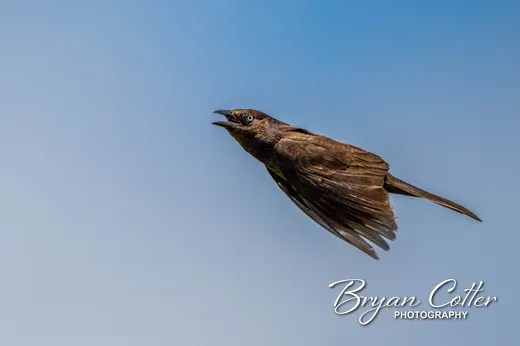
Texans see far more of the Great-tailed Grackle, which makes the Common the better find here: a chunkier, shorter-tailed bird that keeps to woodlands, pecan groves, and winter flocks rather than supermarket parking lots. In flight it holds its tail folded into a distinctive keel, like a paper boat.
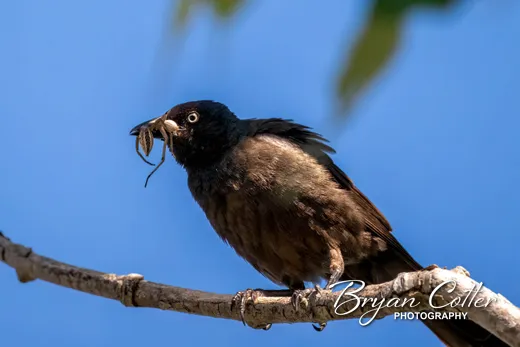
They are opportunists of the first order - seeds, grain, insects, crawfish, eggs, and the occasional small fish or mouse - and they practice "anting," crouching over ants or rubbing them through the feathers, apparently using the insects' formic acid as a parasite treatment.
For all its abundance the species is in quiet trouble, down by more than half since 1970 across its range - a reminder that even the common birds are not guaranteed. A winter flock wheeling into a Texas pecan bottom at dusk, ten thousand wings turning together, is a spectacle worth stopping for while it lasts.
Join one of my guided birding tours! Fine art prints of my photos are also available.
© 2026 Bryan Cotter Photography privacy policy terms of use site by cotter designs