Bullock's Oriole
Icterus bullockii
About the Bullock's Oriole
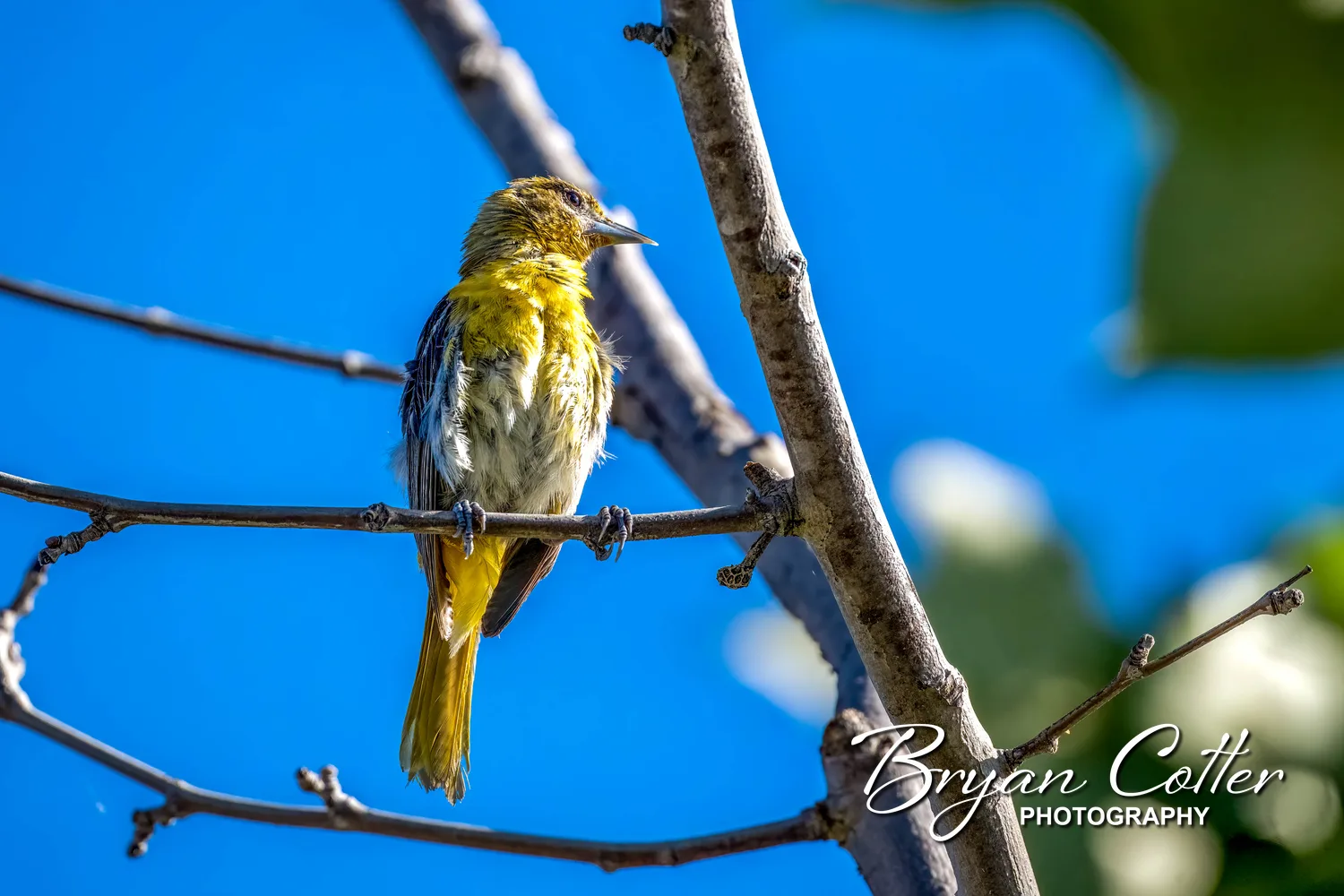
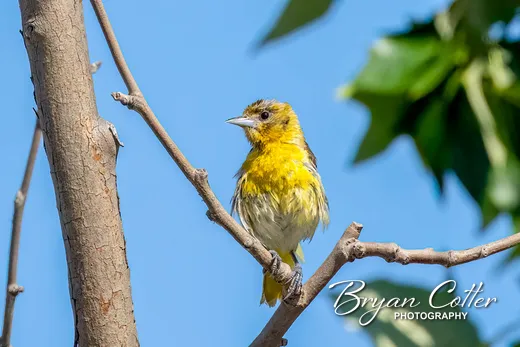
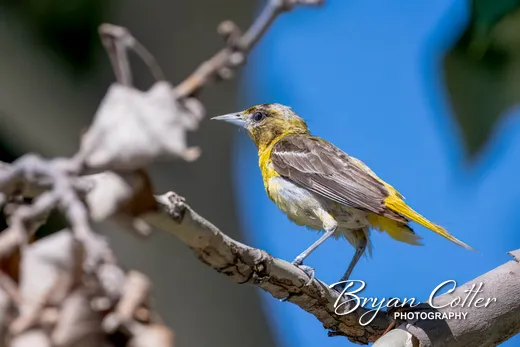
The western oriole: flame-orange with a black crown stripe, a thin black eyeline through an orange face, and a big white wing patch that flashes in flight. That orange face is the instant separation from the black-hooded Baltimore - useful in Texas, the state where the two most often share a tree.
Bullock's Orioles summer across the western two-thirds of the state, hanging their woven basket nests from the outer twigs of tall streamside trees - cottonwoods especially - often over water, where climbing predators cannot follow. Where the two orioles' ranges meet on the plains they occasionally hybridize, a zone biologists have studied for decades to watch speciation in action.
The species is named for William Bullock, an English collector, and for a stretch of the twentieth century it was lumped with the Baltimore as a single "Northern Oriole" before the two were re-split - the genes, and the birds, insisted they are different things.
They feed on insects, fruit, and nectar with equal enthusiasm, and a West Texas hummingbird feeder in migration often hosts one drinking with surprising delicacy for a bird that size. Low morning sun sets that orange burning against mesquite green.
Join one of my guided birding tours! Fine art prints of my photos are also available.
© 2026 Bryan Cotter Photography privacy policy terms of use site by cotter designs