Black and Yellow Mud Dauber
Sceliphron caementarium
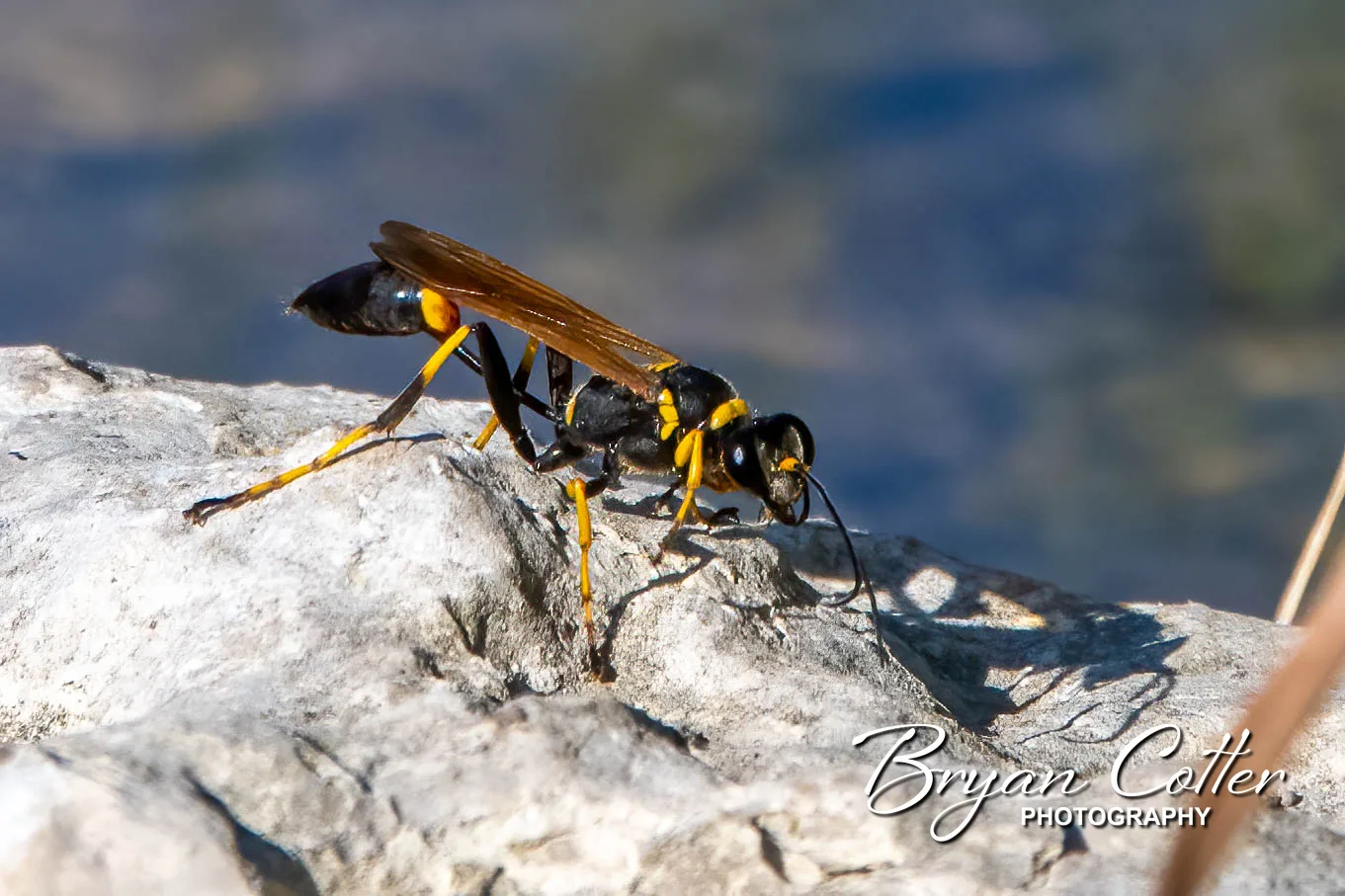
About the Black and Yellow Mud Dauber
That thread-thin waist looks almost drawn on. The black and yellow mud dauber gathers balls of wet mud at puddle edges, trowels them into organ-pipe nests on walls and eaves, and stocks each cell with paralyzed spiders for its young - a dozen or more spiders per cell, sealed in with a single egg.
The hunting is the remarkable part: the female stings spiders into permanent paralysis without killing them, keeping the pantry fresh for weeks. Crab spiders and small orb weavers make up most of the take, and even young black widows appear regularly on the menu, which alone earns the species its keep around a Texas porch.
It is a solitary wasp with essentially no interest in stinging people, whatever the nest may suggest - there is no colony to defend, and a female busy at her masonry can be watched from arm's length. The adults themselves feed quietly on flower nectar.
Old nests outlast their builders and become apartment blocks for other insects: leftover cells are recycled by grass-carrying wasps, resin bees, and the metallic-blue cuckoo wasps that parasitize the original owner. A wall of mud pipes is a little ecosystem in itself.
Join one of my guided birding tours! Fine art prints of my photos are also available.
© 2026 Bryan Cotter Photography privacy policy terms of use site by cotter designs