Baltimore Oriole
Icterus galbula
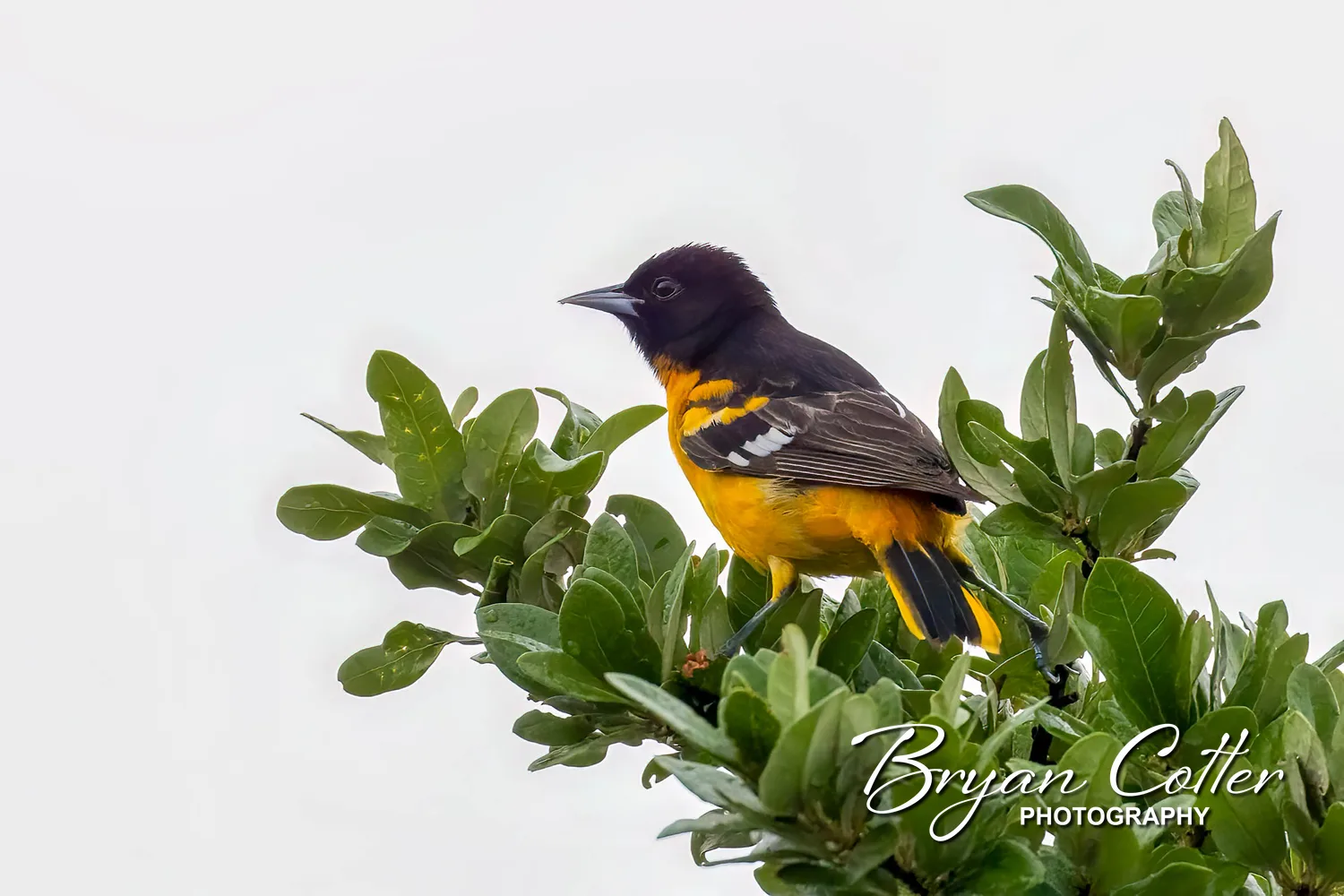
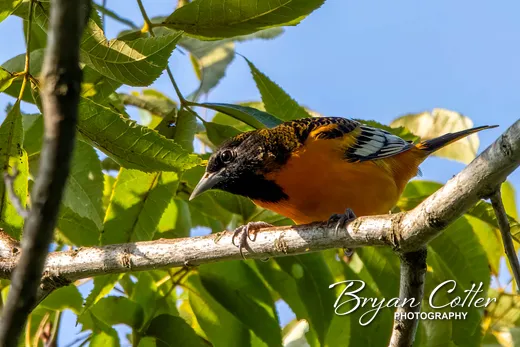
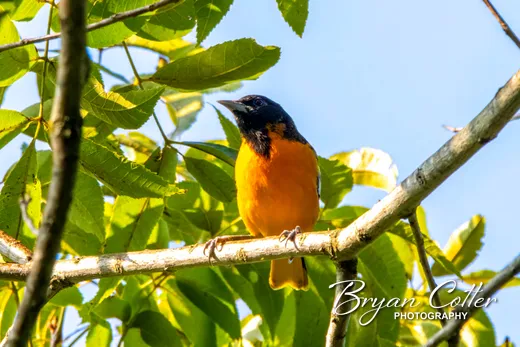
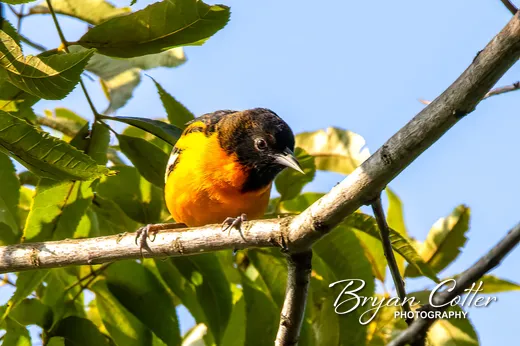
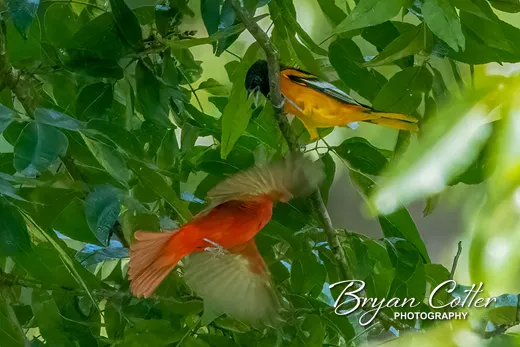
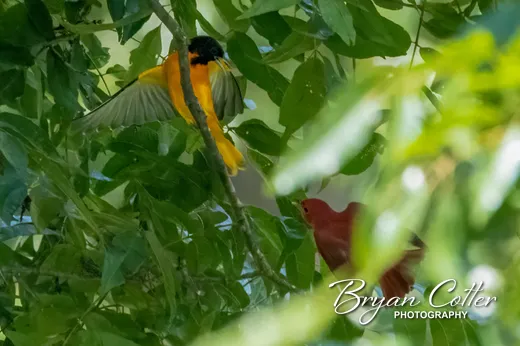
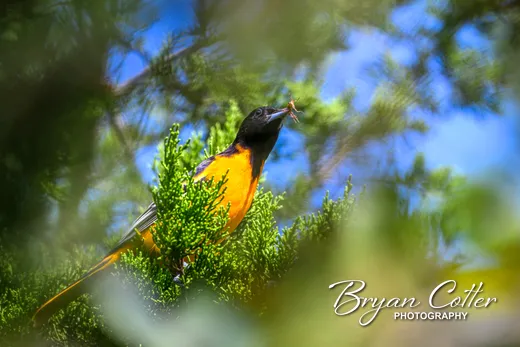
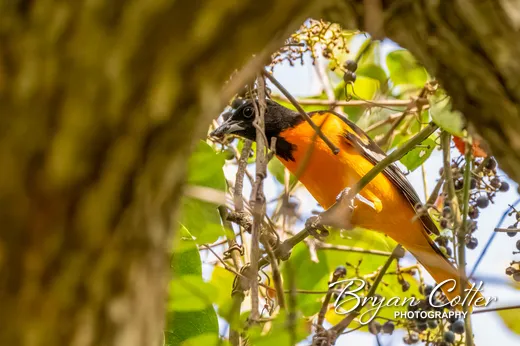
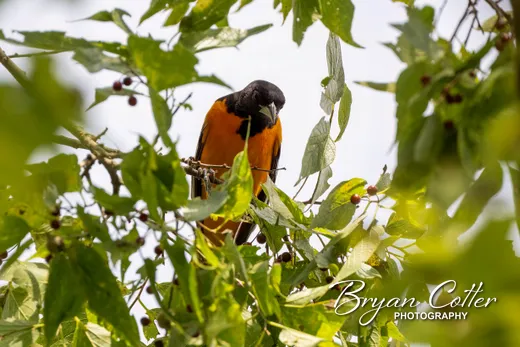
About the Baltimore Oriole
Flame-orange and black, the Baltimore Oriole is the eastern half of a famous pair - its western counterpart, Bullock's Oriole, also moves through Texas, and this state is where their ranges brush and occasionally blur. The male's solid black hood separates him at a glance from Bullock's orange face.
Baltimores ride the spring push up the coast and through Central Texas in April and May, dropping into flowering and fruiting trees, and return south from late August into October. Orange halves, grape jelly, and hummingbird feeders can pull one out of the canopy, where they otherwise stay maddeningly high.
The nest is the family masterpiece: a hanging pouch woven from plant fiber, hair, and string, swinging from the tip of a high branch where no cat or snake cares to follow. Females weave alone, thousands of stitches over about a week.
The name honors Lord Baltimore, whose coat of arms wore the same orange and black - which is also how a bird ended up sharing its name with a baseball team. In the field the color needs no heraldry: an adult male in a green pecan is the loudest thing in the tree without singing a note.
Join one of my guided birding tours! Fine art prints of my photos are also available.
© 2026 Bryan Cotter Photography privacy policy terms of use site by cotter designs