Solitary Sandpiper
Tringa solitaria



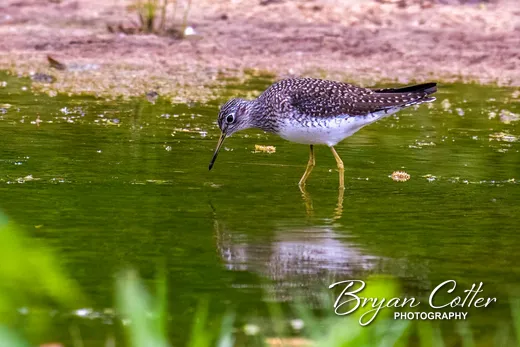
About the Solitary Sandpiper
True to its name, this sandpiper turns up alone - one bird bobbing at the edge of a stock tank, wooded creek, or ditch where no other shorebird bothers to stop. The crisp white eyering on a dark head and the dark, white-spangled back are the marks, and the constant gentle teetering seals it.
Solitary Sandpipers pass through Texas in April-May and again from July into October, trading the Arctic muskeg for South American riverbanks. They travel singly or in twos and threes, never in the massed flocks of other shorebirds, and they favor exactly the small, sheltered waters that bigger migrants ignore.
The species holds one of the strangest nesting habits in the shorebird world: instead of scraping a hollow in the ground, the female lays her eggs in old songbird nests - robin, grackle, waxwing - up in trees. Only one other shorebird on earth does anything like it.
When flushed it towers up with a sharp peet-weet and flashes a dark rump - unlike the white rump of the similar Lesser Yellowlegs - then often circles back to the same few yards of shoreline. Patience by a quiet pond edge usually brings it walking back into frame.
Join one of my guided birding tours! Fine art prints of my photos are also available.
© 2026 Bryan Cotter Photography privacy policy terms of use site by cotter designs