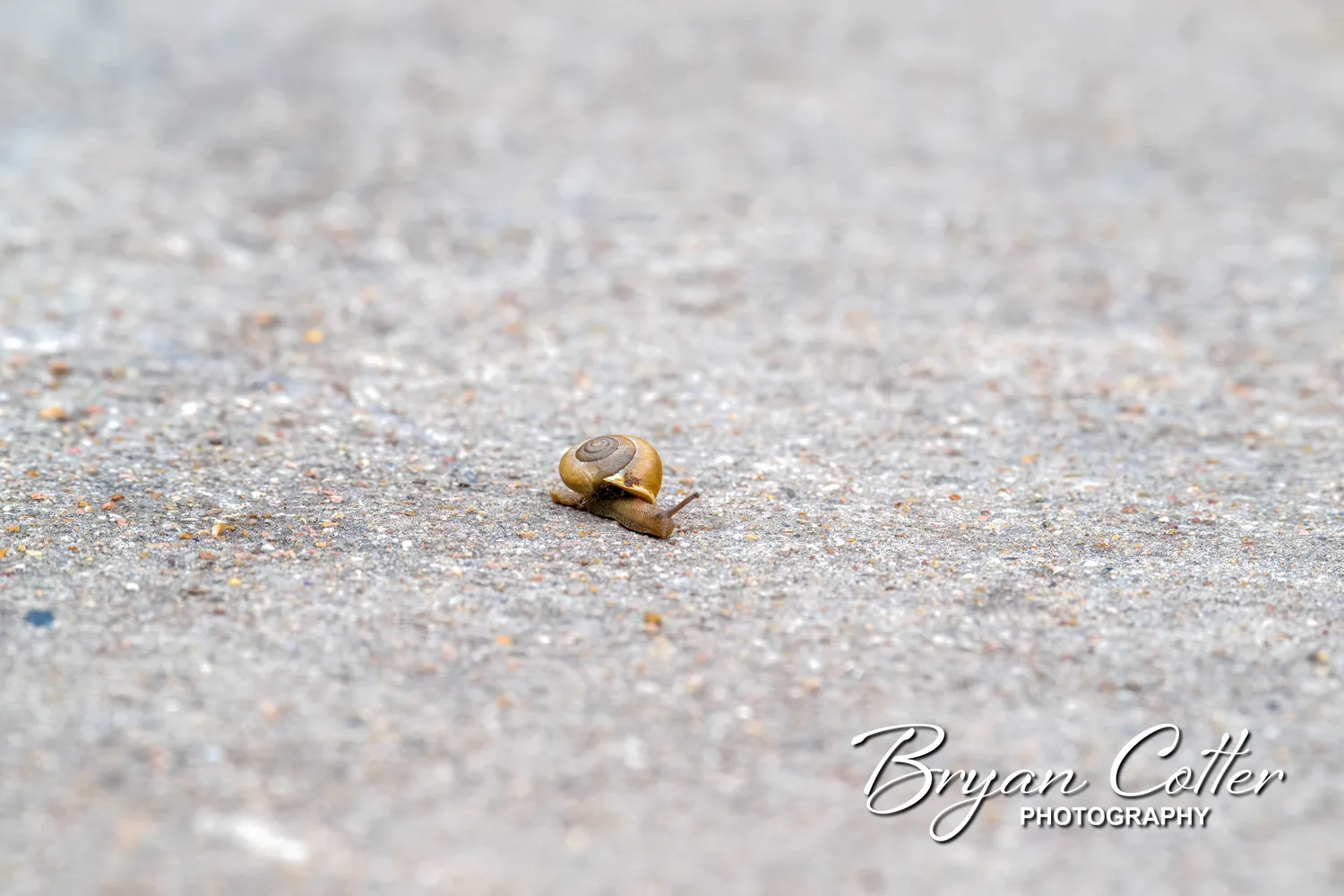
Brown Garden Snail
Cornu aspersum
About the Brown Garden Snail
An Old World import now thoroughly at home in Texas gardens, the brown garden snail carries a handsome chestnut-banded shell and emerges after rain or dew to work the flowerbeds - to the gardener's lasting dismay. It arrived in North America in the 1850s, imported to California deliberately as escargot, and has been escaping dinner ever since.
The snail is a study in patience. It travels on a single muscular foot over a road of its own mucus, rasping leaves with a ribbon tongue bearing thousands of microscopic teeth. In hot, dry spells it seals itself to a wall or fence post with dried mucus and simply waits - weeks or months if need be - for the weather to turn.
Like most land snails it is a hermaphrodite; any two adults can mate, and both may go on to bury clutches of pearly eggs in soft soil. The famous courtship involves each snail firing a tiny calcium "love dart" into the other, a ritual biologists are still puzzling over.
After a summer rain, a snail cruising a wet leaf with its eyestalks up makes a surprisingly elegant macro subject - all spiral geometry and glass-bead texture.
Join one of my guided birding tours! Fine art prints of my photos are also available.
© 2026 Bryan Cotter Photography privacy policy terms of use site by cotter designs