Rose-breasted Grosbeak
Pheucticus ludovicianus
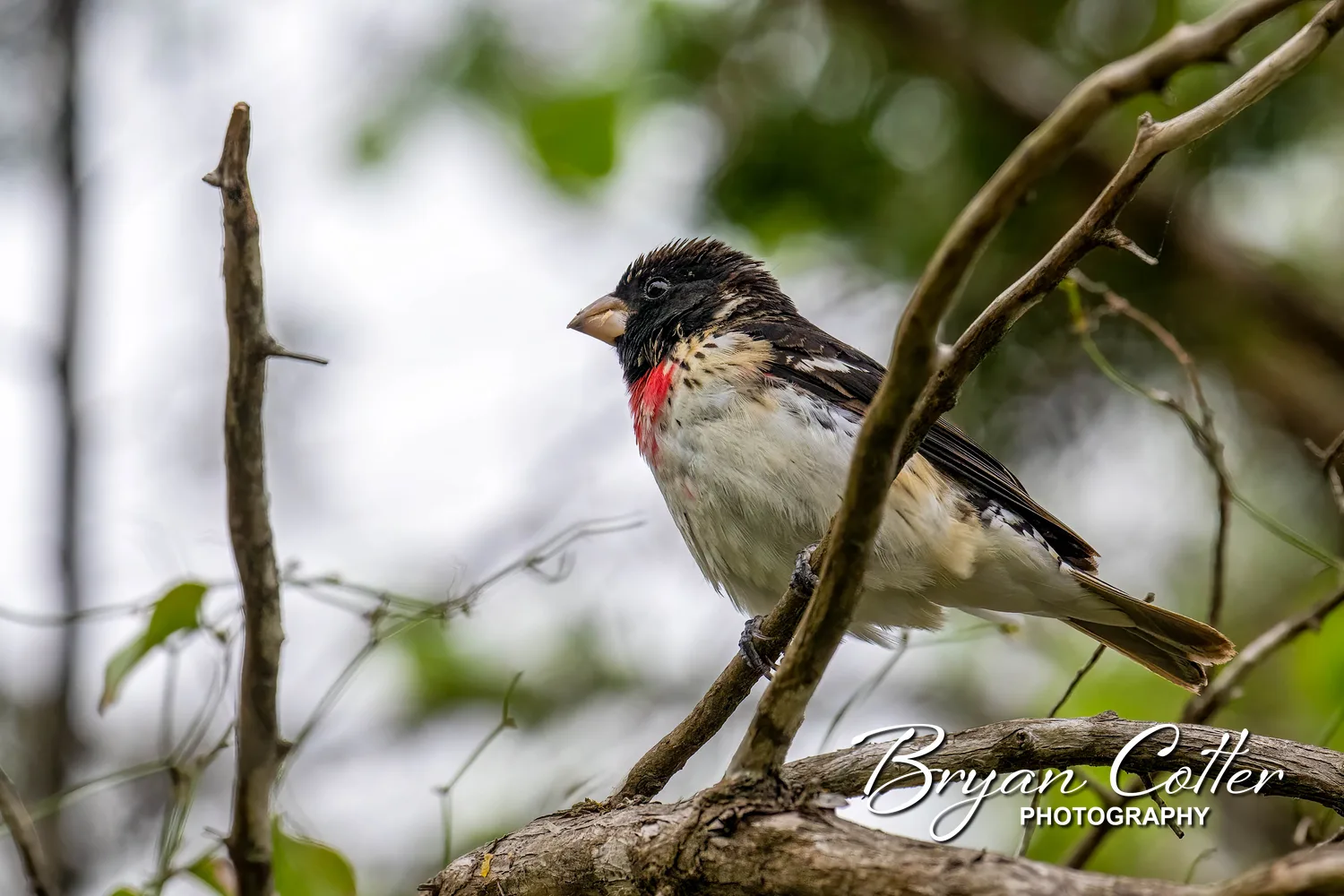
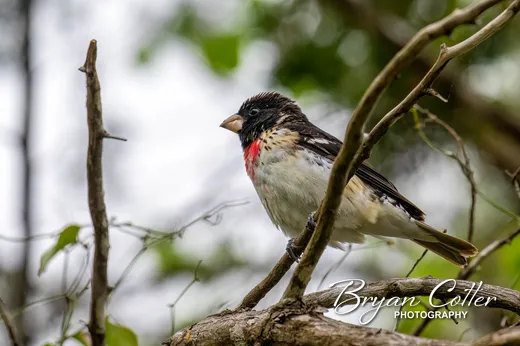
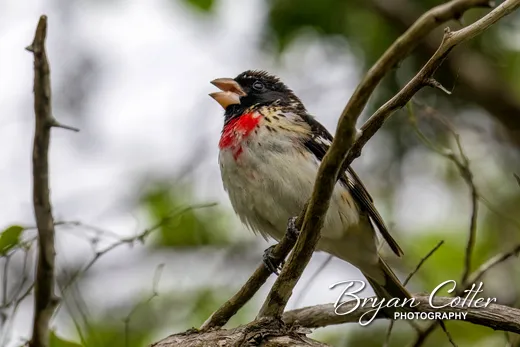
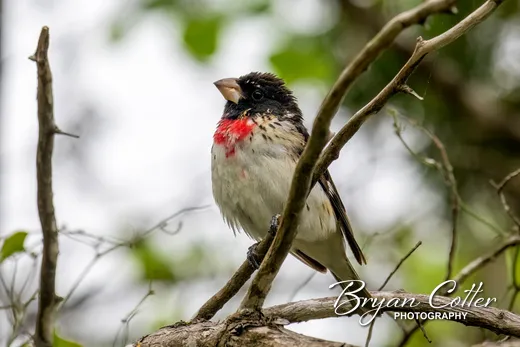
About the Rose-breasted Grosbeak
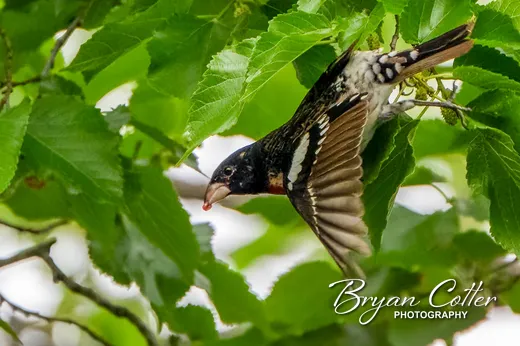
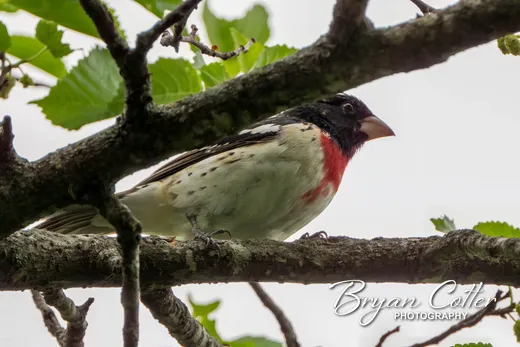
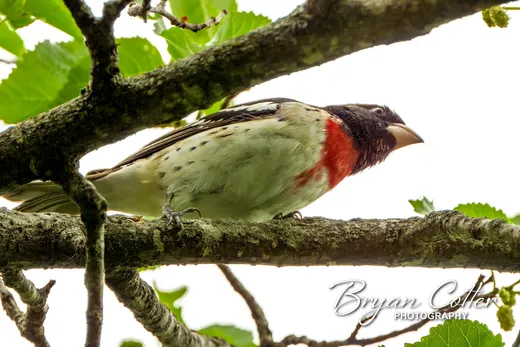
A spring male is one of migration's great prizes: black and white with a rose-red triangle bled across the chest, and a huge pale bill built for crushing. Females look like giant sparrows with a bold white eyebrow - so different that the pair was once assumed to be separate species.
Rose-breasted Grosbeaks pass through Central Texas in late April and May, riding the same cold fronts that drop tanagers and buntings into the oaks. A good push puts them in backyards, where a sunflower feeder will stop one for a day or two - and where that bill makes short work of seeds that defeat smaller birds. Fall birds slip through in September wearing subtler plumage.
The species breeds across the Northeast and upper Midwest and winters from Mexico to South America, so every Texas sighting is a traveler at a rest stop. Males sing even in migration - a rich, hurried robin-like warble that has been described as a robin that took voice lessons.
At the feeder they are calm, deliberate, almost tame, which makes them one of the easiest of the migrant showpieces to photograph well. The red flares brightest in direct morning sun.
Join one of my guided birding tours! Fine art prints of my photos are also available.
© 2026 Bryan Cotter Photography privacy policy terms of use site by cotter designs