Pipevine Swallowtail
Battus philenor
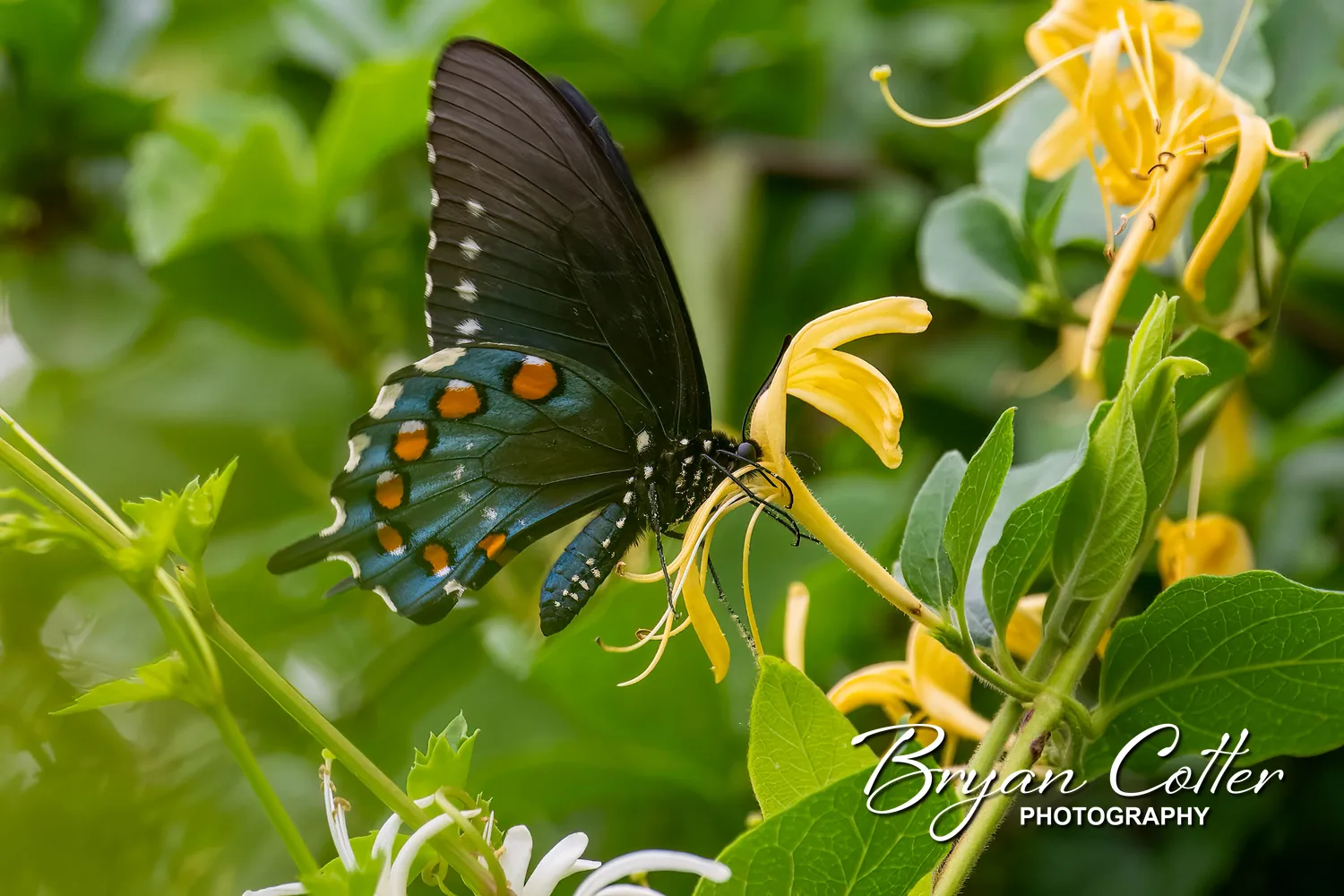
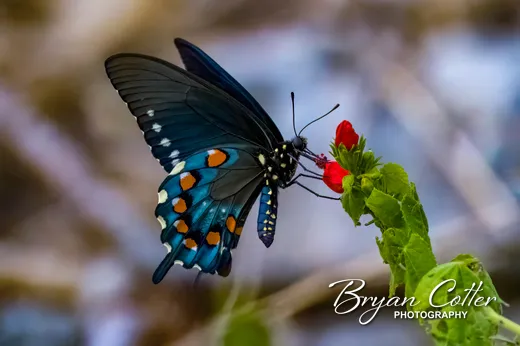
About the Pipevine Swallowtail
The hindwings shine iridescent blue-green, a color that moves as the butterfly does - pipevine swallowtails never quite hold still, fluttering even while they nectar, and the shimmer in flight is the field mark long before you see any detail.
The caterpillars - black, spiky, and dressed in orange warning studs - feed on pipevines and load themselves with the plants' aristolochic acids, toxins they carry through metamorphosis. Birds that sample one adult rarely try another, and that protection is so effective that a whole guild of Texas butterflies makes its living imitating this species: the Red-spotted Purple, the dark female Tiger Swallowtail, the Spicebush Swallowtail, and more. One toxic model, many mimics.
In Central Texas they fly from early spring well into fall, wherever native pipevines twine through the brush. Females flutter low, tapping leaves with their forefeet to taste for the host plant before laying clusters of rust-red eggs.
To photograph the iridescence, angle matters more than light: the blue only fires when the wing, the sun, and the lens line up. Work a nectaring butterfly in a slow arc and one frame in ten will suddenly burn blue.
Join one of my guided birding tours! Fine art prints of my photos are also available.
© 2026 Bryan Cotter Photography privacy policy terms of use site by cotter designs