Paper Wasp
Polistes sp.
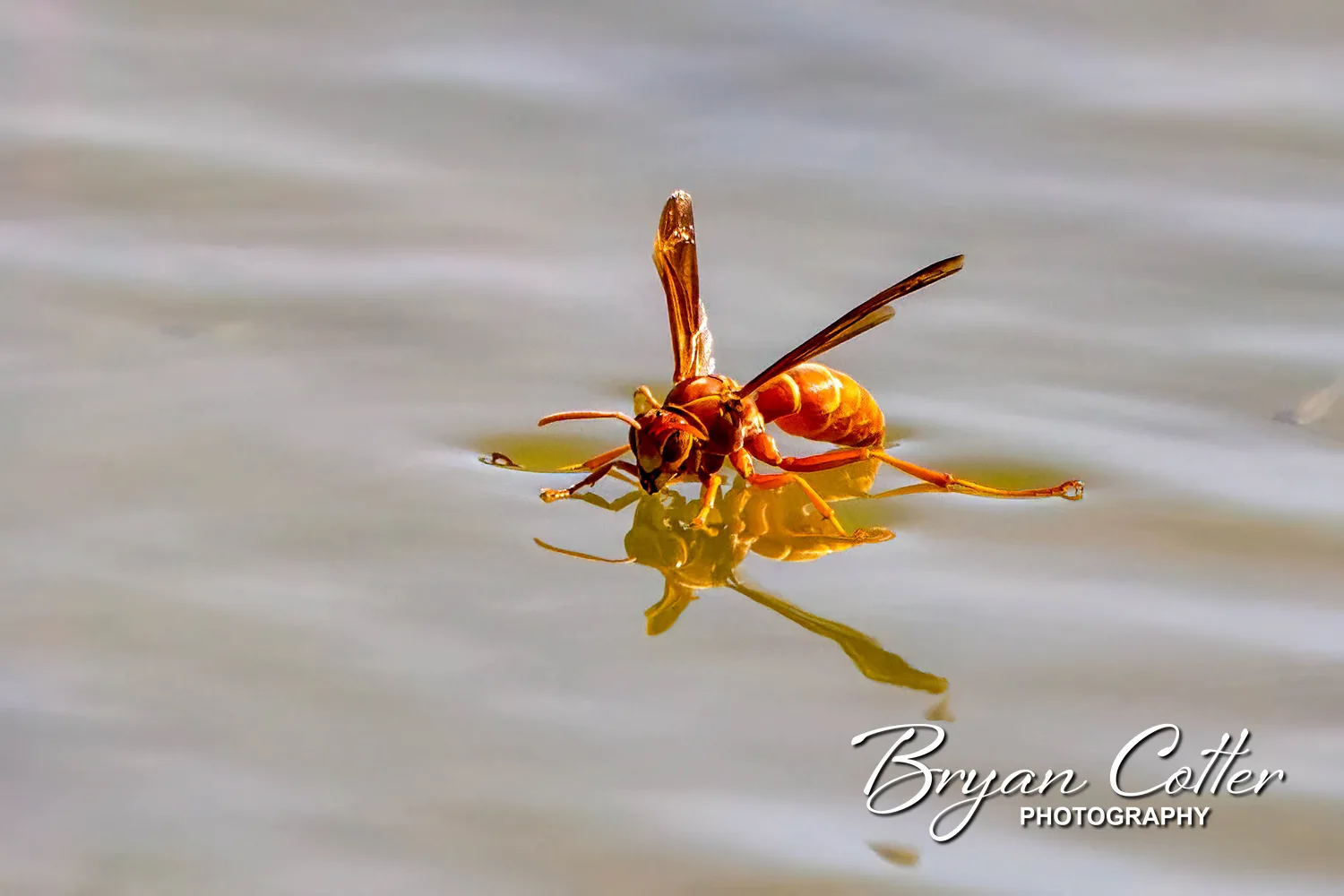
About the Paper Wasp
Builder of the open honeycomb nest under the eaves, the paper wasp chews weathered wood into pulp and shapes it into gray paper cells - papermaking a few million years before we got to it. The nest hangs from a single stalk, which the wasps coat with an ant repellent they produce themselves.
Away from that nest, a paper wasp is all business and no menace: they are far less defensive than yellowjackets, and a foraging wasp on a flower can be photographed from inches away. They hunt caterpillars relentlessly, chewing them into portions for the developing brood, which makes a summer colony one of the garden's best pest-control services. The adults themselves run on nectar.
The colony is an annual production. Mated queens overwinter in bark and woodpiles, found new nests in spring, and raise a first generation of workers; by late summer a healthy nest is producing new queens and males, and by the first freezes the whole enterprise winds down, paper and all.
Several Polistes species share Texas, from rusty red to nearly black, and telling them apart is its own small hobby. All of them build the same elegant, exposed comb.
Join one of my guided birding tours! Fine art prints of my photos are also available.
© 2026 Bryan Cotter Photography privacy policy terms of use site by cotter designs