Northern Shoveler
Spatula clypeata
About the Northern Shoveler
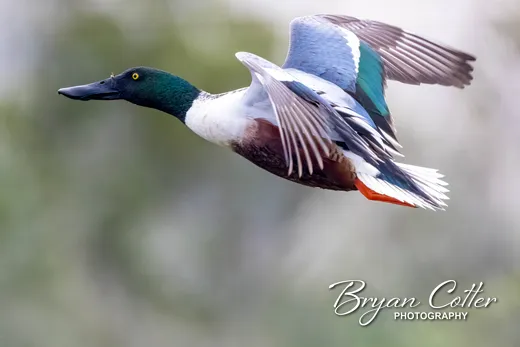
No duck commits harder to a tool than the shoveler. That outsized spatula of a bill is lined with more than a hundred fine comb-like lamellae along each edge, and a feeding bird swims with it skimming the surface, straining out seeds and plankton like a baleen whale in miniature.
The signature behavior is the feeding wheel: flocks swim in tight circles, each bird stirring food up into the path of the one behind - a machine built of ducks. Once you have seen a dozen shovelers rotating like a slow pinwheel on a pond, you never misidentify the species again, even at a distance.
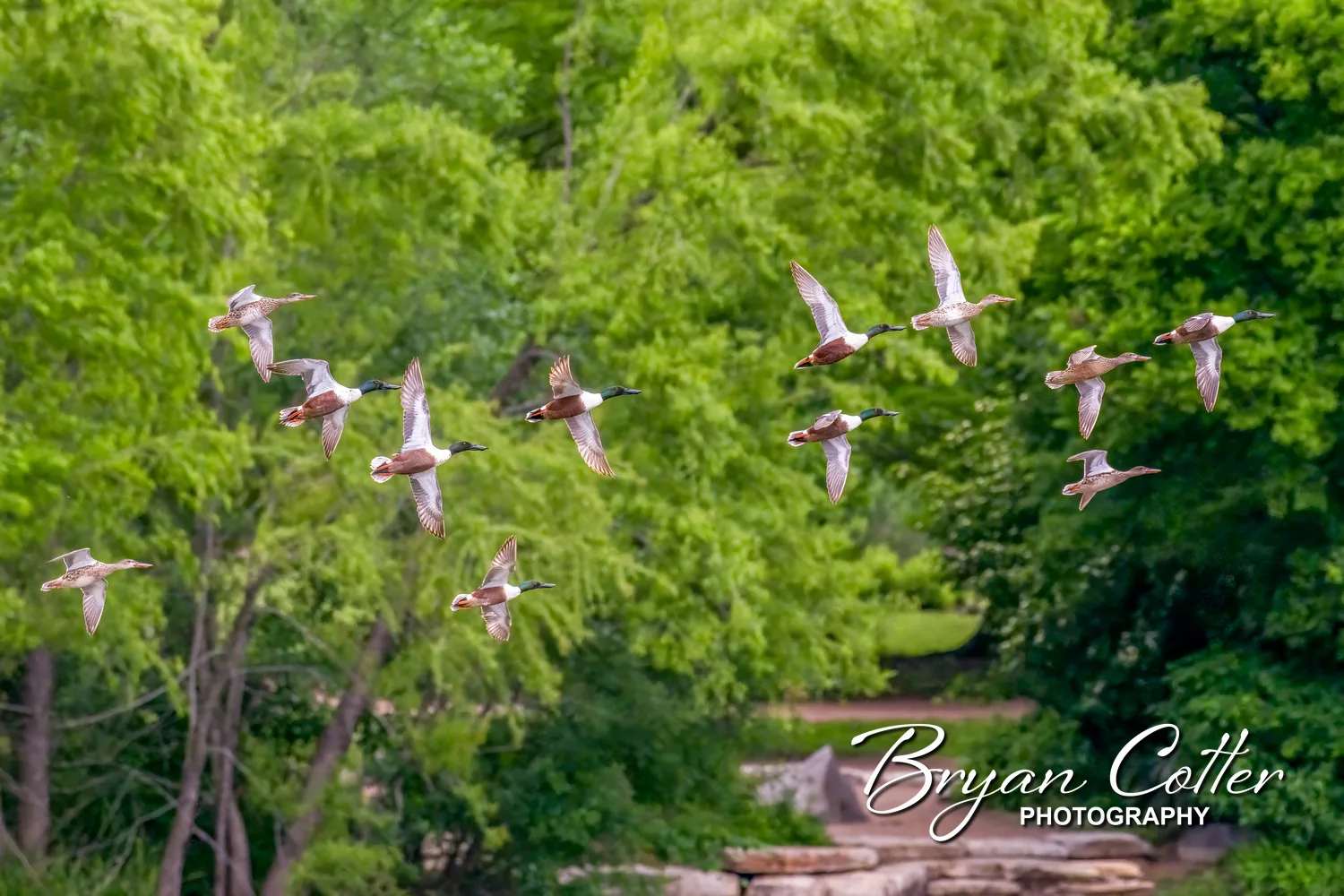
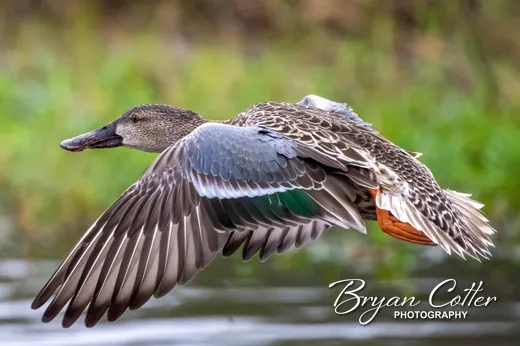
Drakes in winter are a knockout - bottle-green head, white chest, chestnut flanks, and that absurd black bill - while hens wear the sensible brown of all female dabblers, with an orange-edged shovel of their own. They arrive in Texas around October and linger into April.
Shovelers favor shallow, rich, even scummy water that other ducks pass over; the murkier the pond, the more there is to strain out of it. Some of the best photography comes late in winter, when pairs court in low golden light and the drakes chase across the water.
Join one of my guided birding tours! Fine art prints of my photos are also available.
© 2026 Bryan Cotter Photography privacy policy terms of use site by cotter designs