Black Vulture
Coragyps atratus
About the Black Vulture
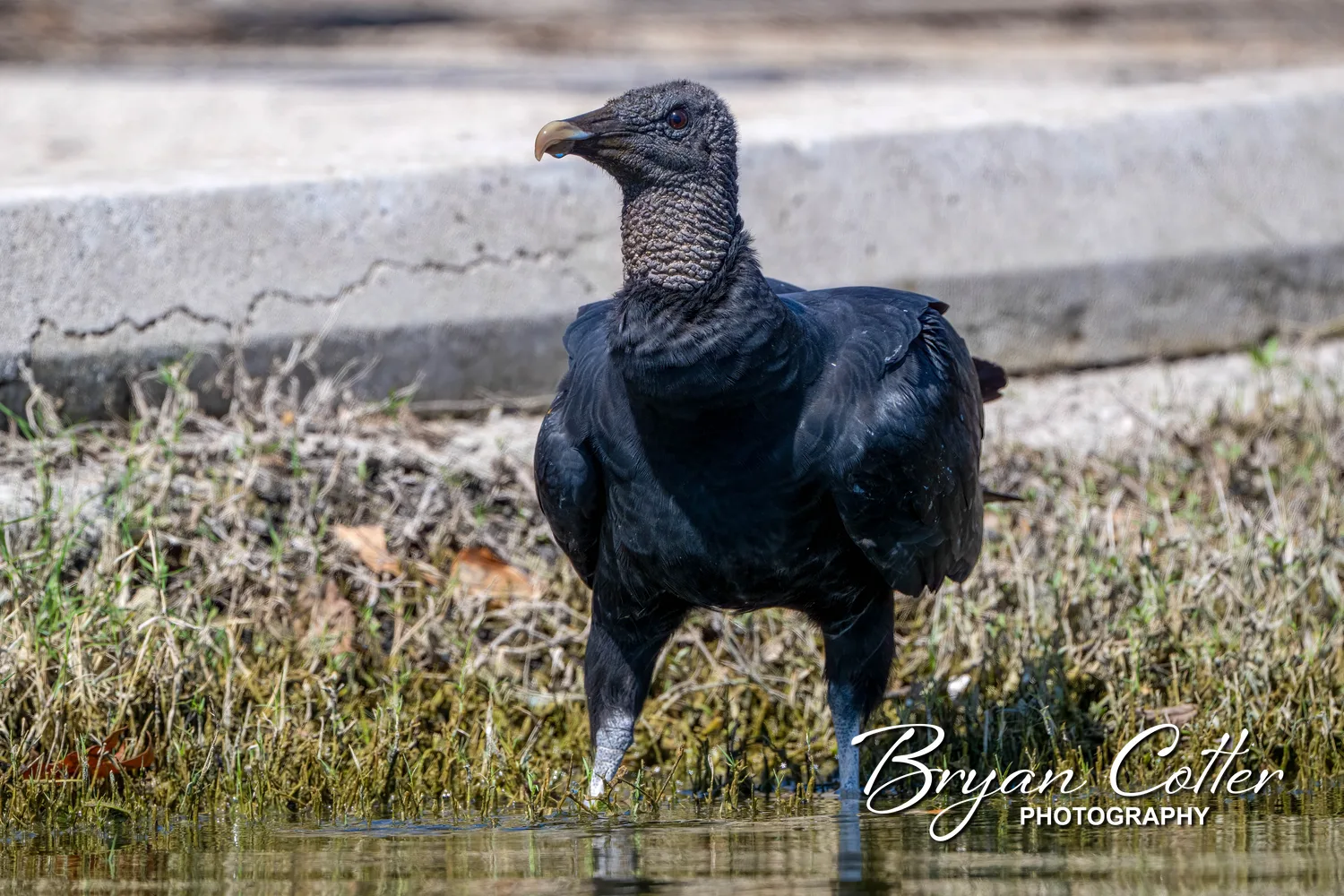
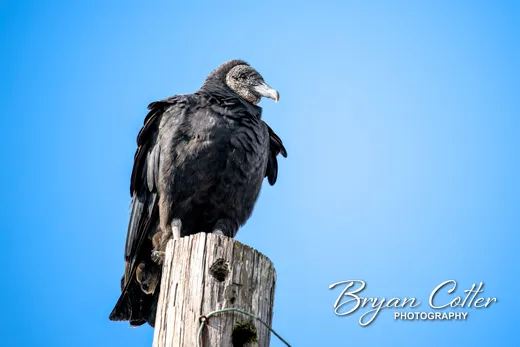
The stockier, shorter-tailed of our two vultures, all black with silvery patches at the wingtips and a bare gray head. Black Vultures fly with quick, choppy wingbeats between short glides - a rhythm you can identify at a mile once you know it - while Turkey Vultures rock along on raised wings.
Black Vultures find much of their food by watching Turkey Vultures, whose extraordinary sense of smell leads them to carrion first. The Blacks then muscle in, and in numbers they usually win the carcass. It is a piracy that has worked for a few million years.
They are intensely social birds. Extended families roost together, share food information, and stay bonded for life; pairs are so faithful that researchers have documented mates attacking philandering partners. There is no nest to speak of - eggs go straight onto the floor of a cave, hollow stump, or abandoned building.
Once mostly an eastern and southern bird, the Black Vulture has been expanding north and west for decades, and Central Texas holds them in every season. A kettle of mixed vultures over a Hill Country ridge is one of the state's most dependable wildlife spectacles.
Join one of my guided birding tours! Fine art prints of my photos are also available.
© 2026 Bryan Cotter Photography privacy policy terms of use site by cotter designs