Bluebonnet
Lupinus texensis
About the Bluebonnet
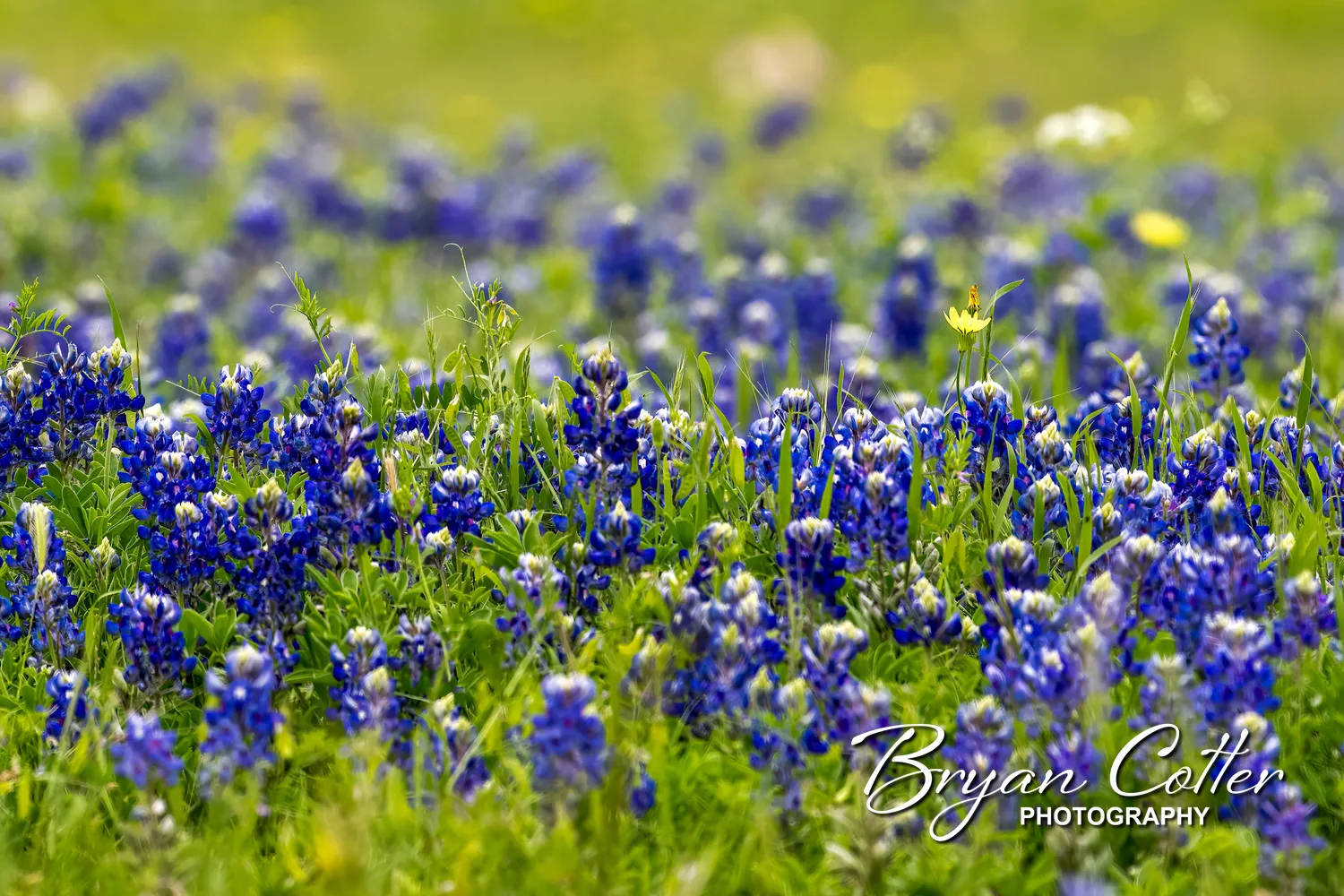
The state flower of Texas, and the reason whole families sit down in highway medians every spring. Bluebonnet blue is really a deep violet, each spike tipped in white, and a good year turns entire Hill Country pastures the color of the sky.
The species is a Texas endemic - it grows wild nowhere else on earth. It is an annual lupine that germinates with fall rains, sits through winter as a low rosette, then bolts and blooms from March into April. The white tip on each spike is a freshness signal: as flowers age and pollen fades, the tip blushes red-purple, and bees learn to skip the spent spikes.
Like other legumes, bluebonnets partner with root bacteria to fix nitrogen, quietly enriching the thin limestone soils they favor. That is part of why they thrive on poor roadside ground where little else takes hold - that, and decades of highway department seeding that turned Texas roadsides into the best wildflower show in the country.
Photograph them low and early: backlit at sunrise, a bluebonnet stand reads as a blue mist floating over the grass. And the classic shot still works - there is a reason every Texas family album has one.
Join one of my guided birding tours! Fine art prints of my photos are also available.
© 2026 Bryan Cotter Photography camera gear privacy policy terms of use site by cotter designs