Western Meadowlark
Sturnella neglecta
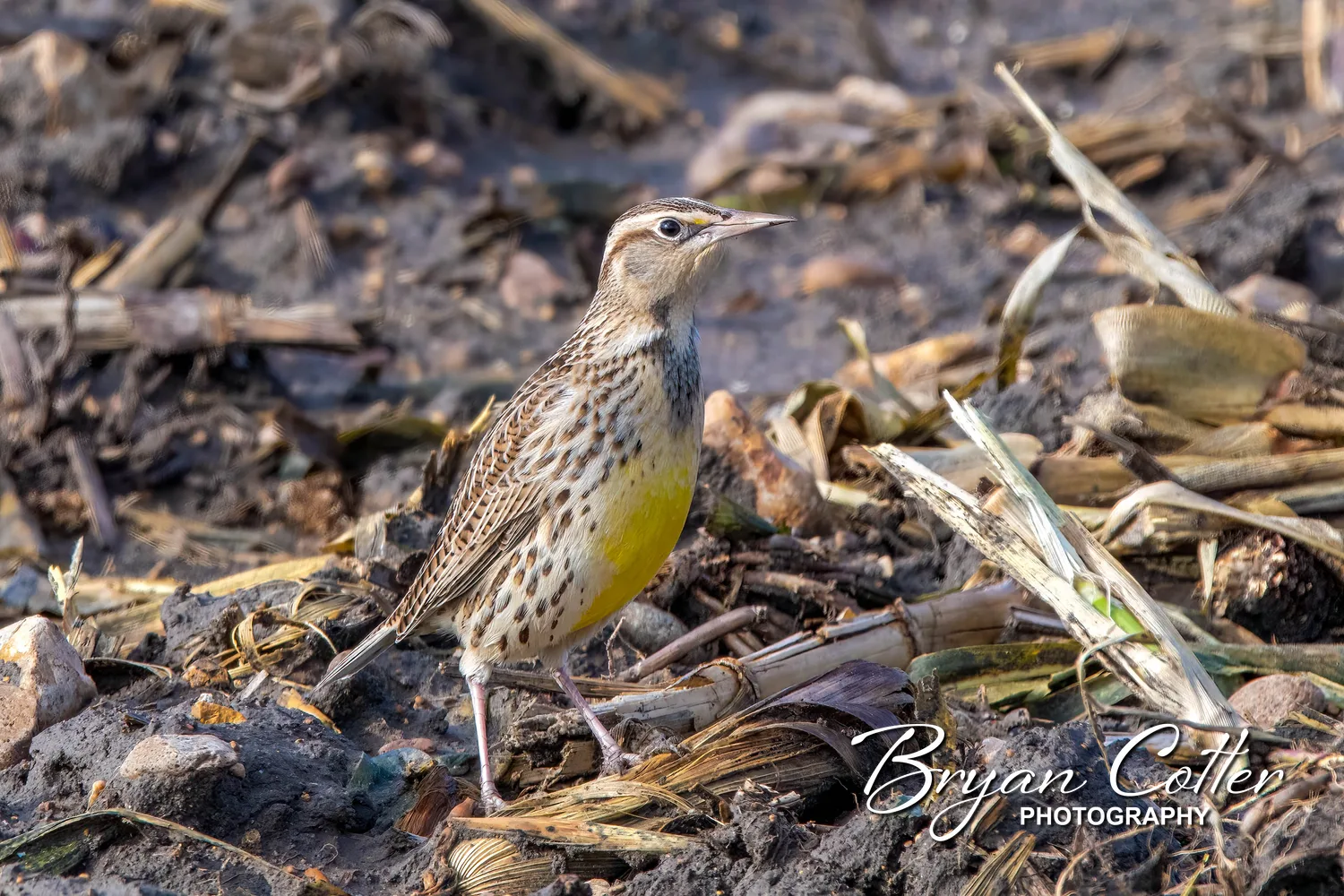
About the Western Meadowlark
A stocky grassland bird, yellow below with a black V across the chest and cryptic brown streaking above - to the eye, very nearly identical to the Eastern Meadowlark. The differences are real but slight: on the Western the yellow of the throat usually spreads a little onto the cheek, the upperparts are paler and grayer, and there is less white in the tail. In the field, in Texas, in winter, those marks will let you down as often as not.
Voice settles it. The Western sings a rich, low, gurgling, flute-like phrase that tumbles downward - one of the great sounds of open country in the American West - while the Eastern gives a simpler, higher, purer series of slurred whistles. The two species overlap widely across Texas and do not usually interbreed, keeping apart by song.
The scientific name carries a small joke. Audubon named it neglecta - neglected - because generations of naturalists had crossed the plains without noticing that this was not the same bird they knew from the east.
Like the Eastern it nests on the ground in grass under a woven dome. In Texas it is largely a winter visitor to the centre of the state and a year-round resident in the west and the Panhandle, and in winter the two meadowlarks mix in the same fields.
Join one of my guided birding tours! Fine art prints of my photos are also available.
© 2026 Bryan Cotter Photography privacy policy terms of use site by cotter designs