Townsend's Solitaire
Myadestes townsendi

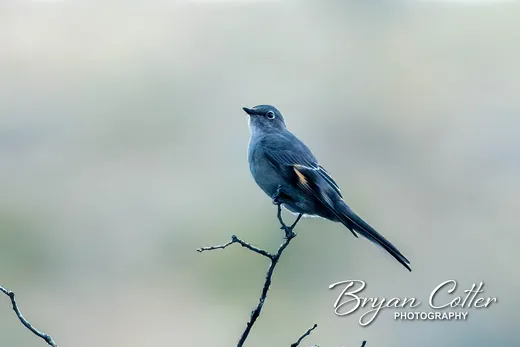
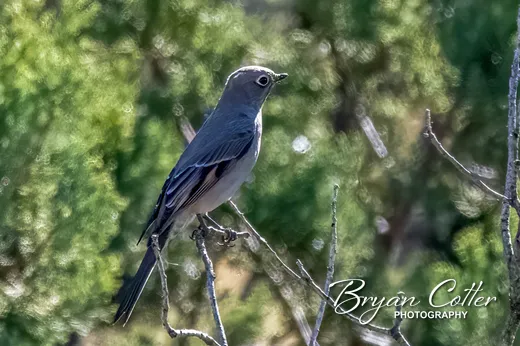
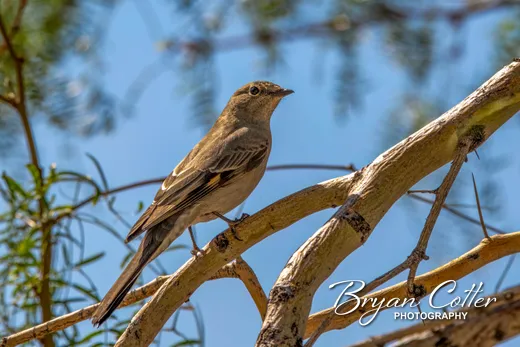
About the Townsend's Solitaire
A slim, upright, plain gray thrush with a bold white eye-ring, a short bill, and a long tail edged in white. In flight it shows a buffy patch across the wing. Perched high and motionless on a bare snag, it is easy to take for a small flycatcher or a shrike until the eye-ring registers - and the name is earned, because a solitaire is almost always alone.
The behaviour is more flycatcher than thrush: it sits on an exposed perch and sallies out after passing insects in summer, returning to the same spot. In winter it switches almost entirely to juniper berries, and that switch drives its most interesting habit. A wintering solitaire will claim a juniper tree or a stand of them and defend the crop all season against other solitaires and against robins and waxwings, chasing off anything that tries to feed. A bird holding a good tree can sit the whole winter in one place.
Its song is a long, rich, rolling warble, and unusually it sings in the depth of winter, which is when a defended territory most needs advertising.
In Texas it is a winter bird of the mountains of the west - the Guadalupes, the Davis Mountains, the Chisos - and the number that come down varies with how the juniper crop has done further north.
Join one of my guided birding tours! Fine art prints of my photos are also available.
© 2026 Bryan Cotter Photography privacy policy terms of use site by cotter designs