Phainopepla
Phainopepla nitens
About the Phainopepla
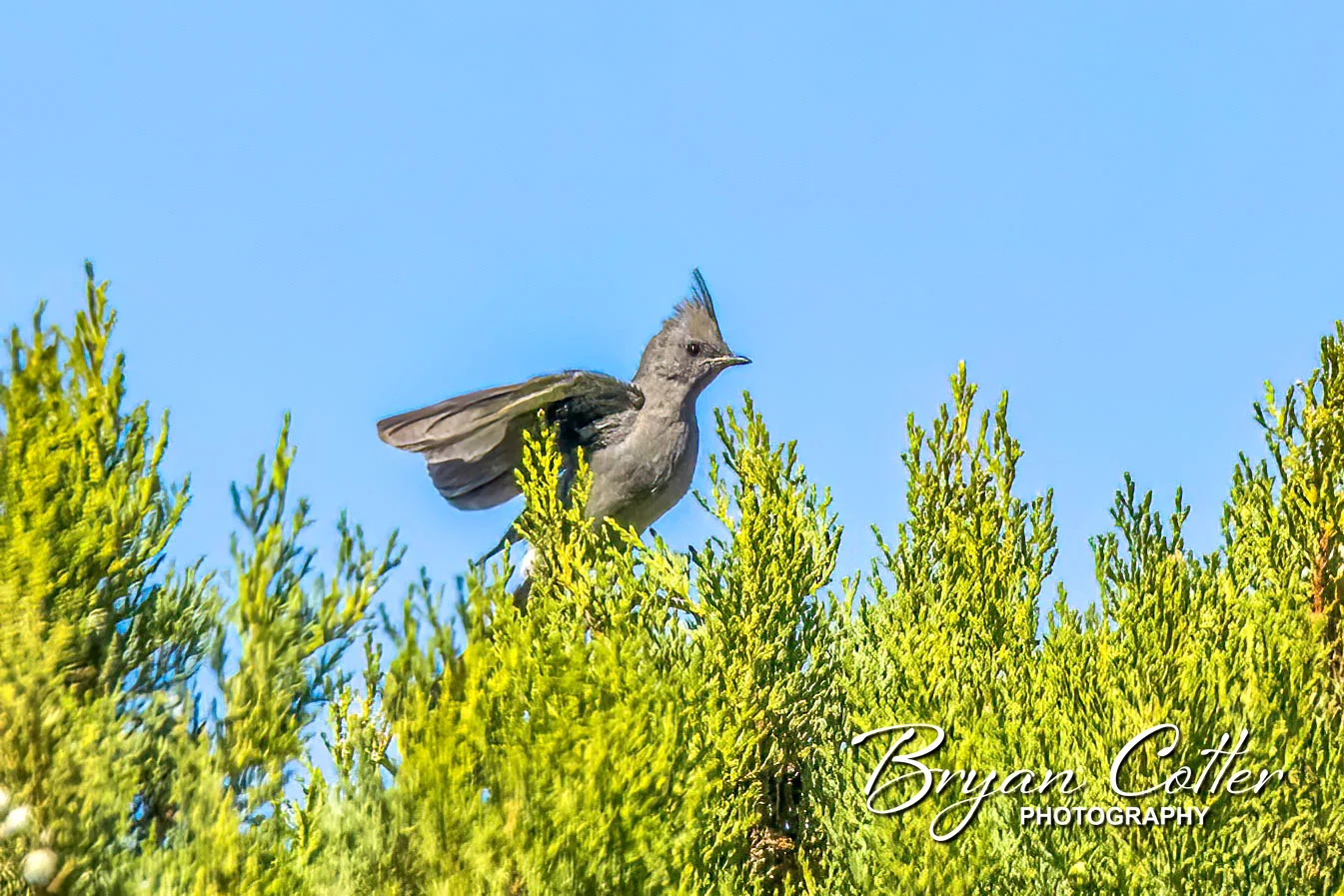
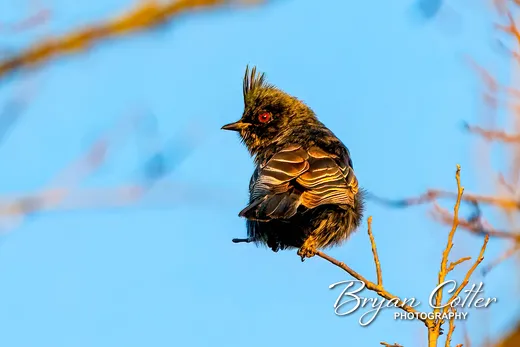
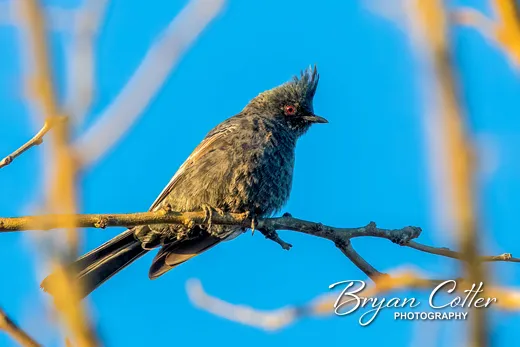
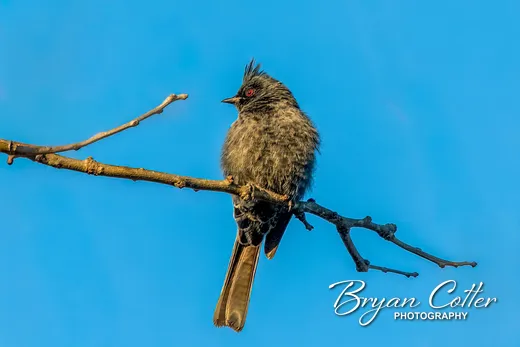
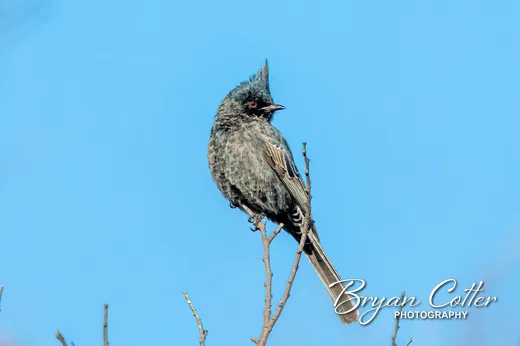
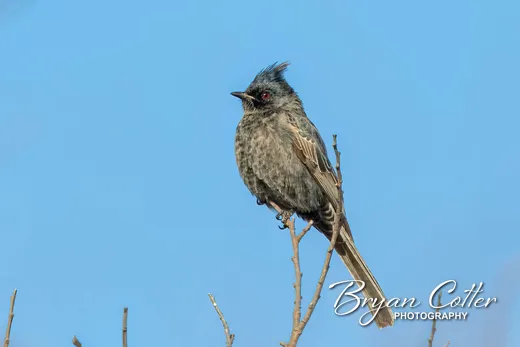
A slim, elegant, silky-plumaged bird with a tall wispy crest and a startling red eye. The male is glossy black throughout and shows large white wing patches the moment he flies; the female is the same shape in soft gray. The name is Greek for shining robe, and it fits - the plumage has a sheen quite unlike the flat black of a grackle or a cowbird.
Phainopeplas are mistletoe specialists to a degree that shapes their whole lives. A single bird can eat well over a thousand berries in a day, and its gut is adapted to strip the fruit and pass the seed quickly and intact, sticky enough to glue itself to the next branch it lands on. The bird plants the crop it depends on. Where mistletoe is thick, males defend individual clumps through the winter, sallying out flycatcher-style after passing insects and returning to the same high bare perch.
The species belongs to the silky-flycatchers, a small Central American family with only this one member reaching the United States. In Texas its range is the Trans-Pecos - the desert country west of the Pecos, where mesquite carries mistletoe.
Which is what makes the bird photographed here remarkable. It was found on County Road 250 near Andice, in Williamson County, in December 2021 - hundreds of miles east of where it belongs. In the entire eBird record for Williamson County, spanning more than ninety years, every single Phainopepla report comes from this one bird. It stayed from mid-December into early March, and roughly ninety-seven different observers made the trip out to that stretch of county road to see it. Birders simply called the spot the Phainopepla stakeout.
Join one of my guided birding tours! Fine art prints of my photos are also available.
© 2026 Bryan Cotter Photography privacy policy terms of use site by cotter designs