Mule Deer
Odocoileus hemionus
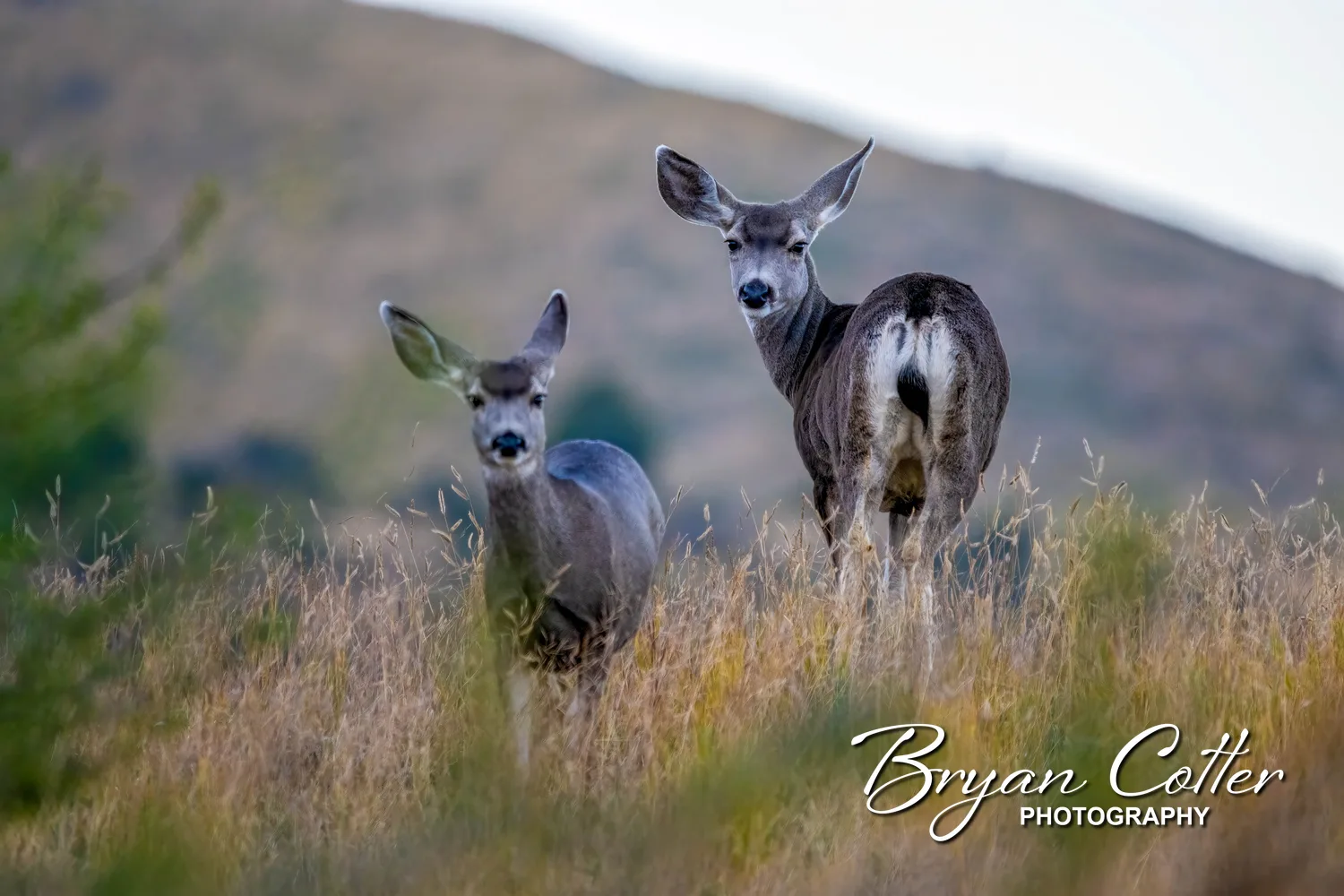
About the Mule Deer
A big-eared western deer, grayer and blockier than a Whitetail, with a white rump patch and a narrow rope-like tail tipped in black. The ears are the giveaway that named it - broad and long, held out from the head, mule-like. A buck's antlers fork evenly, each beam splitting and splitting again, rather than throwing tines off a single main beam the way a Whitetail's do.
The other reliable difference is how it moves. Alarmed Mule Deer stot, bouncing away with all four feet leaving and hitting the ground together, a stiff-legged pogo gait that carries them up broken slopes at speed. A Whitetail runs flat out with its tail flagged white; a Mule Deer bounces and holds its tail down.
They browse rather than graze, taking shrubs, forbs, and prickly pear fruit, and they can go long stretches on the moisture in their food. Bucks shed antlers in late winter and regrow them over the summer under velvet.
In Texas this is a bird-country-adjacent western animal, found in the Trans-Pecos and the Panhandle, replacing the White-tailed Deer of the eastern and central parts of the state. In the Guadalupe and Davis Mountains they come out to feed in the open at either end of the day.
Join one of my guided birding tours! Fine art prints of my photos are also available.
© 2026 Bryan Cotter Photography privacy policy terms of use site by cotter designs