Harris's Sparrow
Zonotrichia querula
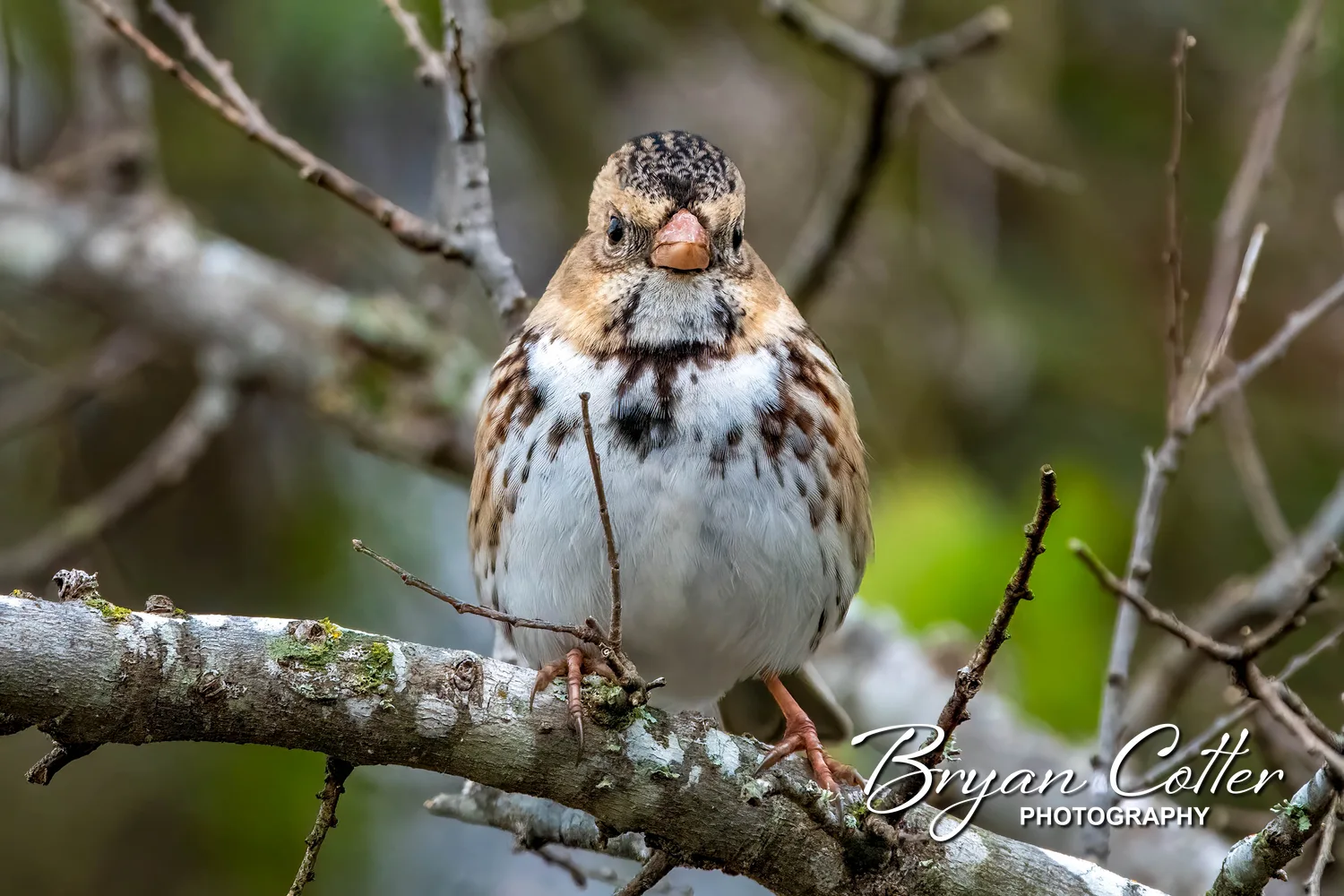
About the Harris's Sparrow
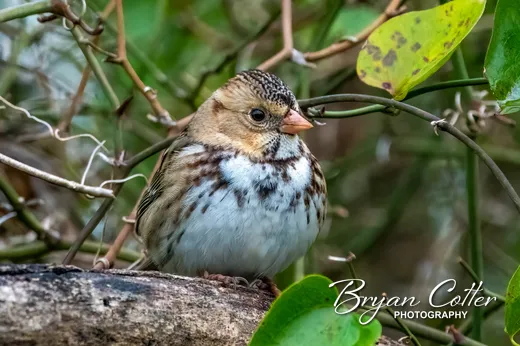
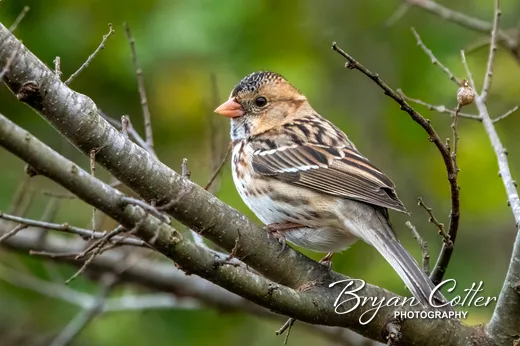
The largest sparrow in North America and one of the most handsome. A winter adult is unmistakable: a black bib and crown framing a pale pink bill and gray face, with clean white underparts and warm brown streaking above. First-winter birds show much less black, sometimes only a smudge on the chest, and can puzzle people until the size and the bright bill register.
The amount of black is a badge of rank. Birds with more black are older and dominant, and they win contests at food without needing to fight - the plumage settles the matter in advance.
Harris's Sparrows feed on the ground under dense cover, scratching in leaf litter with both feet, and they mix readily into flocks of White-crowned and White-throated Sparrows.
The distribution is remarkable. This is the only bird species that breeds exclusively in Canada, nesting in the stunted spruce and tundra edge of the Northwest Territories and Nunavut, and its nest was not described by science until 1931. In winter the entire world population funnels into a narrow corridor through the central plains, reaching south into north and central Texas. Numbers have fallen enough for Near Threatened status, so a wintering flock in a Texas hedgerow is worth more than a passing glance.
Join one of my guided birding tours! Fine art prints of my photos are also available.
© 2026 Bryan Cotter Photography privacy policy terms of use site by cotter designs